Behind the Scenes of the Hottest Sports Events in 2026
8 September 2026
The year 2026 is shaping up to be a monster for sports fans. You have the FIFA World Cup spreading across three countries, the Winter Olympics in Milan-Cortina, and a packed calendar of club finals, championship fights, and new-format tournaments. But what most people see on their screens is only the polished tip of a massive operational iceberg. The real story is in the logistics, the security planning, the broadcast engineering, and the split-second decisions that happen far from the cameras.
Understanding what goes on behind the scenes is not just for event managers or sports executives. If you are planning to attend, bid on hospitality, cover the event as media, or even bet on outcomes, knowing how these events actually function gives you a serious edge. It changes how you read schedules, how you budget, and how you react when things inevitably go wrong.

The Logistics Labyrinth: Moving People, Equipment, and Athletes
The most overlooked part of any major sporting event is simple movement. In 2026, the World Cup alone will involve 48 teams, 104 matches, and 16 host cities across the United States, Canada, and Mexico. That is not just a travel headache; it is a military-scale operation executed under civilian rules.Athlete Travel and Acclimatization Windows
For teams, the biggest behind-the-scenes battle is not the opponent. It is the clock. A team playing in Mexico City's altitude (2,240 meters) and then flying to Miami's humidity three days later faces physiological whiplash. Performance staff do not just book flights. They calculate circadian rhythm disruption, sleep debt, and training load adjustments down to the hour.The best practice here is the "staggered arrival" strategy. Teams that can afford it will set up base camps in the host continent weeks early. For example, European teams often land in the eastern United States, train for ten days, and then move to their match venues. The mistake amateurs make is assuming that a direct flight and a hotel near the stadium is enough. It is not. The real pros book hotels with blackout curtains, dedicated meal prep areas, and private gyms that are within a 15-minute bus ride of the training pitch. A 45-minute bus ride through city traffic before a session is a silent performance killer.
The Equipment Supply Chain
Then there is the gear. A single top-tier football match uses about 40 match balls, but the official ball supplier for a tournament ships thousands. Those balls have to be stored at specific temperatures and inflated to precise pressures hours before kickoff. Behind the scenes, there are ball managers whose only job is to check valve integrity and re-inflate every ball at the exact PSI mandated by the rules. Miss that by half a pound, and you get a complaint from a star striker who feels the ball is "dead."For multi-sport events like the Olympics, the logistics are even crazier. Each national Olympic committee ships its own medical equipment, recovery tools, and even food. The Italian organizers for Milan-Cortina are handling alpine sports where the difference between a gold medal and a crash can be a tenth of a second. That means snow grooming machines operate at night, under floodlights, with laser-guided grading systems to ensure the ice surface has a consistent hardness. If the temperature swings by two degrees Celsius, the entire course becomes dangerous, and the race director has to make a call that could delay a primetime broadcast.
Security: The Invisible Shield That Shapes Everything
Security is the most expensive and most misunderstood element of a major sports event. The public sees barriers and bag checks. What they do not see is the years of intelligence gathering, the counter-drone operations, and the cybersecurity teams monitoring ticket sales for fraud.The Crowd Flow Paradox
In 2026, expect to see a major shift toward "touchless" security. Facial recognition at stadium entrances is no longer science fiction; it is being deployed in several World Cup venues. The trade-off is obvious: faster entry versus privacy concerns. For the average fan, the benefit is real. Instead of waiting 40 minutes in a security line, you walk through a gate that scans your face against your ticket and ID in under five seconds.But there is a catch. This system only works if the database is clean. If your ticket was bought second-hand and the original owner reported it lost, you might get flagged as a potential fraudster. That is a common mistake fans make: buying from unofficial resellers without checking if the ticket is transferable through the official app. In 2026, the ticket is not a piece of paper. It is a dynamic QR code linked to your biometric data. If you try to transfer that ticket to a friend whose face does not match, the gate will reject them. The behind-the-scenes reality is that event organizers would rather have an empty seat than a security breach.
Drone Threats and Airspace Closures
Another massive behind-the-scenes operation is airspace control. Every major stadium has a no-fly zone that extends several miles out. In 2025, we saw several incidents of rogue drones interrupting matches. By 2026, counter-drone systems using radio frequency jamming and net capture are standard. But the problem is that these systems can interfere with broadcast helicopters and medical evacuation flights. So the security teams run constant drills, practicing how to distinguish a hostile drone from a news drone or a lost consumer toy.The practical advice here is simple for attendees: do not fly a drone anywhere near a stadium during an event. The fines are astronomical, and you will be detained. It is not worth the "cool footage."
Broadcast Engineering: The Hidden Fourth Team
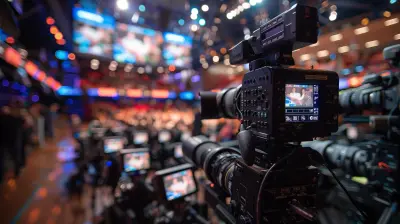
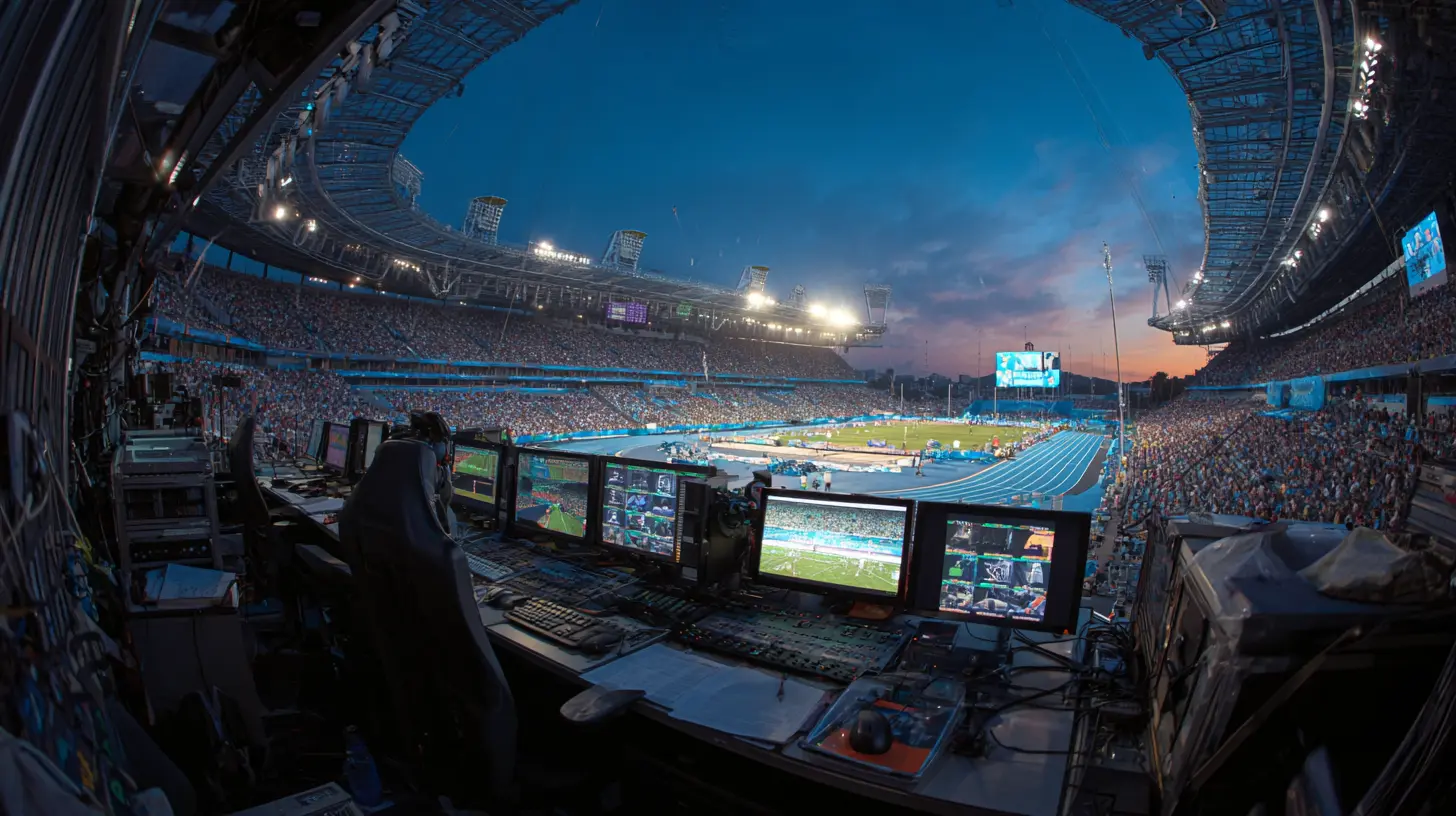
When you watch a match on TV, you see one feed. Behind the scenes, there are over 40 camera feeds, each requiring a dedicated operator, a routing path, and a backup. The broadcast compound outside the stadium looks like a small city of trailers filled with monitors, fiber optic cables, and generators.The 4K HDR and 5G Latency Problem
In 2026, the standard is 4K HDR with high frame rates. But the real challenge is latency. For live betting and real-time stats, broadcasters are pushing for sub-second delay between the actual event and the viewer's screen. This is incredibly difficult because the video signal has to be encoded, transmitted, compressed, and decoded. Any error in that chain causes a freeze frame, which for a sports fan is unacceptable.The solution has been the use of dedicated fiber networks rather than public internet. The host cities for the 2026 World Cup have invested heavily in laying temporary fiber lines that run directly from the stadium to the international broadcast hubs. This is why you see those massive spools of orange cable being laid along city streets weeks before the event. It is not for the local internet. It is for the broadcast.
The Director's Role as a Choreographer
The most underappreciated person in the stadium is the TV director. They sit in a dark truck, looking at a wall of monitors, and they have to decide in real time which camera angle tells the story best. A good director knows the sport deeply. They know that after a goal, the first replay should be the goalkeeper's reaction, not the scorer's celebration, because that is where the emotion is. They also know when to cut away from the action to show a manager's tactical instructions on the sideline, because that adds context.A common misconception is that more cameras mean better coverage. That is false. Too many cameras can confuse the director. The best broadcasts use a limited set of high-quality angles and switch between them with intention. In 2026, expect to see more use of "tactical cameras" that provide a wide, high-angle view of the entire pitch. This helps viewers understand formations and spacing, but it is terrible for following the ball. The director has to balance the aesthetic of the wide shot with the practicality of the close-up.

Player Welfare and Medical Protocols
The physical toll of a major tournament is enormous. In a World Cup year, top players can play up to 70 matches across club and country. The behind-the-scenes medical staff are not just treating injuries; they are managing fatigue, nutrition, and mental health.The Hidden Injury Data
Every professional team uses GPS trackers during training and matches. These trackers measure sprint distance, acceleration, and heart rate variability. The data is analyzed in real time by sports scientists on the bench. If a player's high-speed running distance drops below a certain threshold in the first half, the scientist tells the coach that the player is fatigued and at risk of injury. The coach then has a decision: substitute the player early or push them for another ten minutes.In 2026, this data is also being shared with the tournament medical officers, but only with the team's consent. There is a constant tension between transparency and competitive advantage. If a team reveals that their star player has a hamstring issue, the opposing team will target that player with physical challenges. So teams often hide minor injuries until the last possible moment.
The Concussion Protocol Gap
Concussion management is still the most controversial area. The current protocols require a player to leave the field for a 10-minute assessment if a head injury is suspected. But in high-stakes matches, players and coaches sometimes pressure the medical staff to clear the player quickly. The behind-the-scenes reality is that the independent spotter, who watches video feeds from a separate room, has the authority to stop the game if they see a player showing signs of a concussion that the on-field referee missed.This creates a power struggle. The spotter is not part of the team. They are employed by the league or tournament. Their job is to protect the player, even if it means removing a star player from a final. In 2026, expect to see more spotters and better video review tools, but do not expect the controversy to end. The trade-off between player safety and the entertainment value of having the best players on the pitch is a fundamental conflict that cannot be fully resolved.
Hospitality and the Fan Experience Economy
The biggest revenue stream for event organizers is not tickets. It is hospitality. Corporate suites, VIP lounges, and premium experiences generate three to four times more revenue than standard seats. Behind the scenes, this involves a separate logistics chain for food, beverage, and concierge services.The Menu Engineering
In 2026, the trend is hyper-local food. The World Cup matches in Mexico will feature gourmet tacos and local craft beers. In Canada, expect poutine and maple-infused dishes. But this is not just about offering local flavor. It is about managing supply chains. A stadium that normally serves 20,000 hot dogs has to suddenly handle 70,000 portions of a specific dish. The kitchen operations run 24 hours before the event, pre-cooking and flash-freezing items that will be reheated in convection ovens at the exact moment of service.The common mistake hospitality buyers make is assuming that the most expensive package is the best. Often, the mid-tier "club" package offers better sightlines and easier access to food than the top-tier "presidential" suite, which is far from the pitch and feels like a boardroom. The best advice is to visit the stadium beforehand, if possible, and check the actual view from the seat, not just the brochure.
The Queue Management Science
Another hidden operation is bathroom and concession queue management. Data analysts use historical data to predict exactly when fans will rush to the restrooms during halftime. They then adjust staffing levels and open temporary facilities. In 2026, some venues are testing an app that lets you pre-order food and drinks for pickup at a specific time, reducing wait times. But this only works if the kitchen can handle the order spike. If too many fans pre-order for the 15th minute of the match, the system crashes. The behind-the-scenes staff have to throttle the app, allowing pre-orders only during specific time windows.
Sponsorship Activation and Brand Integration
Sponsors pay hundreds of millions of dollars for the right to be associated with a major event. But the actual value comes from "activation," which is the physical and digital experience they create for fans. This is where many brands fail.The Ambush Marketing Trap
Ambush marketing is when a non-sponsor tries to associate itself with the event without paying. For example, a beverage company that is not a sponsor might hand out free samples outside the stadium, hoping fans will bring them inside. The organizers have teams of lawyers and brand police who patrol the perimeter to stop this. They will confiscate products and even detain people distributing them.For brands that are official sponsors, the mistake is being too passive. Simply putting a logo on a banner is worthless. The best activations in 2026 will be interactive. For example, a tire company sponsoring a football event might set up a simulator where fans can "drive" a virtual bus through the host city, picking up players. This creates a memorable experience that ties the brand to the event's excitement.
The Digital Overlay
The most sophisticated sponsorship integration happens on the broadcast itself. Using virtual advertising technology, broadcasters can superimpose different ads for different regions. A viewer in Japan sees a Japanese car ad on the digital perimeter boards, while a viewer in Brazil sees a Brazilian bank ad, even though they are watching the same live feed. This is done in real time using pixel-tracking software. The challenge is that the system occasionally glitches, showing the wrong ad or a blurred image. The behind-the-scenes technicians monitor this constantly, ready to switch to a backup feed if the overlay fails.The Environmental and Legacy Pressure
Every major event in 2026 is under intense scrutiny for its carbon footprint. The FIFA World Cup across three countries is particularly problematic because of the massive air travel involved. Organizers are countering this with carbon offset programs, but the real behind-the-scenes work is in reducing waste.The Single-Use Plastic Ban
Stadiums are moving to reusable cup systems. You pay a deposit for a cup, and when you return it to a collection point, you get your money back. The cups are then washed in industrial dishwashers and reused. This sounds simple, but it requires a complex reverse logistics network. The cups have RFID tags to track their location. If too many cups go missing, the system loses money. In practice, this works best in stadiums with a high density of collection points. In sprawling outdoor venues, fans often throw the cups in the trash, defeating the purpose.The Legacy Question
The biggest critique of mega-events is the "white elephant" problem, where stadiums built for a tournament are abandoned afterward. In 2026, the Olympic venues in Milan and Cortina are mostly existing facilities or temporary structures. This is a deliberate shift away from the massive construction projects of previous Games. The behind-the-scenes planning involves agreements with local clubs and communities to ensure that every permanent venue has a post-event tenant. If a venue does not have a viable long-term use, it is built as a temporary structure that can be dismantled and recycled.
Common Misconceptions and Practical Takeaways
There are several myths about major sports events that persist despite evidence to the contrary.First, people assume that tickets are cheaper closer to the event date. The opposite is usually true. The official resale platforms adjust prices dynamically based on demand. For a World Cup final, prices only go up as the match approaches. If you want a bargain, buy early for group-stage matches in less popular cities, or wait until the day of the match when last-minute tickets are released from corporate holds, but that is a gamble.
Second, people think that arriving early to the stadium is enough. In 2026, with biometric checks and multiple security layers, you should arrive at least 90 minutes before kickoff for a standard match and 2 hours for a final. The worst mistake is bringing a bag that is larger than the permitted size. Most venues in 2026 have a strict "clear bag" policy. If you show up with a backpack, you will have to check it at a separate facility or throw it away.
Third, there is a misconception that the event organizers control everything. They do not. They control the stadium and the immediate perimeter. But the surrounding city, the transportation network, and the weather are outside their control. In 2026, expect more disruption from climate-related events, such as extreme heat or sudden storms. The best organizers have contingency plans, but those plans often involve delaying matches or moving them to alternate venues, which is a logistical nightmare.
What to Watch For in 2026
If you want to appreciate the behind-the-scenes effort, watch the non-match moments. Watch the ground staff during warm-ups. They are not just picking up balls. They are checking the pitch for divots and repairing them in real time. Watch the fourth official during a VAR review. They are communicating with a team of video referees who are analyzing multiple angles. Watch the camera operators during a goal celebration. They are trained to follow the players without bumping into each other, a dance that requires months of rehearsal.The hottest sports events in 2026 will not be remembered for the scores alone. They will be remembered for how smoothly they ran, how safe the fans felt, and how the human drama of sport was enhanced by the invisible machinery behind it. The next time you sit in a stadium or in front of a screen, take a moment to appreciate the thousands of people working in the shadows. They are the unsung athletes of the event, and their performance determines whether you have a good day or a nightmare.
all images in this post were generated using AI tools
Category:
Sports Events CalendarAuthor:

Frankie Bailey
Discussion
rate this article
1 comments
Presley Barlow
This article highlights the intricate dynamics that shape major sports events, revealing not just the thrilling competitions but also the behind-the-scenes efforts that make these experiences unforgettable for fans and athletes alike.
September 13, 2026 at 3:15 AM
Frankie Bailey
Thanks for your thoughts! I'm glad you enjoyed the exploration of what goes on behind the scenes. It's fascinating how much effort goes into creating those unforgettable moments.