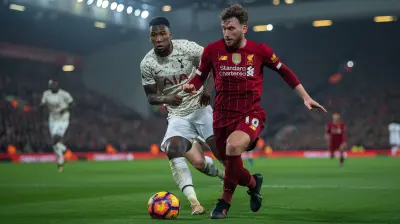
Post-Match Breakdown: What Went Wrong for the Losing Side?
23 May 2026
Ever watched a game where everything just fell apart for one team? You sit there wondering, “What the heck happened?” The players looked lost, the tactics seemed off, and the coach appeared more confused than a cat in a dog park. Yup — we've all been there. Whether you're a die-hard sports fan, a couch coach, or someone who just loves the drama of a good post-match breakdown, this is for you.
Let's dive deep into the real reasons teams lose — not just chalk it up to “bad luck” or “off days.” There’s always a bigger picture, and we're about to paint it, one stroke at a time.
The Tactical Tornado: Game Plan Gone Wrong
Lack of Adaptability
One of the first things that can sink a team faster than a leaky boat? Sticking to a rigid game plan even when it’s clearly not working. Coaches sometimes fall in love with “the system” and forget that flexibility is the name of the game.Think about it — if the opposition counters your high press with long balls over the top, and you keep pressing high, you're basically asking for trouble. Sometimes, what works on paper turns into a trainwreck on the field.
Poor In-Game Management
How many times have we seen the losing side make late substitutions — way too late? Or worse, the wrong substitutions? Coaching isn’t just about preparing a team before the whistle blows; it’s also about reading the game and reacting on the fly.When the manager fails to sense momentum shifts, ignores tired legs, or misreads the opponent's adjustments, it’s game over — literally.
Mental Meltdown: The Psychology of Losing
Overconfidence or Intimidation?
Sometimes a team walks into a match already carrying the emotional baggage of past wins or losses — and that can seriously mess with their heads. Overconfidence leads to sloppiness. On the flip side, being intimidated by the opponent shrinks the team’s presence on the pitch.Remember — confidence is a double-edged sword. Handle it carefully.
Loss of Focus
One error often leads to another. You’ve seen it. One slip-up, one missed tackle, one poor clearance — and suddenly the team unravels. It’s like watching a sweater being pulled apart thread by thread.Once a team starts focusing more on the mistake than the moment, you’re in trouble. Momentum in sports is real, folks.
Individual Errors: The Big Blunders
Defensive Slip-Ups
The cornerstone of any solid performance is a reliable defense. But when defenders make errors — whether it’s a missed tackle, ball-watching, poor positioning, or even a lazy backpass — it’s costly. One lapse and boom! There’s a striker celebrating in your net.And don’t get us started on own goals. Painful.
Wasteful Offense
Sure, they created chances. But did they take them? Nope. Shooting straight at the keeper, ballooning it into Row Z, or overcomplicating things in the final third — it’s all part of the recipe for a loss.The goalposts don’t move, folks. You’ve got to hit the target.
Physical Fatigue: Running on Empty
Fitness Levels
If you can’t put in a solid 90-minute shift, you’re setting yourself up to be outpaced and outplayed. That last 15-20 minutes of a game? That’s where winners are made — and losers are exposed.Teams that fade physically often start playing reactive football. Retreating deeper, missing tackles, and failing to close down space… it’s like watching a battery slowly die.
Injuries and Returnees
Coming into a big match with key players recovering from injury never bodes well. They’re rusty. They lack sharpness. And if they’re not at 100%, neither is the team.Also, patchwork lineups hurt team chemistry. You can’t expect magic when the magician’s down.
The Opposition: Give Credit Where It’s Due
Let’s be real — sometimes the other side is just better. Better tactics, better organization, better execution. They came prepared, and they wanted it more.Maybe they exploited a known weakness. Maybe their press suffocated your midfield. Or maybe their star player just had a game for the ages. It happens.
It’s not always about what you did wrong; sometimes it’s about what they did right.
The Ref Factor: Controversial Calls
We try not to blame the refs — we really do. But occasionally, a dodgy penalty or missed foul can swing the momentum completely.Did it cost the losing team the game? Maybe, maybe not. But controversial decisions do mess with a team's mindset. It can be hard to stay composed when you feel the whistle’s working against you.
Still, good teams find a way to play through adversity. Poor teams let it derail them.
Statistical Black Hole: Ignoring the Numbers
Possession Means Nothing Without Purpose
The losing side often looks good on paper — more possession, more passes, more shots. But were they efficient? Or were they just controlling the ball with zero penetration?It’s like owning a Ferrari and never leaving the driveway.
Defensive Stats Don’t Lie
Look at the basics: tackles won, clearances, interceptions, duels. If a team is losing most of those, they’re basically passengers in their own game. Numbers don’t lie — they tell the story that eyes sometimes miss.Lack of Leadership on the Pitch
Captain Invisible
Big matches require big voices. When heads start dropping and tempers rise, strong leadership keeps the ship steady. But when the captain goes quiet or loses control, the whole team feels it.You need someone rallying the troops, organizing from the back, and leading by example. Without that, chaos creeps in.
The X-Factor: Intangibles
Lack of Hunger
Sometimes, it just feels like the losing side didn’t want it enough. There’s no spark, no fight, no urgency. Maybe they were playing not to lose instead of playing to win.In sports, passion often beats precision.
Team Chemistry
The invisible thread that ties everything together. You can have 11 talented individuals, but if they don’t play as a unit, it shows. Miscommunication, clashing egos, unclear roles — it all adds up to broken plays and broken spirits.Lessons for the Road Ahead
Accountability Over Excuses
After a loss, there’s a tendency to play the blame game — the ref, the weather, the pitch. But growth only comes when teams own their mistakes and learn from them.Review the tape. Repeat the drills. Revamp the strategy. That’s how bounce-backs are born.
Don’t Throw Out the Blueprint
Sometimes a loss exposes faults in an otherwise solid foundation. Don’t burn the whole thing down after one bad night. Make tweaks, not overhauls. Keep the faith, but fix the flaws.Final Whistle Thoughts
Losses hurt — especially in high-stakes games. But every defeat has a story, a lesson, a turning point. The key is recognizing what went wrong, from the tactical choices to the mental lapses, and using that knowledge to come back stronger.Because in sports, as in life, it’s not just about how you fall — it’s about how you rise after.
Got a game in mind where one side crashed and burned? Let’s break it down together in the comments. I’ll bring the popcorn, you bring the theories.
all images in this post were generated using AI tools
Category:
Post Match AnalysisAuthor:

Frankie Bailey
Discussion
rate this article
1 comments
Zelda Jenkins
Tough match, but lessons for improvement.
May 29, 2026 at 10:58 AM
Frankie Bailey
Absolutely, every challenge is an opportunity to grow. We'll learn from this and come back stronger.