Why 2027 Could Be a Pivotal Year in Global Sports
3 September 2026
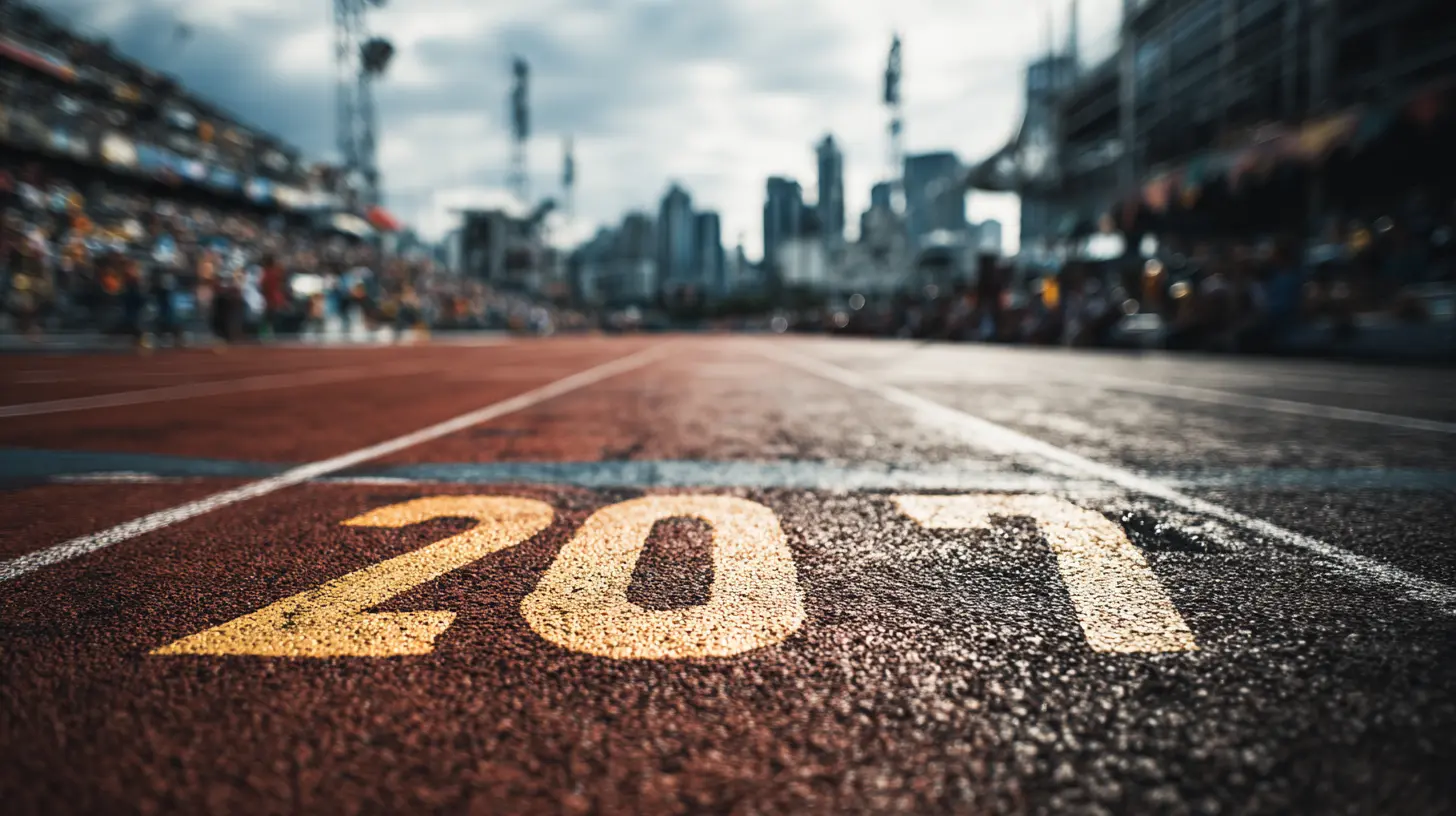
Every few decades, the sports calendar aligns in a way that feels less like a sequence of events and more like a pressure test for the entire industry. 2027 is shaping up to be exactly that kind of year. It is not just another cycle of World Cups and championships. It is a convergence point where financial models, labor relations, geopolitical tensions, and technological disruption will collide. For fans, athletes, and administrators, understanding why this specific year matters is not about predicting scores. It is about recognizing the structural shifts that will define the next generation of competition.
The easy argument is that 2027 simply has a crowded schedule. The FIFA Women's World Cup, the Rugby World Cup, the ICC Men's Cricket World Cup, and major continental tournaments in football all fall within a twelve-month window. But crowded calendars have happened before. What makes 2027 different is the context surrounding those events. The financial stakes have never been higher, the political pressure on host nations has never been more intense, and the alternative models for watching sports have never been more viable. This is the year when the old guard either adapts to a fragmented media landscape or loses its grip on the next generation of fans.
The real story of 2027 is not the events themselves. It is the decisions made in boardrooms and government offices months before the opening ceremonies. Those decisions will determine whether the sports economy remains a winner-take-all system or finally cracks open to allow for more distributed growth.
The Quadrennial Bottleneck
Let us start with the obvious structural problem. 2027 is the year when three of the world's biggest single-sport events happen within roughly six months of each other. The Rugby World Cup in Australia, the Cricket World Cup in South Africa, and the Women's World Cup in Brazil are all scheduled for the same calendar year. Add the men's football continental championships in Europe and South America, and you have a logjam that was not created by accident but by historical cycles that have never been synchronized before.
This is a sponsorship nightmare. Brands that traditionally spend heavily on one major event are now forced to choose between three or four. The old model of a global sponsorship portfolio assumed that major events would be spaced out enough to allow for proper activation. That assumption no longer holds. A company like a major beverage brand or an automotive manufacturer cannot run three separate multi-million-dollar campaigns in the same year without cannibalizing its own marketing budget. The result will be a bidding war for attention, and the events that lose that war will see lower broadcast rights fees in the next cycle.
For broadcasters, the bottleneck is even worse. Linear television still generates the majority of sports revenue, but the audience is aging. Younger viewers are not watching live broadcasts in the same numbers. When three major events compete for the same shrinking pool of live viewers, the ratings for each one suffer. This is not a prediction of failure. It is a simple matter of attention economics. A fan who watches twenty hours of cricket in October is less likely to watch twenty hours of rugby in September, no matter how good the product is.
The solution that many administrators are quietly considering is a shift away from the fixed four-year cycle. Some have floated the idea of moving certain events to odd-numbered years to reduce congestion. But that would require breaking contracts with broadcasters and sponsors that run through 2028 or beyond. So 2027 will be the test case for whether the current cycle is sustainable. If ratings and sponsorship revenue dip across the board, expect a major realignment of the global calendar by 2030.
The Women's Game Reaches Critical Mass
The FIFA Women's World Cup in Brazil is arguably the most significant single event of 2027, but not for the reasons you might think. The growth of women's football has been steady for a decade. Attendance records have been broken, broadcast deals have improved, and the quality of play has risen dramatically. But 2027 is the first time a Women's World Cup will be held in a country where football is a religion and where the men's national team has historically dominated the global conversation.
Brazil brings a unique set of pressures. The infrastructure is there, but so are the expectations. A poorly organized tournament would set back the women's game in South America for years. A well-organized tournament, on the other hand, could create a template for how to host a major women's event in a football-mad developing nation. The key metric will not be goals scored or attendance numbers. It will be the quality of the television production and the willingness of local broadcasters to treat the tournament with the same seriousness as the men's World Cup.
There is also a labor angle that cannot be ignored. The collective bargaining agreements for women's national teams in several major countries expire around this time. The players have been clear that they want revenue sharing and equal conditions, not just equal pay in name. In 2027, the players will have the leverage of a World Cup year to push those demands. If the federations resist, the public relations damage will be severe. If they concede, it will set a new standard for how women's sports are financed globally.
The mistake that administrators often make is treating the women's game as a smaller version of the men's game. It is not. The audience is different, the sponsorship opportunities are different, and the media consumption patterns are different. In 2027, the successful federations will be the ones that stop trying to replicate the men's model and start building a separate economic engine that recognizes the unique value of women's athletes as role models and influencers.
The Host Nation Dilemma
South Africa hosting the Cricket World Cup and Australia hosting the Rugby World Cup in the same year presents a fascinating contrast in host nation strategy. Australia is a wealthy, established sports market with world-class infrastructure and a population that will show up for almost any major event. South Africa is a middle-income country with significant infrastructure challenges and a population that is passionate about cricket but faces economic barriers to attending matches.
This is not a criticism of South Africa. It is an observation about the changing economics of hosting. The old model, where a host nation recoups its investment through tourism and infrastructure legacy, is largely broken. The new model requires host nations to think of the event as a marketing expense, not a revenue generator. Australia can afford that expense. South Africa cannot, unless the International Cricket Council provides significant financial guarantees.
The risk for South Africa is that empty stadiums will dominate the global narrative, even if the cricket is excellent. The risk for Australia is the opposite. Stadiums will be full, but the event might feel too safe, too corporate, and too similar to every other major sporting event that Australia hosts. The best outcome for both would be a middle ground, where South Africa uses the event to showcase its ability to organize on a global scale, and Australia uses the event to experiment with new fan engagement technologies.
There is also a geopolitical layer that is easy to overlook. 2027 will be the first major Cricket World Cup since the sport's governance was fully consolidated under a single body. The financial power in cricket has shifted decisively toward India, and that shift will be visible in South Africa. The broadcast deals, the sponsorship inventory, and even the scheduling of matches will all reflect the preferences of the Indian market. This is not inherently good or bad. It is simply the reality of a sport where one country generates the majority of the revenue. But it creates a tension between the global nature of the event and the commercial imperative to cater to one dominant audience.
The Technology Tipping Point
By 2027, the debate over whether technology enhances or ruins sports will reach a boiling point. We are not talking about goal-line technology or VAR, which are now accepted as standard. We are talking about the integration of artificial intelligence into coaching, the use of biometric data to manage athlete workloads, and the possibility of real-time fan engagement through augmented reality.
The most controversial development will likely be the use of AI for referee decisions. In some sports, the human referee will become a ceremonial figure, with the actual calls being made by algorithms. This will be sold as an improvement in accuracy, and it will be just that. But it will also strip away a layer of human drama that has always been central to sports. The argument over a bad call is part of the fan experience. If the call is always correct, what do fans argue about?
The answer, of course, is that they will argue about the rules themselves. In 2027, expect to see a push for rule changes that are designed to make sports more compatible with AI officiating. This is a dangerous path. Sports are not designed to be perfectly fair. They are designed to be compelling. If the rules are rewritten to suit the capabilities of algorithms, the games will become more sterile.
The practical advice for athletes and teams is to embrace the data but not to become slaves to it. The teams that succeed in 2027 will be those that use biometric data to prevent injuries and optimize training loads, but still allow for the unpredictable creativity that makes sports worth watching. The teams that fail will be those that treat athletes like machines and squeeze the joy out of performance.
The other technological shift is in distribution. By 2027, the streaming wars will have consolidated. The major players will have settled into a rhythm, and the price of sports streaming rights will have stabilized. But the bigger question is whether the traditional broadcast model can survive the fragmentation of audiences. The answer is no, and 2027 will be the year when the last major holdouts admit it.
This does not mean that linear television dies. It means that the premium live events become the only content that linear television can afford to carry. Everything else moves to streaming. The result is a two-tier system where the biggest events are accessible to everyone, but the rest of the sports calendar becomes a pay-to-play proposition. For fans, this means that following a team or a sport will become more expensive. For leagues, this means that the value of a broadcast rights deal will depend less on the total audience and more on the willingness of a small, dedicated group of superfans to pay a premium.
The Athlete as a Free Agent
The traditional model of athlete contracts is already cracking, and 2027 will be the year it breaks in several major sports. The rise of athlete empowerment, where players force trades, sit out seasons, or demand contract renegotiations, has been building for years. In 2027, the combination of a crowded calendar and the financial pressure on teams will create a perfect storm.
Teams will be desperate to manage player workloads during the congested schedule. Players will be desperate to protect their bodies for the next contract. The result will be an increase in load management, which is the practice of resting healthy players during regular season games to keep them fresh for the playoffs. This is already a major issue in basketball. By 2027, it will be a major issue in football, rugby, and cricket.
The trade-off is obvious. Load management reduces the risk of injury and extends careers, but it also reduces the quality of the regular season. Fans who pay premium prices to see star players will be disappointed when those players are rested. The leagues that handle this tension best will be those that create transparent policies about resting players, rather than leaving it to the discretion of individual teams.
There is also a labor rights angle. In 2027, several major collective bargaining agreements will be up for renewal. The players will have leverage because the events are so important that the leagues cannot afford a work stoppage. The owners will have leverage because the crowded calendar means that any lost revenue from a stoppage cannot be made up. The negotiations will be contentious, and the outcomes will set the tone for the next decade of player compensation.
The common mistake that fans make is to side with the players or the owners without understanding the economic realities. The truth is that both sides are responding to the same pressures. The players want to maximize their earning potential in a career that is short and uncertain. The owners want to maximize their return on investment in a business that is becoming more expensive to operate. In 2027, the resolution of these tensions will require a level of creativity that has been absent from labor negotiations in the past.
The Geopolitics of Boycotts and Bids
It is impossible to talk about 2027 without addressing the political environment. The awarding of major sporting events has always been political, but the scrutiny has increased dramatically. In 2027, the events will be held in countries that are all democracies, which is a departure from the recent trend of awarding events to autocratic regimes. This does not mean the politics will be easier. It means the politics will be different.
The expectation for host nations in 2027 is not just that they will put on a good show. It is that they will use the event to advance social causes. This is a double-edged sword. On one hand, it gives athletes a platform to speak out on issues that matter to them. On the other hand, it puts host nations in an impossible position, where they are expected to solve problems that have been festering for decades.
The practical advice for host nations is to be honest about what they can and cannot achieve. A sporting event cannot end poverty or eliminate racial discrimination. It can, however, provide a moment of national unity and a showcase for the best of a country's culture. The mistake is to overpromise and underdeliver. The host nations that succeed in 2027 will be those that set realistic goals for social impact and then exceed them.
There is also the question of the bidding process itself. By 2027, the process for awarding the 2030 and 2034 events will be underway. The decisions made in 2027 will be heavily influenced by the success or failure of the events in that same year. This creates a perverse incentive for host nations to prioritize short-term spectacle over long-term legacy. The structural changes that are needed, such as improved youth sports infrastructure or better athlete welfare programs, are not visible to the average viewer. They are, however, essential for the long-term health of the sport.
The Fan Experience and the Cost of Attendance
The rising cost of attending live sporting events is a crisis that no one in the industry wants to admit. In 2027, the gap between the cost of attending a major event and the average fan's disposable income will be wider than ever. This is a direct result of the financialization of sports, where teams and leagues have become assets to be bought and sold, and the primary way to increase the value of those assets is to increase revenue.
The revenue has to come from somewhere. Broadcast rights are finite. Sponsorship deals are finite. The only unlimited source of revenue is the fan, specifically the fan who is willing to pay for premium experiences. In 2027, expect to see a continued bifurcation of the stadium experience. The lower bowl will be filled with corporate hospitality and premium seating. The upper bowl will be filled with the most passionate fans, who are being priced out of the market.
This is a short-term strategy that will have long-term consequences. If the next generation of fans grows up watching sports on screens because they cannot afford to attend in person, their attachment to the sport will be weaker. The sense of community that comes from attending a live event is irreplaceable. When that is lost, the sport loses its cultural relevance.
The solution is not to lower prices across the board, which would be financially impossible. The solution is to create more tiered pricing options that allow younger fans and lower-income families to attend at least a few events per year. The teams that do this well will build a loyal fan base for the next twenty years. The teams that do not will be left with an aging audience and declining relevance.
The Environmental Question
The carbon footprint of global sports is enormous, and 2027 will be the year when this issue can no longer be ignored. The travel requirements for a World Cup, the energy consumption of stadiums, and the waste generated by fans all contribute to a significant environmental impact. The industry has been slow to address this, partly because the solutions are expensive and partly because there is no consensus on who should pay.
The trade-off is between the global nature of sports and the local nature of environmental impact. A World Cup that is held in one country reduces the travel footprint compared to a World Cup that is held in multiple countries. But a single-country World Cup also concentrates the environmental damage in one place. There is no easy answer.
The practical approach for 2027 is to focus on the low-hanging fruit. Reducing single-use plastics, improving public transportation to stadiums, and using renewable energy for stadium operations are all achievable goals. The mistake is to think that these small steps are enough. The industry needs to have a serious conversation about the future of global travel for sporting events. Whether that means fewer international events or a greater reliance on virtual attendance is a question that will define the next decade.
The Athlete's Mental Health
The pressure on athletes in 2027 will be immense. The crowded calendar means more travel, less rest, and more media obligations. The rise of social media means that every mistake is magnified and every personal struggle is public. The expectation to perform at the highest level while also being a role model and an activist is a burden that few can handle without support.
The good news is that the conversation around mental health in sports has improved dramatically. The stigma is fading, and more athletes are speaking openly about their struggles. The bad news is that the support systems are still inadequate. In 2027, the athletes who thrive will be those who have built strong support networks before the pressure peaks. The athletes who struggle will be those who try to handle everything alone.
The advice for teams and federations is to invest in mental health resources with the same seriousness as physical training. This is not a soft issue. It is a performance issue. An athlete who is mentally healthy is more consistent, more resilient, and more likely to stay healthy physically. The teams that understand this will have a competitive advantage.
A Year of Reckoning
2027 is not a year to be feared. It is a year to be prepared for. The changes that will happen are not sudden. They are the result of trends that have been building for years. The congestion of the calendar, the pressure on athletes, the fragmentation of the media, and the geopolitical scrutiny are all symptoms of a sports industry that has grown faster than its governance structures.
The best approach for anyone involved in sports, whether as a fan, an athlete, an administrator, or a marketer, is to be flexible. The old rules do not apply. The new rules have not been written yet. The organizations that succeed in 2027 will be those that experiment, that listen to their audiences, and that are willing to challenge the status quo.
The events themselves will be spectacular. The football will be fast, the cricket will be tense, and the rugby will be brutal. But the real drama will happen off the field. 2027 will be the year when the sports industry has to decide what it wants to be when it grows up. The choices made in that year will echo for decades.
all images in this post were generated using AI tools
Category:
Sports Events CalendarAuthor:

Frankie Bailey
Discussion
rate this article
1 comments
Fallon Henderson
The upcoming changes in regulations, technology, and player development could reshape global sports in 2027, influencing everything from fan engagement to athlete performance significantly.
September 10, 2026 at 12:33 PM