When Politics Enters the Locker Room
11 August 2026
Let's cut through the noise right away. The locker room was never a politics-free zone. Anyone who tells you otherwise is either selling nostalgia or hasn't been paying attention. From Jackie Robinson breaking baseball's color barrier to Muhammad Ali refusing the draft, athletes have always carried their politics into the arena. The difference now is that the cameras are inside, the social media feeds are live, and there is no such thing as an off-the-record opinion anymore.
The question isn't whether politics belongs in sports. It is already there, has always been there, and will stay there. The real question is how teams, leagues, and fans handle the collision when personal conviction meets professional obligation. And that is where things get messy, complicated, and genuinely interesting.
The Myth of the Apolitical Athlete
There is a persistent fantasy that athletes should just stick to sports. Shut up, dribble, as the saying goes. But that demand ignores the reality that athletes are human beings with families, communities, and life experiences that shape their worldview. A Black quarterback in the NFL does not stop being a Black man when he steps onto the field. A Latina tennis star does not leave her immigrant parents' struggles in the locker room. A white player from a rural town does not suddenly forget the economic pressures back home.The idea that sports provide a sanctuary from politics is a relatively modern invention. In the 1930s, Jesse Owens' Olympic triumphs in Berlin were inherently political, whether he wanted them to be or not. The Cold War turned every Olympic medal count into a proxy battle between capitalism and communism. The 1980 Olympic boycott was politics in its purest form, and it cost hundreds of athletes their shot at glory.
What has changed is the volume and the speed. In the past, an athlete's political stance might appear in a newspaper column or a post-game interview. Now it is a tweet that goes viral in minutes, a jersey patch that sparks a boycott, a pre-game gesture that dominates the news cycle for a week. The locker room is no longer a private space. It is a content factory, and every player is a potential headline.
The Team Chemistry Problem
Here is the uncomfortable truth that no sports psychologist wants to put on a poster: political disagreement can destroy team chemistry faster than a losing streak. When half the locker room believes the other half is morally bankrupt, the trust required for split-second passes and defensive rotations starts to crack.Consider the practical mechanics of a team sport. You need to trust that the guy next to you will cover your blind spot, block for you, or make the extra pass. That trust is built on shared sacrifice and mutual respect. When a teammate posts something on social media that you find deeply offensive, that respect takes a hit. It does not matter if the post was about tax policy or human rights. The emotional response is the same: I cannot believe you believe that.
Some teams handle this well. The 2020 NBA bubble was a masterclass in navigating political tension. Players wore Black Lives Matter messages on their jerseys, and for the most part, the season went on without imploding. But that was a unique situation. The players were isolated, the league provided structured platforms, and there was a unifying cause that most of the roster supported. The harder test comes when the locker room is genuinely split down the middle.
Let's talk about the NFL's national anthem protests. Colin Kaepernick started kneeling in 2016 to protest police brutality and racial inequality. The gesture was political, yes, but it was also deeply personal and rooted in a specific set of grievances. Within a few seasons, the kneeling became a litmus test for the entire league. Players who knelt were called traitors. Players who stood were called sellouts. Veterans in the locker room had to navigate the tension between supporting their teammates and honoring their own military service. Some teams managed to have honest conversations. Others just avoided the topic and let the silence fester.
The lesson here is that political conversations in the locker room are inevitable, but they do not have to be destructive. The teams that survive these moments are the ones that create space for disagreement without demanding conformity. That sounds easy. It is not.
When the Locker Room Becomes a Battleground
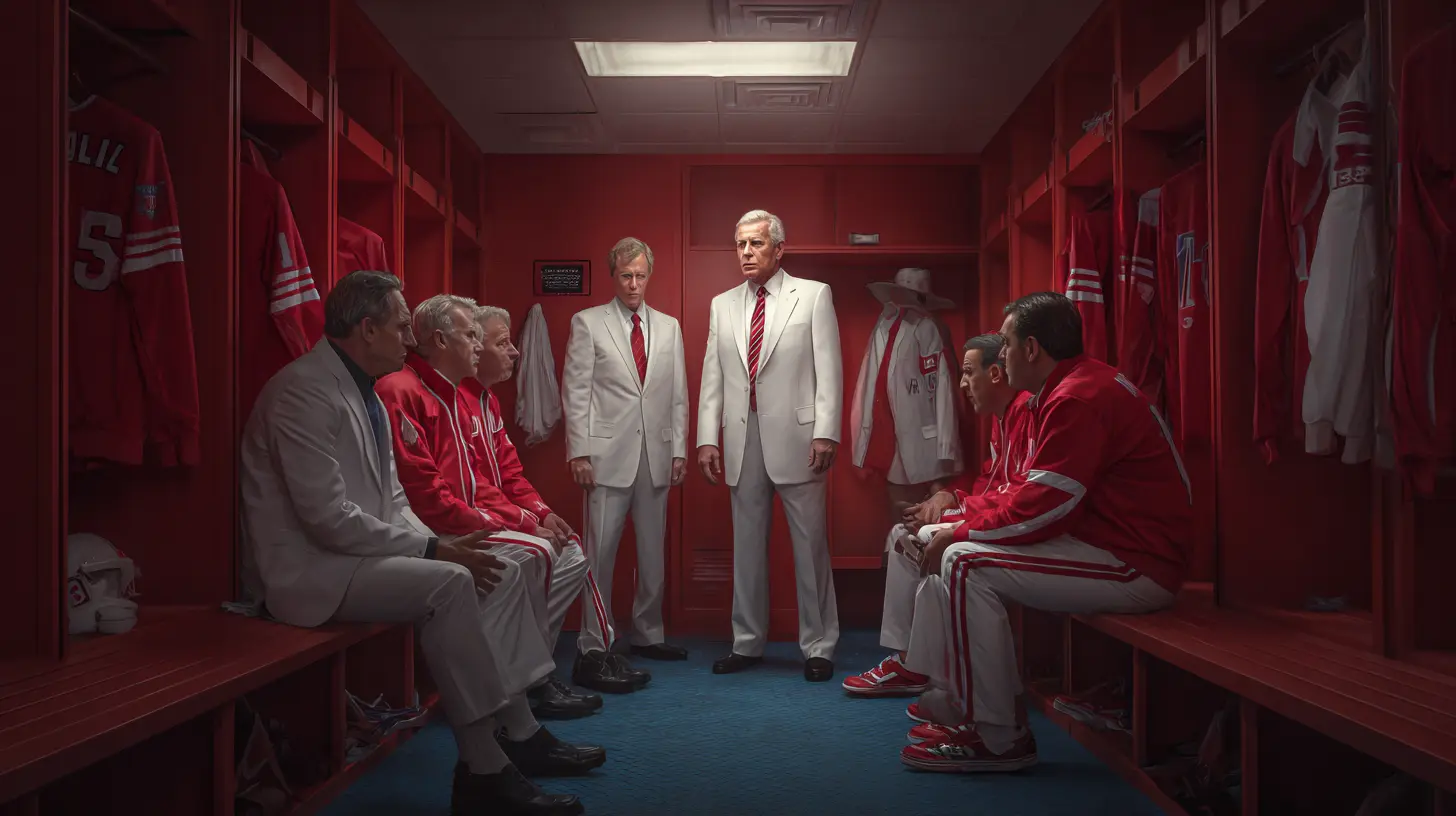
There are moments when the politics inside the locker room is not about external events at all. It is about the players themselves. The fight for LGBTQ inclusion in sports is a perfect example. When the first active male professional team-sport athlete comes out, and that day will come, the locker room dynamic will shift in ways that most organizations are not prepared for.Here is what the research and anecdotal evidence suggest: the younger the player, the more likely they are to be accepting. Generation Z has grown up in a world where same-sex marriage is legal and gender identity is a mainstream topic. The tension will not come from the rookies. It will come from the veterans, the coaches, the front office staff, and the fans. The locker room will become a microcosm of the broader culture war, with the players caught in the middle.
This is where leadership matters more than ever. A head coach who sets a clear standard of respect and professionalism can prevent the locker room from becoming a hostile environment. A coach who lets personal beliefs dictate team policy will create chaos. The best approach, and this is backed by organizational psychology, is to establish baseline behavioral expectations that apply to everyone equally, regardless of their personal politics.
That means no slurs, no harassment, no intimidation. It does not mean everyone has to agree. It means everyone has to be professional. That is a distinction that many people, both inside and outside of sports, fail to grasp.
The Sponsor's Tightrope
Let's talk about money, because that is what really drives the political calculus in professional sports. Teams and leagues are businesses. They depend on sponsors who want to associate their brands with positive, unifying messages. Politics is divisive by nature. When a player takes a political stance, they are not just expressing a personal opinion. They are potentially alienating a segment of the fan base that buys the sponsor's products.This creates a fascinating tension. Sponsors used to demand that athletes stay neutral. That era is over. Now sponsors are expected to take stands on social issues, and they often look to athletes for guidance. Nike's partnership with Colin Kaepernick is the most obvious example. The company took a huge risk by featuring him in an ad campaign, and it paid off financially, even as it sparked boycotts and burned jerseys. But not every sponsor has Nike's brand equity or risk tolerance.
For the athlete, this means navigating a minefield. Take a stance that aligns with the sponsor's values, and you might get a lucrative endorsement deal. Take a stance that does not, and you might find your contract quietly not renewed. The athletes who navigate this successfully are the ones who understand their personal brand and are willing to accept the consequences. The ones who fail are often the ones who try to please everyone and end up pleasing no one.
There is also the question of authenticity. Fans can smell a calculated political statement from a mile away. When an athlete suddenly becomes passionate about a cause right before a contract negotiation, it is transparent and often backfires. The athletes who earn respect are the ones who have been consistent over time, whether that means speaking out on racial justice, environmental issues, or veteran support. Consistency builds credibility. Credibility builds influence.
International Complications
The political landscape becomes even more complicated when you factor in international competition. An American athlete criticizing US foreign policy might be a hero at home or a villain, depending on the audience. But when that same athlete competes in an international tournament, they are representing more than themselves. They are representing a flag, a country, and all of its baggage.Consider the Olympics. The International Olympic Committee has rules against political protest on the field of play. Those rules have been enforced inconsistently, to say the least. Tommie Smith and John Carlos were stripped of their medals for raising their fists in 1968. More recent athletes have faced lighter sanctions or no sanctions at all, depending on the politics of the moment. The message is clear: some protests are tolerated, and some are not. That inconsistency is itself a political statement.
Then there are the countries where the government controls the athletic program. Athletes from authoritarian regimes do not have the luxury of speaking their minds. They are expected to be national heroes, not political commentators. The pressure on those athletes is immense, and the consequences for stepping out of line can be severe. This is not a hypothetical. There are real examples of athletes who have been punished, exiled, or worse for expressing political views that conflicted with their government's position.
For athletes from democratic countries, the challenge is different. They have the freedom to speak, but they also have to deal with the fallout. An NFL player who criticizes the president will get a different reaction than a soccer player in Brazil who criticizes the president. The political culture, the history of protest, and the level of fan tolerance all vary from country to country. What works in one place might be a disaster in another.
The Media's Role in Amplifying Everything
The media loves a political controversy in sports because it drives engagement. Outrage is the currency of the internet. When an athlete makes a political statement, the media does not just report on it. They amplify it, analyze it, and invite commentators to argue about it. This creates a feedback loop that can quickly spiral out of control.Here is the problem: the media often frames political disagreements in sports as binary conflicts. You are either with the athlete or against them. There is no room for nuance. A player who says they support racial justice but also believe in police reform might get attacked by both sides. The media has no interest in presenting a balanced view because a balanced view does not generate clicks.
This puts athletes in an impossible position. If they say nothing, they are criticized for being apathetic. If they say something, they are criticized for being divisive. If they try to explain their position in detail, they are accused of being political. The only way to win is to not play, and that is not an option.
The best athletes have learned to control their own narrative. They use social media to speak directly to their fans, bypassing the traditional media gatekeepers. They release statements on their own platforms, in their own words, without the filter of a press conference or a news article. This approach has its drawbacks, of course. Social media is a firehose of toxicity, and even the most careful statement can be twisted and misrepresented. But for athletes who want to maintain some control over their political identity, direct communication is often the best option.
Practical Advice for Teams and Leagues
So what should a team do when politics enters the locker room? The answer depends on the situation, but there are some general principles that tend to work.First, establish a clear policy before a crisis happens. Teams that wait until a controversy erupts to figure out their approach are doomed to react poorly. The policy should cover social media use, public statements, and pre-game demonstrations. It should be written, communicated clearly, and applied consistently. It should also leave room for individual expression within reasonable bounds.
Second, create forums for discussion. The locker room is not a debate club, but it is a place where people spend a lot of time together. If players want to talk about politics, they should be able to do so in a structured way. Some teams have brought in facilitators to lead conversations about sensitive topics. Others have held team meetings where everyone gets a chance to speak. The goal is not to reach consensus. The goal is to ensure that everyone feels heard and respected.
Third, expect disagreement and plan for it. A team that tries to suppress all political expression will fail. A team that tries to force everyone to agree will fail even harder. The successful approach is to acknowledge that players have different beliefs and to create a culture where those differences do not interfere with the mission on the field. That requires leadership, patience, and a thick skin.
Fourth, remember that the fans are watching. In the age of social media, every locker room conversation has the potential to leak. Players and coaches should assume that anything they say in the locker room might end up on the internet. That does not mean they should censor themselves. It means they should be thoughtful about how they communicate and aware of the potential consequences.
The Future of Politics in Sports
The trend is clear. Politics will continue to enter the locker room, and the volume will only increase. The generation of athletes coming up now has been raised in a hyper-political environment. They are used to taking stands on social media. They are not afraid of controversy. They expect their platforms to be used for more than just selling sneakers.This is not a passing phase. It is a fundamental shift in the relationship between sports, athletes, and society. The old model, where athletes were expected to be silent entertainers, is dead. The new model is still being written, and it is messy, chaotic, and full of contradictions.
The best thing that teams, leagues, and fans can do is accept the reality and adapt. That means supporting athletes who speak out, even when you disagree with them. It means holding athletes accountable for their words and actions, but not demanding that they conform to a single political orthodoxy. It means recognizing that the locker room is not a sanctuary from the world. It is a part of the world, with all its flaws and complexities.
The athletes who thrive in this environment are the ones who are clear about their values and willing to live with the consequences. The teams that thrive are the ones that create a culture of respect and open communication. The fans who thrive are the ones who can separate a player's politics from their performance on the field. That is a tall order, but it is the price of admission for the modern sports experience.
Politics is not going anywhere. The locker room is not going anywhere. The collision between the two is inevitable, uncomfortable, and sometimes infuriating. But it is also what makes sports feel relevant, alive, and connected to the real world. So strap in, because this ride is just getting started.
all images in this post were generated using AI tools
Category:
Sports And PoliticsAuthor:

Frankie Bailey
Discussion
rate this article
1 comments
Sylph Cross
Politics in sports sparks debate, but unity remains essential.
August 11, 2026 at 5:02 AM
Frankie Bailey
Absolutely. While debates are important, finding common ground should always be our focus.