The Ultimate Preview for Major Championships in 2027
28 September 2026
The 2027 sports calendar is still taking shape, but the broad outlines are already visible. FIFA will stage its first 48-team World Cup, spread across North America. The Cricket World Cup heads to southern Africa. The Rugby World Cup returns to Australia. Athletics, swimming, and winter sports each crown their own champions in the same twelve-month window.
That overlap matters more than most previews admit. When five or six marquee events land inside a single year, the story is not just who wins what. It is how athletes, federations, broadcasters, and fans manage a calendar that no longer has a true offseason. This preview looks at what is confirmed, what is likely, and what could go wrong. It also explains how to actually watch and follow these events without burning out or missing the moments that matter.
Why 2027 Is an Unusually Crowded Year
Most years have one or two global championships that dominate attention. 2027 has at least five, and they cluster in ways that create real scheduling pressure.The FIFA World Cup runs from mid-June to mid-July. The Cricket World Cup, hosted by South Africa, Zimbabwe, and Namibia, is expected to occupy a similar window. The Rugby World Cup in Australia typically stretches across September and October. The World Athletics Championships have recently settled into a September slot. The World Aquatics Championships often land in July or August. Add winter sports, which run from October through March, and the year has almost no quiet month.
The Collision Problem
Two events can share a summer without much friction if they draw different audiences. Football and cricket overlap heavily in South Asia, the UK, and parts of Africa. Rugby and football overlap in Europe and the Pacific. Aquatics and athletics overlap among Olympic-sport viewers who follow both.This is not a hypothetical. Broadcasters in these regions will have to choose which event gets the primary channel and which gets the streaming overflow. That decision shapes sponsorship value, highlight-reel placement, and even which sports get front-page coverage in national newspapers.
What This Means for Athletes
Crossover athletes are rare at the elite level, but the fatigue problem is real in a different way. Many top footballers also carry club commitments that stretch from August to May. A World Cup that ends in mid-July leaves roughly three weeks before preseason. Sports scientists have warned for years that this is not enough recovery time for players who go deep in the tournament.The same logic applies to cricketers who play year-round franchise leagues, and to rugby players whose club seasons now run almost continuously. 2027 will test whether federations actually protect player welfare or simply pay lip service to it.
FIFA World Cup 2027: The 48-Team Experiment
This is the headline event of the year, and also the one with the most uncertainty baked in.Format and Hosts
The 2026 World Cup, hosted by the United States, Canada, and Mexico, is the first to use the 48-team format. 2027 is not a World Cup year in the traditional four-year cycle, so this section refers to the tournament cycle that includes the expanded format. If you are reading this expecting a 2027 FIFA World Cup, note that FIFA's men's tournament runs on a four-year cycle and the next edition after 2026 falls in 2030. The 2027 slot in the football calendar belongs to the FIFA Women's World Cup, which will be hosted by Brazil.That is an important correction to make early, because plenty of casual previews get it wrong. The 2027 FIFA Women's World Cup in Brazil is the tournament to circle.
Why Brazil 2027 Matters
Brazil is the first South American host of a Women's World Cup. That is not just a symbolic first. It changes travel logistics, kickoff times, and the kind of crowd atmosphere players will face.South American crowds are loud, close to the pitch, and emotionally invested in ways that differ from the more family-oriented stadium culture in parts of Europe and North America. Players who have not experienced a Copa America or a Libertadores final may find the intensity jarring. Coaches will need to prepare for that, not just tactically but psychologically.
The time zones also matter for viewers. A tournament in Brazil means afternoon and evening kickoffs that land in prime time for North America and late night for Europe and Asia. That is a reversal of the 2023 Women's World Cup in Australia and New Zealand, which forced European viewers to set alarms for 4 a.m. matches.
Tactical Trends to Watch
The 2023 tournament showed a clear shift toward high pressing and quick transitions, even among teams that traditionally sat deep. That trend is likely to continue, but with a twist. The expanded field means more mismatches in the group stage, which rewards teams that can score early and manage minutes.The teams that struggle most in expanded tournaments are usually the ones with thin benches. A 48-team or 32-team format with a congested schedule punishes squads that rely on eleven players. Depth wins tournaments. That has been true for years, and 2027 will reinforce it.
ICC Cricket World Cup 2027: South Africa's Turn
The 2027 Cricket World Cup will be hosted by South Africa, Zimbabwe, and Namibia. It is the first men's World Cup to be shared across three countries in southern Africa, and the first in the region since 2003.Why the Venues Matter
South African pitches are among the most varied in the world. Wanderers in Johannesburg rewards pace and bounce. Newlands in Cape Town offers swing early and turn later. Kingsmead in Durban can be slow and low. Zimbabwe's Harare Sports Club and Bulawayo Athletic Club tend to favor spin as the match progresses. Namibia's Wanderers Cricket Ground in Windhoek is a smaller venue with its own quirks.That variety is a gift for purists and a nightmare for teams that build one-dimensional squads. A side loaded with fast bowlers will thrive in Johannesburg and struggle in Bulawayo. A side built around spin will do the opposite. Selectors will need to think about squad balance in a way that a single-country tournament rarely demands.
The Altitude Factor
Johannesburg sits at roughly 1,750 meters above sea level. The ball travels further, swings less, and tires bowlers faster. Teams that have not played at altitude recently often misjudge lengths in the first ten overs. This is not a small detail. It has decided matches before, and it will again.Format and Qualification
The 2027 tournament is expected to follow the 2023 model: a round-robin group stage followed by knockouts, with qualification split between automatic entry for top-ranked sides and a qualifying pathway for associates. The exact number of teams is likely to remain at 14, though there has been discussion about expansion. Treat any specific number as provisional until the ICC confirms it.Common Mistakes Teams Make in Southern Africa
The biggest one is picking a squad based on reputation rather than conditions. A bowler who averages 22 in England may average 35 in Africa. A batsman who dominates on flat subcontinental tracks may struggle against the moving ball in Cape Town.The second mistake is underestimating travel. South Africa is large. A team that plays in Cape Town, then Durban, then Johannesburg in the space of ten days will spend more time on planes and buses than on the training ground. Recovery and rotation become strategic decisions, not afterthoughts.
Rugby World Cup 2027: Australia's Shot at Redemption
World Rugby has confirmed Australia as host of the 2027 men's Rugby World Cup. It is the third time Australia has hosted the tournament, after 1987 and 2003.What Changes on Australian Soil
Australian rugby crowds are knowledgeable and demanding. They expect running rugby, not just set-piece dominance. The 2003 final between Australia and England was a kick-heavy, tactical affair, and while it was dramatic, it did not reflect the open style Australian fans typically prefer.The 2027 tournament will likely be played in stadiums that range from the cavernous to the intimate. Suncorp Stadium in Brisbane is a cauldron. AAMI Park in Melbourne is smaller but sharper acoustically. The Sydney Football Stadium and Stadium Australia offer different atmospheres entirely.
The Northern Hemisphere Question
European teams have historically struggled in Australian conditions, particularly in the pool stage when the heat and humidity are at their peak. The 2027 tournament is expected to run from late September to late October, which avoids the worst of the Australian summer but still presents warm-weather challenges in the northern states.Teams from the Six Nations will need to decide whether to arrive early for acclimatization or late to preserve peak fitness. Both approaches have worked. Neither is universally correct. The trade-off is between heat adaptation and freshness, and it depends on the squad's age profile and injury history.
Why Depth Wins Again
Rugby World Cups are won by squads, not starting fifteens. The 2019 and 2023 tournaments both showed that teams with genuine rotation options at prop, hooker, and fly-half outlast teams that rely on a single playmaker. Australia's own depth has been questioned in recent cycles. The host nation will need to address that before the tournament, not during it.World Athletics Championships 2027
World Athletics has not yet finalized the host for 2027 at the time of writing, though several cities have expressed interest. What is certain is the timing: the championships will fall in the traditional August or September window.The Sprint Landscape
The post-Usain Bolt era has been defined by unpredictability in the men's 100 and 200 meters. That is likely to continue. The women's sprints have been more stable, with a smaller group of athletes dominating finals, but that too can shift quickly.What matters for 2027 is the pipeline. Athletes who were juniors in 2023 and 2024 will be in their early twenties by 2027, which is often when sprinters make their first real breakthrough. Keep an eye on the World Under-20 Championships in the years leading up to 2027. That is where future finalists announce themselves.
Distance Running and the Super Shoe Era
Road and track distance running has been transformed by advanced footwear technology. World Athletics has introduced rules to limit stack height and plate design, but the shoes still matter enormously. The 2027 championships will be the first full cycle where every major final is run in shoes designed under the current regulations.The practical effect is that times will keep dropping, but the gap between athletes will not necessarily shrink. Shoes help everyone. The differentiator is still training, tactics, and racing intelligence.
World Aquatics Championships 2027
Aquatics has become one of the most reliably entertaining championships on the calendar, partly because swimming finals are short and dramatic, and partly because the sport has genuine global depth.The Post-Phelps, Post-Ledecky Question
Every era of swimming has a dominant figure. When that figure retires, the sport does not collapse. It redistributes. The 2027 championships will likely be the first where the current generation of teenage stars is fully mature, racing against veterans who have held on for one more cycle.That mix is usually good for the sport. Young swimmers bring raw speed and fearlessness. Veterans bring tactical discipline and the ability to peak on the right day. Finals are often decided by hundredths of a second, and experience matters in those moments.
Open Water and the Venue Problem
Open water events depend heavily on the venue. Water temperature, currents, and marine life all affect the race. If the 2027 host city has a challenging open water course, expect surprises. If it has a calm, predictable course, expect the favorites to dominate. Either way, the event is worth watching because it is the least predictable part of the aquatics program.Winter Sports in 2027
The winter sports calendar runs from October 2026 through March 2027, which means it overlaps with the build-up to the summer championships.Alpine Skiing
The 2027 Alpine World Ski Championships are scheduled for Crans-Montana, Switzerland. That is a classic venue with a long history on the World Cup circuit. The course is technical, the snow is usually reliable, and the crowd is knowledgeable.Crans-Montana favors skiers who can handle steep, icy sections and who have the confidence to attack rather than survive. Speed specialists and technical specialists both have chances, but the all-rounders usually win here.
Nordic Skiing
The Nordic World Ski Championships in 2027 will be hosted by Falun, Sweden. Falun is a regular World Cup stop and a proven championship venue. The courses are demanding, and the Swedish crowd is among the most passionate in the sport.Distance races in Falun tend to reward athletes with strong classic technique and the ability to pace themselves over multiple laps. Sprint races favor explosive skiers who can recover quickly between heats.
Biathlon
The Biathlon World Championships in 2027 will be held in Otepaeae, Estonia. This is a smaller venue than some recent hosts, but the Estonian crowd is enthusiastic and the courses are challenging. Shooting conditions can be tricky, especially if wind picks up.Biathlon is the most unpredictable winter sport because shooting introduces a variable that no amount of physical fitness can fully control. That is also why it is so compelling to watch.
How to Actually Follow All of This
The practical challenge for fans is not finding coverage. It is finding coverage without drowning in it.Pick Your Tier
Not every event deserves equal attention. Decide which two or three championships matter most to you, and commit to those. Follow the others through highlights and recaps. Trying to watch everything live is a recipe for burnout and missed sleep.Understand the Time Zones
The 2027 calendar spans North America, South America, Africa, Europe, and Australia. That means no single viewing schedule works for everyone. If you are in Europe, the Women's World Cup in Brazil will be late-night viewing. If you are in Asia, the Rugby World Cup in Australia will be early-morning viewing. Plan accordingly.Use Highlights Wisely
Highlights are not a substitute for watching live sport, but they are an excellent way to stay informed. The key is to watch highlights of events you do not follow closely, and watch live only the events where the drama depends on real-time tension. A penalty shootout loses almost everything in a highlight package. A 100-meter final does not.Avoid the Overload Trap
Sports media will try to convince you that every event is unmissable. It is not. Some group-stage matches are filler. Some early-round athletics heats are processions. The skill is knowing which sessions produce the moments that define the year.What Could Go Wrong
No preview is complete without acknowledging risk.Scheduling Conflicts
If the cricket and football tournaments overlap significantly, broadcasters will face impossible choices. Sponsors may reduce investment in the less-covered event. Fans in overlapping markets may feel forced to pick sides.Political and Logistical Issues
Major championships always carry political risk. Visa delays, security concerns, and infrastructure problems can disrupt even well-planned tournaments. Host nations are aware of this and plan accordingly, but not every risk can be eliminated.Athlete Withdrawals
Injury, fatigue, and personal reasons will remove some stars from the start list. That is normal. What matters is whether the tournaments have enough depth to absorb those absences without losing competitive integrity.Final Thoughts
2027 is not a single championship year. It is a stress test for the entire global sports calendar. The winners will not just be the teams and athletes who lift trophies. They will also be the federations that manage player welfare, the broadcasters that find creative ways to cover overlapping events, and the fans who figure out how to enjoy the spectacle without letting it consume every waking hour.If you are planning to follow any of these championships, start early. Book travel before prices spike. Learn the venues. Understand the conditions. And remember that the best previews are not the ones that predict winners. They are the ones that help you understand why the winners win.
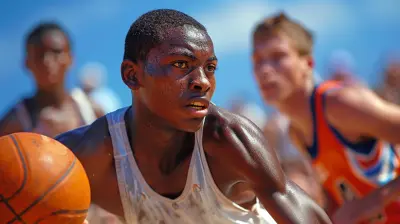
all images in this post were generated using AI tools
Category:
Sports Events CalendarAuthor:

Frankie Bailey