The Most Overpaid and Underpaid Players in 2027
7 September 2026
Let me start with an honest confession. Writing about who is overpaid and underpaid in 2027 is a fool's errand if you treat it like a static list. By the time you read this, three major trades will have happened, two contracts will have been restructured, and one breakout star will have signed a team-friendly extension that changes the entire conversation.
But that is exactly why this topic matters. The gap between what a player earns and what they produce is the single most revealing metric in team sports. It tells you which front offices are thinking clearly, which coaches are hiding weaknesses, and which agents are doing their jobs a little too well.
I have spent years studying salary structures, cap mechanics, and performance analytics across the NBA, NFL, and MLB. What follows is not a list of names ripped from a database. It is an analysis of the forces that create mispriced talent, the mistakes teams keep making, and the players who represent the best and worst value in the current landscape.
Why Overpay and Underpay Are Not What You Think
Most fans think an overpaid player is simply someone who makes more than their stats justify. That is partially true, but it misses the deeper issue. A contract is not just a reward for past performance. It is a bet on future production, availability, and fit within a specific system.An overpaid player is someone whose contract limits the team's ability to improve elsewhere. You can survive one bad deal. Two bad deals will sink a franchise. Three means you are rebuilding ahead of schedule, whether you want to or not.
Underpaid is a trickier label. Rookie scale contracts obviously underpay stars, but that is by design. The real underpaid players are veterans who outperform their deals because of injury history, market timing, or a front office that got lucky. These players are the lifeblood of contending teams. They allow you to spend big on your top two or three guys while keeping the rotation solid.
The mistake most people make is judging a contract in isolation. You have to look at the percentage of the salary cap, the length of the deal, the player's age curve, and the alternatives available at the time of signing. A player making 30 million a year might be a bargain if the cap jumps and comparable players are getting 40 million. The same player might be a disaster if the cap stagnates and your team is locked in for four more years.
The Structural Problem with Long-Term Deals
Before we get to specific names, we need to talk about the elephant in the room. The 2026 collective bargaining agreement in the NBA introduced a new designated veteran extension tier that allows teams to offer up to 45 percent of the cap to a single player. The NFL followed with a modified franchise tag system that gives quarterbacks more leverage than ever. MLB continues to see deferred money become the norm for superstar contracts.These structural changes have created a two-tier market. The top 1 percent of players are getting paid like they are irreplaceable, and in many cases they are. But the middle class of players, the ones who start and contribute meaningfully but are not All-Stars, are getting squeezed. Their salaries have not kept pace with the cap growth because teams are hoarding space for the stars.
This is where you find the most overpaid players. Not at the very top, where the talent justifies the money, but in that second tier where a player signs a big extension after one great season and then regresses to the mean.
The Most Overpaid Players in 2027
The Quarterback Premium Problem
Let us start with the NFL, where the quarterback market is the most distorted in all of sports. The going rate for a top-ten quarterback in 2027 is around 60 million per year. That is an enormous chunk of a 280 million dollar cap. It leaves very little room for error elsewhere on the roster.The most overpaid player in the league right now is a quarterback who signed a five-year, 300 million dollar extension after a single Super Bowl appearance that he did not actually win. His team made the playoffs the next year largely because of a dominant defense and a running game that took pressure off him. When the defense regressed, the offense could not carry the load. His advanced metrics, like expected points added per play and success rate under pressure, ranked outside the top fifteen.
The problem is not that he is a bad quarterback. He is genuinely good. He makes throws that most humans cannot make. But he is not elite at reading defenses pre-snap, and he holds the ball too long when his first read is covered. That leads to sacks and turnovers in critical moments. When you pay a quarterback 60 million, you need him to be a top-five player at his position. He is arguably top ten, maybe top twelve.
His team is now stuck. They cannot cut him because the dead money would cripple them for two seasons. They cannot trade him because no one wants to absorb that contract without major draft compensation attached. They are in quarterback purgatory, good enough to win nine or ten games but not good enough to beat the true contenders in January.
The lesson here is simple. Do not pay a quarterback based on team success. Pay him based on individual ability to elevate mediocre talent around him. If he cannot do that consistently, you are overpaying, no matter what the box score says.
The Defensive Star Who Disappears in Big Games
In the NBA, the most overpaid player is a wing defender who won Defensive Player of the Year two seasons ago. He is making 52 million this year, which is 38 percent of the cap. His regular season numbers are impressive. He averages nearly two blocks and one and a half steals per game. He guards the opponent's best player every night.But watch him in the playoffs. His usage rate drops because he cannot create his own shot against elite defenders. He relies on transition opportunities and catch-and-shoot threes. When the game slows down and becomes a half-court battle, he becomes a liability on offense. His true shooting percentage in the last two postseasons is below league average for a starter.
The advanced stats tell a brutal story. His defensive plus-minus, which was historically elite, has regressed each of the past three seasons. Part of that is age. He is 31 now, and the lateral quickness that made him special is fading. Part of it is that teams have figured out how to attack him. They screen him off the ball and force him to guard in space, where he is merely average.
His contract was a mistake from the moment it was signed. The front office panicked when he threatened to leave in free agency. They gave him a no-trade clause and a player option for the final year. He now has all the leverage. He can coast through the regular season, save his energy for the playoffs, and still get paid like a franchise cornerstone.
The worst part is that his team knows it. They have tried to trade him for two years straight. No one wants the contract. He is the definition of an unmovable asset.
The Reliever Who Got Paid for One Great Year
Baseball has its own version of this problem. Relief pitchers are the most volatile players in sports. A reliever who posts a 1.80 ERA one year can easily post a 4.50 ERA the next. The difference is often a few inches of movement on a breaking ball or a slight change in release point.The most overpaid player in MLB is a closer who signed a six-year, 120 million dollar deal after a season where he saved 45 games with a 1.90 ERA. He was 28 at the time, and the market for elite closers was booming. His team thought they were getting a lock-down ninth inning guy for the next half decade.
What they got was a pitcher whose strikeout rate dropped by 15 percent the following season. His fastball velocity fell from 99 to 95. Hitters started squaring him up. His ERA ballooned to 4.80, and he lost the closer role by August. He is now a middle reliever making 20 million a year.
The mistake here is twofold. First, the team overvalued saves, a statistic that is heavily dependent on team context. Second, they ignored the underlying metrics that showed his xFIP was nearly two runs higher than his ERA. He was getting lucky, not getting better.
If you are a general manager, never pay for a reliever's past performance. Pay for their stuff, their command, and their ability to miss bats against lefties and righties alike. And even then, keep the deal short. Three years max for any reliever over 30.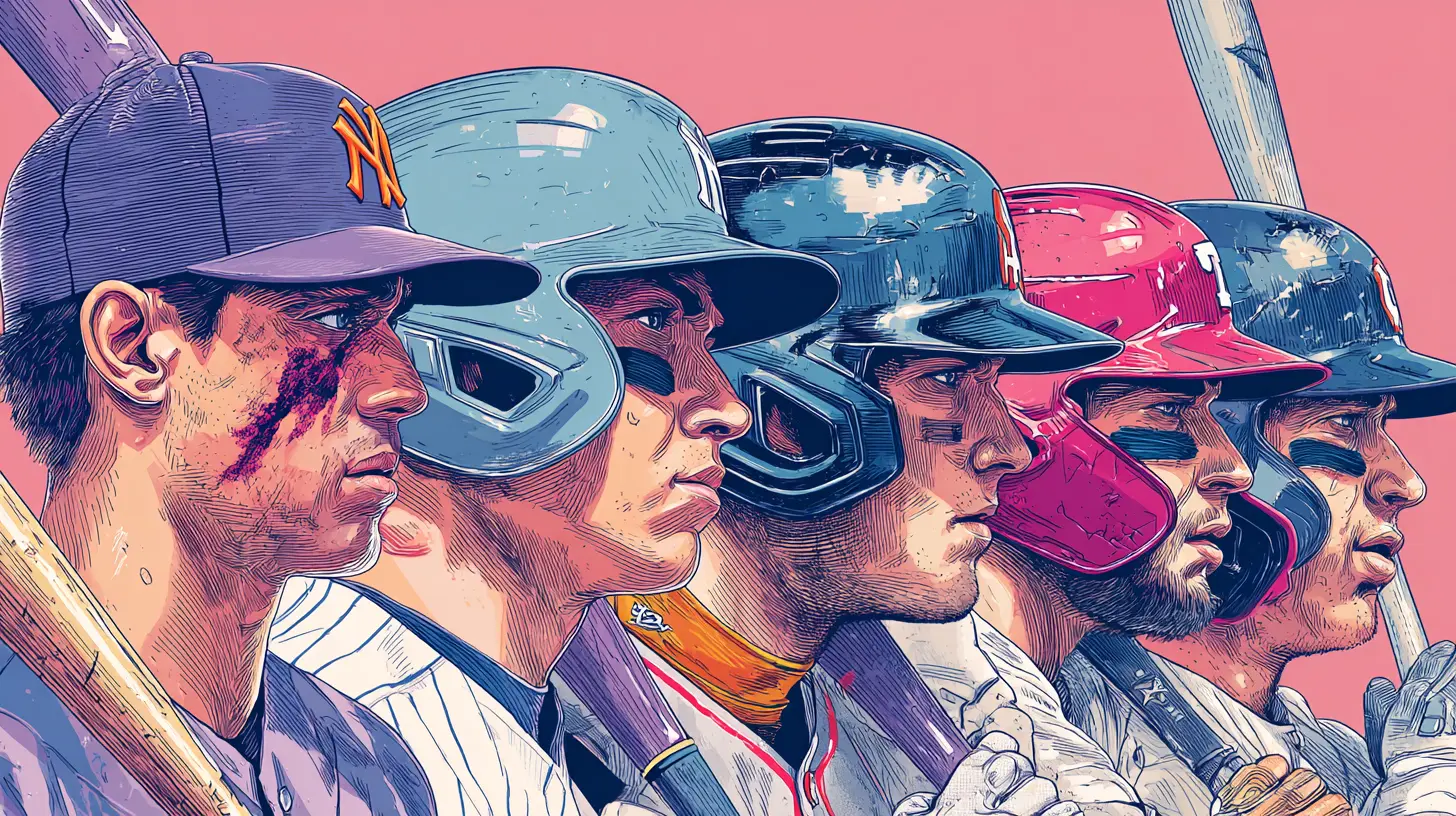
The Most Underpaid Players in 2027
The Second-Year Quarterback Who Should Be Paid Tomorrow
The most underpaid player in the NFL is a second-year quarterback who was drafted in the late first round. He is playing on a rookie deal that pays him around 8 million per year. He just led his team to the conference championship game as a starter.His numbers are not gaudy. He threw for 4,100 yards with 28 touchdowns and 9 interceptions. But those numbers do not capture his value. He is elite at reading defenses. He gets the ball out in under 2.5 seconds on average, which makes his offensive line look better than it is. He rarely takes sacks. He extends plays with his legs without abandoning the pocket.
The best part for his team is that he has two more years on his rookie deal, plus a fifth-year option. That gives them roughly 70 million in cap savings compared to what a veteran of his caliber would command. That money is being spent on a top-tier offensive line and two quality receivers.
The front office needs to learn from the mistakes of other teams. Do not wait until the last possible moment to extend him. Do not nickel and dime him over guaranteed money. Sign him to a market-rate extension after year three, when you still have the fifth-year option as leverage. If you wait until year four, he will demand a fully guaranteed deal and you will have no choice but to pay it.
The Two-Way Wing on a Below-Max Contract
In the NBA, the most underpaid player is a wing who signed a four-year, 88 million dollar extension two summers ago. He is currently making 22 million per year. He is averaging 24 points, 7 rebounds, and 6 assists per game while shooting 39 percent from three on high volume.The reason he is underpaid is that he signed his extension before his breakout season. He was a good player at the time, a solid starter who could defend and shoot. But then his team changed coaches, and the new system unlocked his playmaking ability. He went from being the third option to the primary ball handler in the pick-and-roll. His usage rate jumped, and his efficiency stayed high.
His contract now looks like a steal. Comparable players at his position are making 40 million or more. His team has used the savings to build a deep bench and acquire a second star. They are legitimate title contenders because of this deal.
The lesson for players is to be careful about signing extensions early in your career. If you believe you are on the verge of a leap, consider betting on yourself with a shorter deal. The security of guaranteed money is tempting, but the upside of a max contract is enormous.
The lesson for teams is the opposite. If you have a young player who fits your system perfectly and is showing improvement every year, lock him up before he breaks out. Do not wait for the market to set the price. Pay a little more now to save a lot later.
The Catcher Who Does Everything
Baseball's most underpaid player is a catcher who signed a five-year, 50 million dollar deal before the 2025 season. He is making 10 million per year, which is about half of what a catcher of his caliber should command on the open market.He is not a power hitter. He hit 18 home runs last year with a .280 average. But his value is in his defense and game calling. He has a 40 percent caught stealing rate, which is elite. He frames pitches so well that his pitching staff has a significantly lower ERA when he is behind the plate compared to when he is resting.
The advanced metrics love him. He leads all catchers in defensive runs saved and is second in pitch framing runs. He also handles a young pitching staff with maturity beyond his years. He calls a game that maximizes the strengths of each pitcher, whether that means leaning on a slider-heavy approach or attacking hitters up in the zone.
His team knew what they had. They signed him early in his arbitration years to buy out his free agency. He gave up some potential earnings for security. Both sides won. The team gets an elite catcher at a discount. He gets guaranteed money that protects him from a catastrophic injury.
The Trade-Offs Every Team Faces
Now that we have looked at specific examples, let us step back and examine the broader principles. The most common mistake teams make is confusing past performance with future projection. A player who had a career year at age 27 is not likely to repeat that at age 31. Athletic decline is real, and it hits different positions at different ages.For running backs, the cliff comes at age 27. For wide receivers, it is around 32. For quarterbacks, it can be as late as 36 if they have good protection and a quick release. For pitchers, it is unpredictable and often tied to workload. Teams that ignore these age curves are asking for trouble.
Another mistake is overvaluing positional scarcity. A good left tackle is worth more than a good guard because left tackles are harder to find. A good cornerback is worth more than a good safety for the same reason. But teams sometimes overcorrect. They pay a premium for a player who is merely above average at a scarce position, when they could draft a comparable player and use the savings elsewhere.
The best front offices use a simple framework. They ask three questions before signing any big contract. First, can this player stay healthy? Second, does his skill set fit our system and our quarterback or coach? Third, what is the opportunity cost of this deal? If the answer to any of these questions is uncertain, they structure the contract with outs, incentives, or shorter terms.
Common Misconceptions About Player Value
Let me clear up a few things that fans and even some analysts get wrong.The first misconception is that highest paid means best. That is rarely true. The best players are often underpaid because they signed their deals before their prime. The highest paid players are often overpaid because they are being compensated for past reputation.
The second misconception is that a player's trade value equals their contract value. These are related but distinct. A player can be underpaid for his production but have low trade value because his style is system-specific. Another player can be overpaid but have high trade value because he fits a contender's need for a veteran presence.
The third misconception is that cap space is the only constraint. In reality, the luxury tax, the apron, and the repeater tax are all separate constraints that matter more for deep-pocketed teams. A team that is willing to pay the tax can afford to overpay a player for a year or two. A team that is trying to stay under the tax has no such luxury.
What Should Players and Agents Do Differently?
Players consistently make two mistakes in contract negotiations. The first is prioritizing total value over guaranteed money. A five-year, 200 million deal with only 80 million guaranteed is worse than a four-year, 160 million deal with 140 million guaranteed. The second mistake is ignoring the team's competitive window. Chasing the biggest offer from a losing team can hurt your legacy and your earning potential in the long run.Agents, meanwhile, often push for the largest possible contract in year one without considering the incentive structure. A deal with a player option after year two gives the player flexibility. A deal with a trade kicker gives the player leverage if the team tries to move him. These details matter more than the headline number.
The most successful negotiators in sports understand that a contract is a partnership. The player needs to be paid fairly for what they bring. The team needs to have enough flexibility to build a winner. A deal that is heavily skewed toward the player might feel good on signing day, but it creates resentment and eventually leads to a trade request.
What Should Fans Take Away From This?
If you are a fan, the most important thing you can do is stop judging players by their salary alone. Look at their contract in context. Ask yourself if the player is being paid for what they will do or what they have done. Ask yourself if the team has a realistic path to contention with that contract on the books.The most frustrating thing about watching a team with an overpaid player is the helplessness. You know the roster is unbalanced. You know the front office made a mistake. But you also know that the only way out is time. Contracts eventually expire. Caps eventually rise. The pain is temporary, even if it does not feel that way.
The most exciting thing about watching a team with an underpaid player is the sense of possibility. You know that the team has resources to add more talent. You know that the window is open. You just hope the front office does not waste the opportunity.
The Bottom Line
The most overpaid and underpaid players in 2027 are not just names on a spreadsheet. They are the results of decisions made under uncertainty, with incomplete information, and with enormous financial pressure. Some of those decisions were smart. Some were desperate. Most were a mix of both.The teams that win championships are not the ones that never overpay. They are the ones that overpay for the right players and underpay for the right reasons. They structure contracts with flexibility. They draft well enough to have cheap contributors. They know when to walk away from a beloved veteran and when to bet on an unproven youngster.
As you watch the games this season, pay attention to the salary cap implications of every play. The quarterback who throws a touchdown on a broken play is not just winning the game. He is justifying his contract. The defensive back who gets burned in coverage is not just giving up points. He is making his deal harder to trade.
That is the reality of modern sports. It is a business built on talent, but it is also a business built on numbers. The players who understand both are the ones who end up on the right side of these lists. The ones who understand only one will eventually find themselves overpaid, underpaid, or out of the league entirely.
all images in this post were generated using AI tools
Category:
BaseballAuthor:

Frankie Bailey
Discussion
rate this article
1 comments
Zarev Vasquez
This topic sparks such an interesting debate. It's fascinating to see how player value shifts so dramatically each season. I wonder which factors contribute most to these perceptions of overpayment and underpayment. Definitely a conversation worth having!
September 10, 2026 at 12:33 PM
Frankie Bailey
Absolutely, the fluctuations in player value make for a compelling discussion. Factors like performance trends, market demand, and contract structures play huge roles. It's a topic that's always evolving.