How Sports Broadcasting Keeps Up with Fast-Paced Action in Sports
14 February 2026
If you've ever sat glued to your TV during a high-octane basketball game or an edge-of-your-seat football match, you’ve probably wondered: How do sports broadcasters manage to keep up with all the fast-paced action? It seems almost magical how they seamlessly show every critical moment, replay the best plays, and give you all the information you need in real-time.
The world of sports broadcasting is complex, and it’s evolving rapidly to keep up with technology and the increasing pace of sports. From innovative camera technologies to expert commentators, there's a lot that goes on behind the scenes to bring the game to life in your living room.
In this article, we're diving deep into how sports broadcasting handles the chaos of fast-paced sports and ensures you don’t miss a thing. Buckle up, because it’s going to be a wild ride!
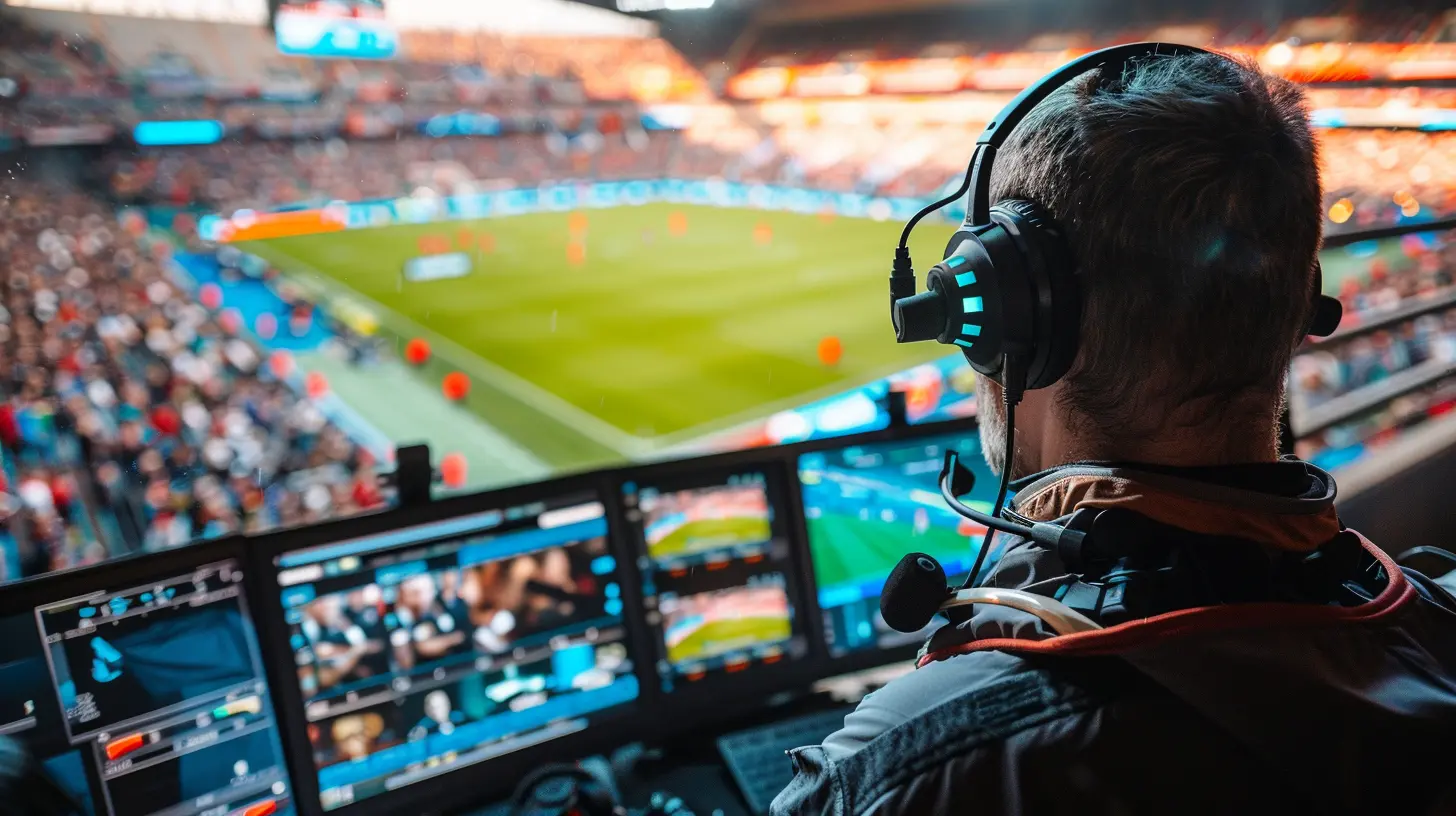
The Evolution of Sports Broadcasting
From Radio to Real-Time HD Streaming
Sports broadcasting has come a long way since its inception. Remember the days when people huddled around radios to listen to play-by-play announcers describe the game? Well, we’ve come a long way from there! The first sports broadcast was a simple radio commentary of a baseball game in 1921, and now we have real-time HD streaming, slow-motion replays, multiple camera angles, and even virtual reality experiences.Back then, the focus was on narration—a good announcer could paint vivid pictures with his words. But today, it's about immersion. Broadcasters now have to juggle visuals, graphics, and live commentary in real-time, all while ensuring that viewers are engaged and informed.
So, how exactly do broadcasters keep up with the breakneck speed of modern sports?
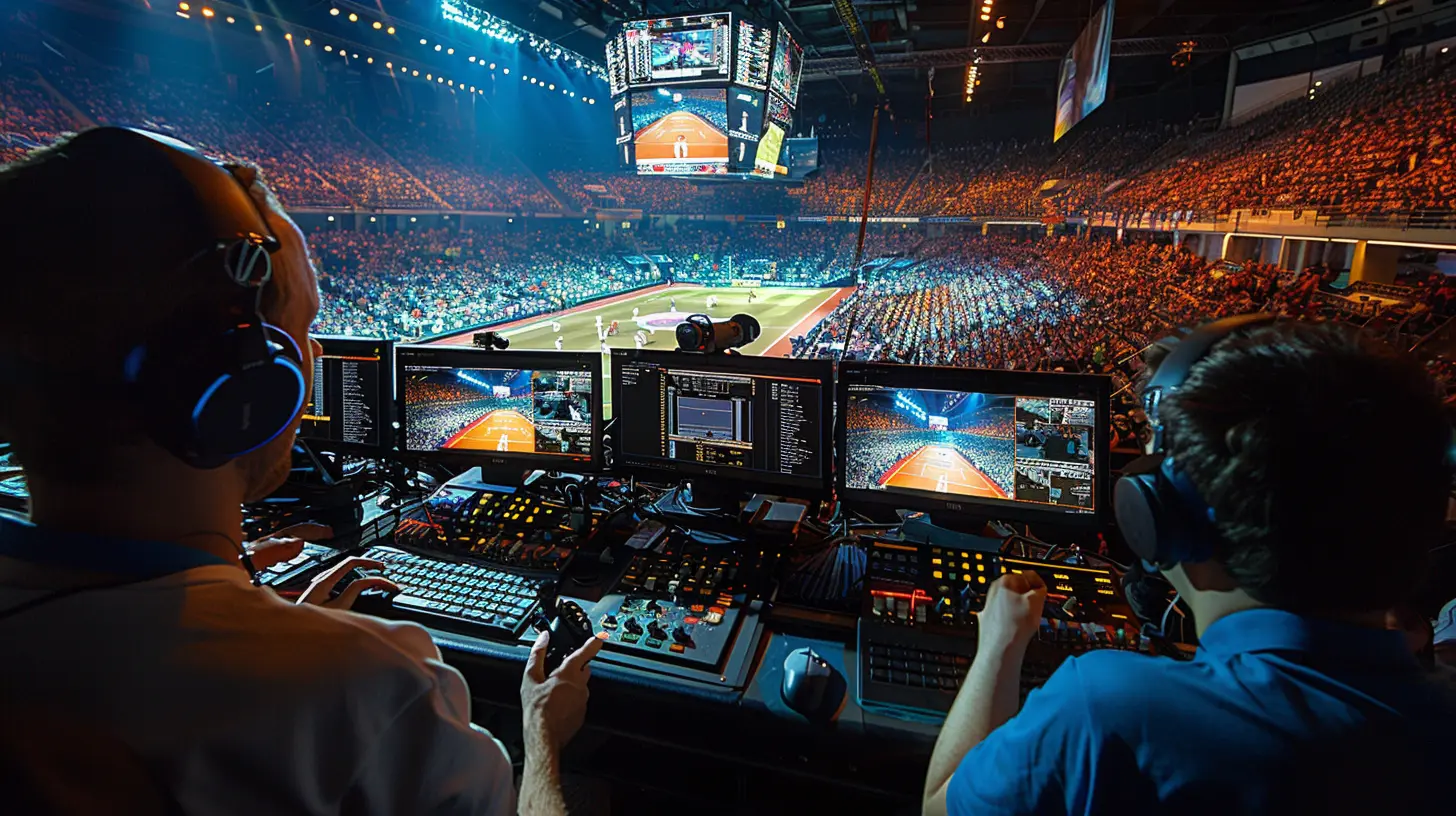
Multi-Camera Setups: Capturing Every Angle
One of the biggest advancements in modern sports broadcasting is the multi-camera setup. If you’re watching a soccer match, for example, it’s not just one camera tracking the ball. There are dozens of cameras strategically placed around the stadium, each focused on different aspects of the game. Some cameras track the players, others zoom in for close-ups, and others focus on the crowd or coaches.Why So Many Cameras?
Imagine trying to follow a Formula 1 race with just one camera at the finish line. Impossible, right? That’s why broadcasters use a vast array of cameras to ensure they capture every single moment from different perspectives. Some of these include:- Main Camera: This one follows the ball or main action, providing a wide view of the field or court.
- Close-Up Cameras: These are responsible for those intense facial expressions of athletes. You know, the ones where you can almost feel their sweat!
- Goal-Line Cameras: In sports like soccer and hockey, these ensure that the ball or puck has indeed crossed the line, helping referees make the right call.
- Spidercam or Skycam: Suspended above the field, this camera gives an incredible bird’s-eye view, making you feel like you’re right in the middle of the action.
Multicamera setups make it possible to capture the speed and intensity of a game without missing a beat. Imagine watching a basketball game and missing a slam dunk because the camera was focused elsewhere. That’s a nightmare scenario for any broadcaster!
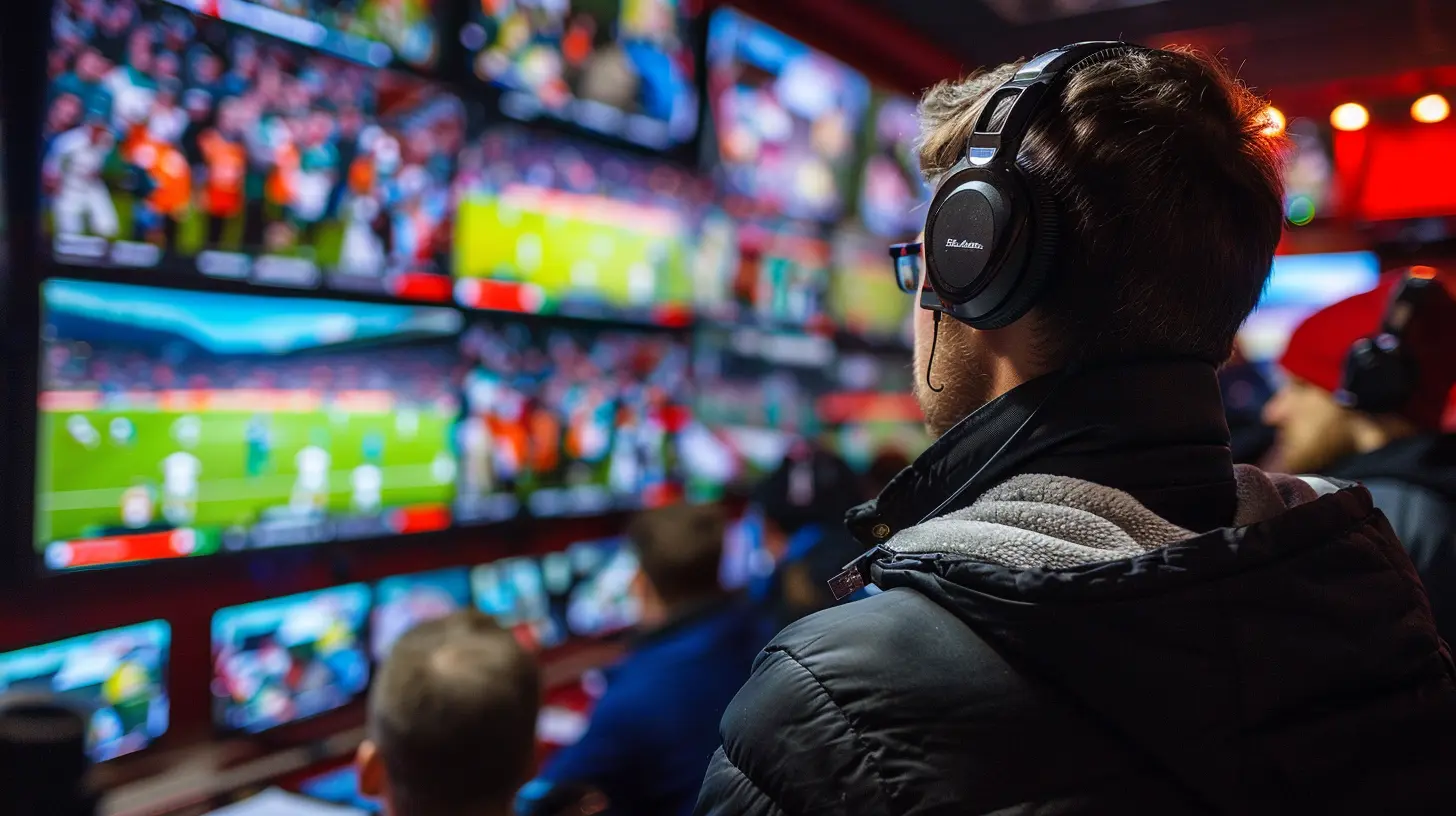
Instant Replays: Reliving the Best Moments
We all love a good instant replay, don’t we? Whether it’s a jaw-dropping goal, a buzzer-beater shot, or a controversial referee decision, replays give us a second (and sometimes third) chance to witness the magic.How Do Instant Replays Work?
The moment something noteworthy happens, a dedicated team of technicians is ready to cue up the replay. Using sophisticated software and hardware, they can instantly pull clips from any camera angle and show them in slow motion. This process happens in seconds—blink, and the replay is already on your screen.And it’s not just about slowing things down. Broadcasters also use replay to zoom in, highlight specific moments, and analyze plays in detail. This adds depth to the viewing experience and ensures we don’t miss any crucial moments in fast-paced sports.
For example, in cricket, they use the Hawk-Eye system to track the trajectory of the ball, showing whether it would have hit the stumps in an LBW decision. Similarly, in tennis, the system is used to check if the ball was in or out.
Graphics and Data Overlays: More Than Just a Scoreboard
Gone are the days when the only thing displayed on the screen was the score. Now, you see a whole range of data overlays that provide real-time stats, player information, and even play predictions.Real-Time Stats and Analysis
Today’s sports broadcasts are packed with advanced statistics. During a football game, you might see a player’s running speed, the distance covered, or even their heart rate. In baseball, you’ll get stats like exit velocity and launch angle. All these data points are pulled in real-time and displayed on your screen without interrupting the flow of the game.This is possible thanks to cutting-edge sensors and tracking systems. For instance, in the NFL, players wear chips in their shoulder pads that track their movements. This data is fed into the broadcast, giving viewers an unprecedented level of insight into the game.
Not only does this help fans understand the game better, but it also keeps them more engaged. After all, who doesn’t love a bit of extra info to impress their friends during the game?
Real-Time Commentary: The Human Element
While technology does a lot of the heavy lifting, sports broadcasting would be incomplete without real-time commentary. The commentators are the voices that guide us through the game, providing insights, making predictions, and adding excitement to every play.The Role of Commentators
A good commentator does more than just narrate the action—they contextualize it. They provide background information, analyze strategies, and even predict what might happen next. This keeps viewers engaged and ensures they fully understand the intricacies of the sport.But here’s the thing: commentators don’t just sit there and talk. They are constantly receiving information from production teams, analysts, and even social media. In fact, some modern broadcasts even incorporate fan reactions from platforms like Twitter, making the experience more interactive.
Virtual and Augmented Reality: The Future of Sports Broadcasting?
Now, let’s talk about the future. As technology continues to evolve, so does sports broadcasting. We’re already seeing the rise of Augmented Reality (AR) and Virtual Reality (VR) in sports broadcasts, and it’s mind-blowing.Augmented Reality Graphics
You might have noticed something new during soccer broadcasts lately—virtual offside lines drawn directly onto the field. This is an example of AR in action. Broadcasters are using AR to enhance the viewing experience by overlaying graphics and information directly onto the game itself.Imagine watching a basketball game where the shot clock is virtually projected above the hoop, or a football game where you can see the first-down line projected on the field. These aren’t far-fetched ideas—they’re happening now, and they’re making broadcasts even more immersive.
Virtual Reality: The Ultimate Viewing Experience?
Imagine putting on a VR headset and suddenly finding yourself in the middle of a stadium, sitting court-side, or even standing on the field with the players. VR sports broadcasting is still in its early stages, but it has the potential to completely revolutionize how we watch sports.Companies like NextVR are already working on bringing live sports to VR, allowing fans to experience the game from a whole new perspective. With VR, you’re not just watching the game—you’re part of it.
Challenges of Broadcasting Fast-Paced Sports
Of course, keeping up with fast-paced sports isn’t without its challenges. Broadcasters have to deal with unpredictable events, technical glitches, and the constant pressure of delivering a flawless viewing experience.Unpredictability
In sports, anything can happen, and it often does. A player can score a goal when you least expect it, or a fight could break out on the field. Broadcasters need to be ready for anything, with the ability to switch cameras, cue replays, and adjust commentary on the fly.Technical Glitches
Despite all the advanced technology, things can and do go wrong. A camera might malfunction, a mic might cut out, or the feed might lag. When you’re broadcasting live, there’s no time for do-overs. The production team needs to be quick to fix any issues and keep the broadcast running smoothly.
Conclusion: A Symphony of Technology and Skill
So, how does sports broadcasting keep up with the fast-paced action in sports? It's a combination of cutting-edge technology, expert commentators, and a dedicated production team working behind the scenes. From multi-camera setups that capture every angle to real-time data overlays and instant replays, it’s all about immersing the viewer in the action.The next time you watch a game, take a moment to appreciate the incredible complexity of the broadcast. It’s not just about showing you the game—it’s about making you feel like you’re right there, in the middle of the action.
all images in this post were generated using AI tools
Category:
Sports BroadcastingAuthor:

Frankie Bailey
Discussion
rate this article
2 comments
Wendy Kearns
Great article! It's fascinating how sports broadcasting has adapted to keep up with the fast pace of games. The technology and creativity involved really enhance our viewing experience. Keep up the good work!
April 3, 2026 at 3:16 AM
Frankie Bailey
Thanks for the kind words! I'm glad you found it fascinating. The evolution of sports broadcasting really does make a difference in how we enjoy the games.
Carla McCarty
As sports evolve in pace and complexity, broadcasting must innovate, balancing technology and narrative. This dance between immediacy and storytelling not only enhances viewer experience but also redefines our connection to the game.
February 15, 2026 at 5:48 AM
Frankie Bailey
Absolutely! Balancing technology with engaging storytelling is crucial for enhancing viewer experience and deepening our connection to sports as they evolve.