The Ripple Effect: How One Big Trade Reshapes an Entire League
27 November 2026
A blockbuster trade rarely stays contained. The moment a star player changes uniforms, the shockwave travels outward: through locker rooms, front offices, salary cap sheets, draft boards, and the strategies of teams that had nothing to do with the deal. Fans see the headline. Insiders see the aftershocks. The best executives see the aftershocks before they happen.
This article examines how a single major trade reorganizes an entire league. Not the mechanics of the transaction itself, but the chain reaction it triggers. Why do some trades echo for a decade while others fade in a season? What do smart teams do in the hours after a rival's deal is announced? And what should you, as a fan or analyst, watch for to understand what is really happening?

Why One Trade Can Move an Entire League
A trade is not a two-team event. It is a market event.Think of a league as a network of interconnected decisions. Every roster is built on assumptions about every other roster. A contender budgets for a specific rival in the playoffs. A rebuilding team plans its timeline around the belief that certain stars will stay put. Agents price their clients against the going rate for comparable players. When one team makes a massive move, it invalidates a stack of those assumptions at once, and everyone has to reprice.
There is a useful analogy in ecology. Remove a keystone species from an ecosystem and the effects cascade far beyond the removal site: predators shift territories, prey populations swing, vegetation changes. A superstar trade works the same way. The player is the keystone. The ecosystem is the league.
Three mechanisms drive the ripple:
1. Talent redistribution. A star moving from one conference to another changes the balance of power overnight. Contenders in the receiving team's conference suddenly face a harder path. Contenders in the sending team's conference see an opening.
2. Price setting. A trade establishes a market rate. If a team pays three first-round picks for an All-Star, every general manager negotiating for a similar player now anchors on that price. The trade becomes a benchmark whether anyone intended it to or not.
3. Strategic signaling. Trades communicate intent. A team trading for a veteran star is saying it will compete now. A team trading one away is saying it will rebuild. Rivals adjust their own timelines in response, sometimes within days.
The key insight: the trade itself is the smallest part of the story. The reaction is the story.
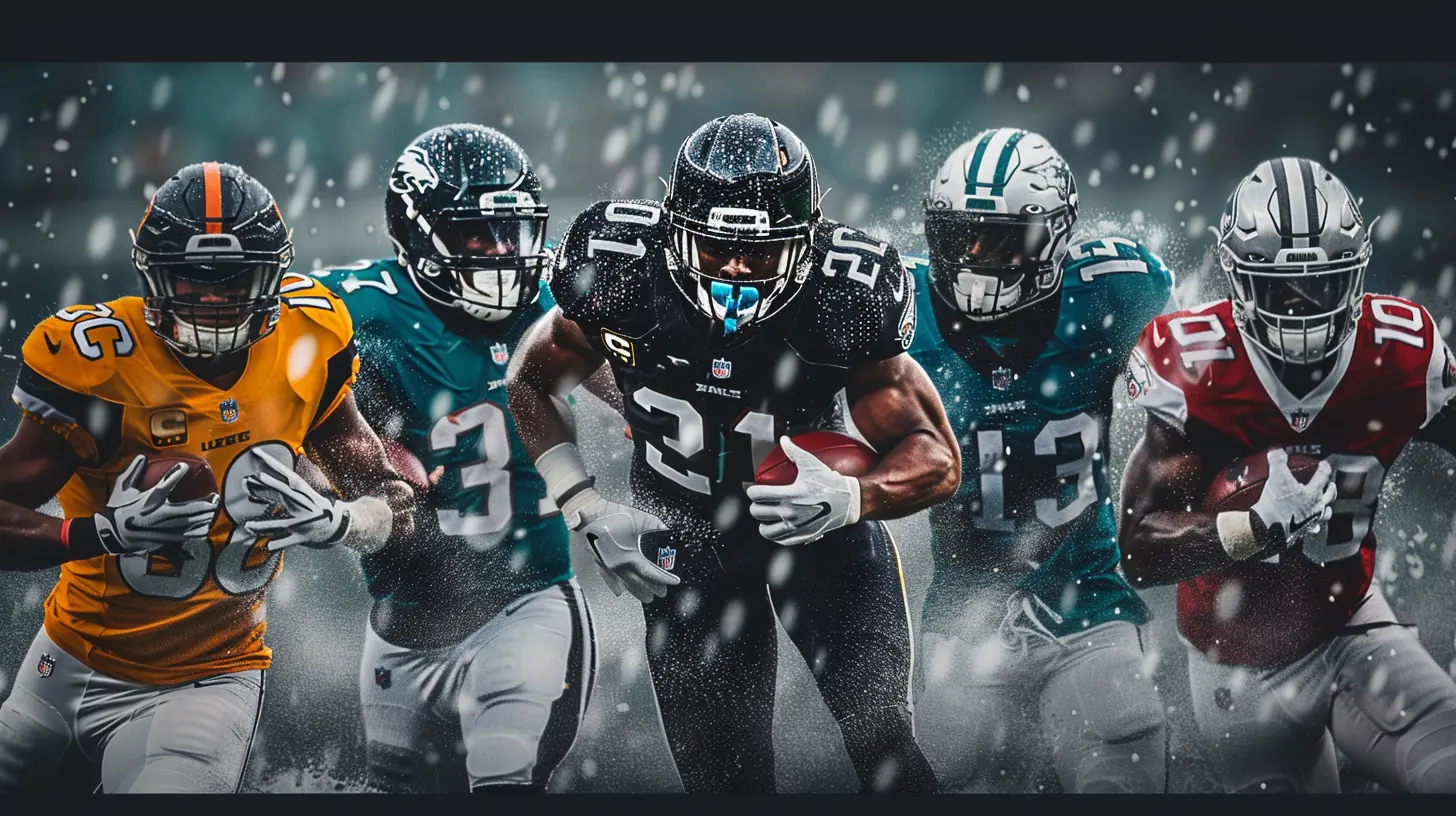
The Anatomy of a Ripple: Following the Shockwave
Stage One: The Immediate Vacuum
When a franchise player leaves, the sending team does not simply lose production. It loses structure. Offenses were designed around that player's gravity. Defenses were built to cover for their weaknesses. Role players were signed because they fit alongside them. Remove the centerpiece and the whole system wobbles.This is why rebuilding teams often look worse than their talent suggests in the first season after a star departs. The roster is not just weaker; it is misaligned. Players who thrived in supporting roles are suddenly asked to carry loads they were never signed for. Coaches must redesign schemes mid-stream. The smart organizations accept this dip as part of the plan. The impatient ones panic, sign a replacement at a premium, and trap themselves in mediocrity.
Watch for this pattern: a team that trades its star and immediately spends the freed-up money on a lesser veteran is usually prioritizing ticket sales over title odds. A team that absorbs the dip and develops young players is playing the longer game. Neither approach is automatically wrong, but they lead to very different places.
Stage Two: The Conference Rebalancing
Within weeks, rival executives recalculate. A general manager who spent the offseason building a roster to beat one specific superteam now faces a different threat. Sometimes the response is another trade. Sometimes it is a tactical shift, like going smaller or stockpiling defensive specialists.This is where the ripple becomes visible in box scores. You will see teams that made no trade at all change their rotations, their pace, or their defensive coverages. Those adjustments are the trade's fingerprints.
A concrete example of this dynamic: when a dominant interior scorer moves to a conference rival, teams that previously played two traditional bigs may switch to a five-out approach to pull that scorer away from the rim. The trade happened in one city. The tactical response happens in five others.
Stage Three: The Draft and Free Agency Distortion
The aftershocks reach the offseason. Draft picks traded away change the shape of future drafts. A team that sent out three first-rounders has fewer young cost-controlled players coming, which means it must fill roster holes in free agency, which inflates prices for role players, which affects what other teams can afford.Free agents, meanwhile, reassess destinations. A star joining a young core makes that city suddenly attractive to veterans chasing a ring. A star leaving makes it a less appealing landing spot. Agents notice. Players notice. The transaction that happened in February shapes the signings of July.

The Market-Making Trade: How One Deal Sets Prices for Everyone
Here is a subtle effect that casual fans miss entirely: a big trade resets the market for comparable players.Suppose a team acquires a proven two-way wing for two first-round picks, a young prospect, and salary filler. Every front office in the league now has a reference point. When they negotiate for their own two-way wing, they will cite that deal. "You are asking for three firsts, but the market just said two." The original trade becomes a bargaining chip in a dozen unrelated negotiations.
This cuts both ways. If the acquiring team overpaid, the market inflates and sellers celebrate. If the acquiring team got a bargain, sellers dig in and insist the comparison is flawed. Either way, the trade has changed the negotiating landscape without the parties ever intending it.
Practical takeaway for analysts: when evaluating any trade, do not just ask "who won?" Ask "what price did this set, and who benefits from that price?" The team that wins a trade outright often helps sellers everywhere. The team that overpays often hurts buyers everywhere, including itself in future deals.

Trade-offs: The Contender's Gamble Versus the Rebuilder's Patience
Every major trade sits on a spectrum between two philosophies, and understanding the trade-offs helps you judge decisions fairly.The All-In Contender
What it is: Trading future assets (picks, prospects, cap flexibility) for present production.Why it works: Championships are rare and windows close fast. A star in his prime may only have a few genuine title shots. Converting uncertain future value into certain present value is rational when the window is open.
When it fails: When the team pays for a star who does not fit the scheme, or when injuries hit, or when the supporting cast is too thin to survive a playoff series. The bill comes due years later with no picks and no cap room.
What to consider first: Does the incoming player address the team's actual weakness, or just add talent? Fit beats accumulation. A great player in a bad scheme is an expensive square peg.
The Patient Rebuilder
What it is: Trading present stars for picks, prospects, and flexibility, accepting short-term pain for long-term optionality.Why it works: Draft picks are cheap labor and trade currency. Accumulating them creates multiple paths to contention. The team controls its timeline.
When it fails: When the picks do not convert, when the culture erodes from too much losing, or when the rebuild drags past the patience of the fanbase and ownership. Infinite patience is a myth; real teams face real pressure.
What to consider first: Is there a credible development infrastructure? Picks are only as good as the coaching and player development behind them. A rebuild without a development plan is just losing with extra steps.
Most successful organizations blend the two. They stay flexible, pounce when a star becomes available at a fair price, and avoid both mortgaging everything and hoarding assets forever. The trade-off is not binary; it is a dial.
Common Mistakes and Misconceptions
Misconception: The team that gets the best player wins the trade.
Not always. The best-player principle holds in a vacuum, but trades happen in context. A team that acquires a star who does not fit its timeline, or who blocks a younger player's development, can lose a trade even while winning the headline. Fit, timeline, and cap consequences matter as much as raw talent.Misconception: Ripple effects are predictable.
They are directional, not precise. You can forecast that a conference will rebalance and that prices will shift. You cannot forecast exactly which rival will respond with which countermove. Treat ripple analysis as scenario planning, not prophecy.Mistake: Reacting to a rival's trade with a panic trade.
This is the most common front-office error. A competitor lands a star, and the response is an overpay for a lesser player to keep up appearances. Panic trades usually combine the worst of both philosophies: they sacrifice future assets without genuinely closing the gap. The disciplined response is to reassess honestly and act only if a real opportunity exists.Mistake: Ignoring the salary cap ripple.
Fans focus on players and picks. Executives focus on cap sheets. A big trade often requires matching salaries, which means the acquiring team may have to shed contracts, which means other teams get role players at discount prices. Those secondary moves are part of the ripple and often decide who actually benefits from the chaos.
Best Practices: How Smart Teams Navigate the Aftermath
1. Keep a live model of every rival's cap sheet and timeline. The teams that respond fastest to a blockbuster are the ones that already knew which rivals were vulnerable to the change.2. Separate the trade from the reaction. Evaluate your own roster on its merits, not relative to a rival's move. Comparison is a trap; fit is the test.
3. Treat market resets as opportunities. When a trade inflates prices, some teams will be forced to sell cheaply. Position yourself as the buyer of those discounted assets.
4. Protect optionality. Avoid moves that eliminate all future flexibility in response to a single event. The league will change again; you want to be able to change with it.
5. Communicate a coherent timeline. Players, agents, and fans tolerate rebuilding if the plan is clear. They revolt against confusion.
What to Watch For: Reading the Ripple in Real Time
If you want to understand a big trade's true impact, track these signals over the following weeks and months:- Rotation changes on uninvolved teams. When rivals alter lineups or schemes, the trade is working through the league.
- The next trade's price. The second blockbuster of the season usually reveals what the first one actually did to the market.
- Veteran buyout activity. Contenders created or destroyed by a trade often become destinations or dead ends for buyout candidates.
- Draft-night behavior. Teams that traded picks away behave differently on draft night than teams that stockpiled them. Watch who trades back and who trades up.
- Agent chatter. Publicly, agents praise fit. Privately, they steer clients toward or away from cities based on the new competitive landscape.
The Long Echo
The most important thing to understand about the ripple effect is its timescale. A trade is announced in a day. Its consequences unfold over years. The picks conveyed become players who become trade chips who become champions or cautionary tales. The cap space freed becomes a signing that becomes a culture. The vacuum created becomes a draft position that becomes a franchise cornerstone.This is why evaluating trades in the moment is nearly useless. The verdict arrives late, and it is rarely the verdict anyone expected. The team that "lost" a trade in the headlines may win it in the standings three years later. The team that "won" may find that the cost of winning was a future it never got back.
So the next time a blockbuster lands, resist the urge to declare a winner. Instead, ask the questions that matter: What assumptions did this trade break? Who has to reprice their plans? Where will the countermoves come from? And who is positioned to profit from the chaos everyone else is about to create?
The trade is the headline. The ripple is the story. Read it carefully.
all images in this post were generated using AI tools
Category:
Big TradesAuthor:

Frankie Bailey