The Political Playbook: How Governments Use Major Sporting Events
30 November 2026
A World Cup final or an Olympic opening ceremony looks like pure sport on the surface. Underneath, it is often a carefully staged act of statecraft. Governments spend billions to host these events, and they rarely do it for the ticket revenue. They do it because a stadium full of cameras offers something money usually cannot buy: a captive global audience and a chance to shape how the world sees them.
This article breaks down that playbook. Not the feel-good version you hear in bid presentations, but the real mechanics of how governments use major sporting events, why those tactics sometimes work, where they backfire, and what anyone involved in hosting, sponsoring, or covering these events should watch for.

Why Sports and Politics Are Impossible to Separate
The idea that sport and politics should stay apart is a noble one, and it has never really held up. The modern Olympic movement itself was built on political compromise. Coubertin's vision of international unity was always entangled with nationalism, because athletes compete under flags and anthems play at medal ceremonies. The moment you organize nations into a competition, you have created a political stage.Governments understand this intuitively. A major event delivers three things that are hard to obtain any other way:
- Legitimacy. Hosting signals that a country is stable, capable, and part of the international community.
- Attention. Broadcast audiences in the billions create a window when the world is actually looking.
- Control of the narrative. For a few weeks, the host writes the story the cameras tell.
The question is never whether politics will enter the event. It always does. The real question is who is steering it and toward what end.

The Core Motivations Behind State Involvement
Not every government that hosts a tournament has the same goal. Understanding the motive explains the behavior you see. Here are the main ones.Diplomatic Legitimacy and "Coming Out" Moments
For governments seeking to reposition themselves internationally, hosting is a shortcut to recognition. South Africa's 2010 World Cup is the clearest modern example. The event was framed domestically and abroad as proof that the country had moved past apartheid and could operate at the highest level. Whether it delivered lasting economic gains is debated, but the symbolic payoff was real and widely acknowledged.The logic is simple. Diplomats can spend decades building relationships. A successful tournament compresses that into a few weeks of positive coverage, visits by heads of state, and feel-good imagery.
Economic Signaling and Foreign Investment
Hosting is often pitched to voters as an investment that will attract business. The theory is that global visibility reassures investors and tourists. The reality is more complicated. Mega-events rarely pay for themselves through direct revenue. Studies of hosting economics have repeatedly found that the promised windfalls tend to be overstated, and that costs, especially for new stadiums and transport, tend to be understated.That does not mean hosting is economically irrational. It means the return is often political and reputational rather than financial. Governments that treat hosting as a pure economic investment usually end up defending numbers they cannot prove.
Domestic Politics and National Cohesion
A tournament can give a divided country a shared focus. It can also give an unpopular government a temporary lift. Leaders routinely time bids and events around electoral cycles. The risk is that the unity effect fades fast, and the bills do not.Soft Power and Cultural Projection
Soft power is the ability to influence others through attraction rather than coercion. Sport is one of its cheapest vehicles. A country that hosts well is seen as competent and welcoming. Its brands, cities, and culture get airtime they could not otherwise afford. Qatar's 2022 World Cup, whatever one thinks of the controversies, was an explicit soft power project aimed at raising the country's global profile.Domestic Control and Prestige
Some governments use events to project strength at home. A successful games can be presented as proof of national progress under current leadership. This is where the line between national pride and regime legitimization gets thin.
The Tools Governments Actually Use
If the motivations are clear, the methods are where it gets interesting. These are the levers states pull.The Bid as a Diplomatic Instrument
Bidding itself is political. Governments lobby fellow governments, trade favors, and deploy heads of state to make the case. The bidding process is where alliances are tested and where promises about infrastructure, human rights, and budgets get made. Anyone evaluating a bid should read those commitments carefully, because they are often the first thing to be quietly dropped after the vote.Infrastructure as a Statement
A new airport, a metro line, a waterfront district. Hosting gives governments a deadline and a justification for projects they wanted anyway. This can be genuinely useful, but it also invites white elephants. The classic mistake is building facilities sized for a two-week event and then struggling to fill them for decades. The better practice is to plan the legacy use before breaking ground, not after.Security and the "Safe Games" Narrative
Security spending at major events is enormous, and it serves a dual purpose. It protects people, and it projects competence. But heavy security also changes the feel of an event. Visible militarization can reassure some visitors and unsettle others. Governments have to balance the two, and there is no universal right answer.Media Management and Framing
Hosts control a lot of the environment around an event: where cameras can go, which stories get facilitated access, what the opening ceremony says about the nation. This is not inherently sinister. Every host frames its story. The concern arises when framing slides into suppression, such as restricting press access or steering coverage away from inconvenient realities.Visa, Travel, and Symbolic Gestures
Small decisions carry political weight. Who gets a visa, which dignitaries are seated where, whether athletes can protest, what flags are allowed. These choices are read as statements about a government's values and alliances. Ignoring them is a common mistake for organizers who think they are only running a sports event.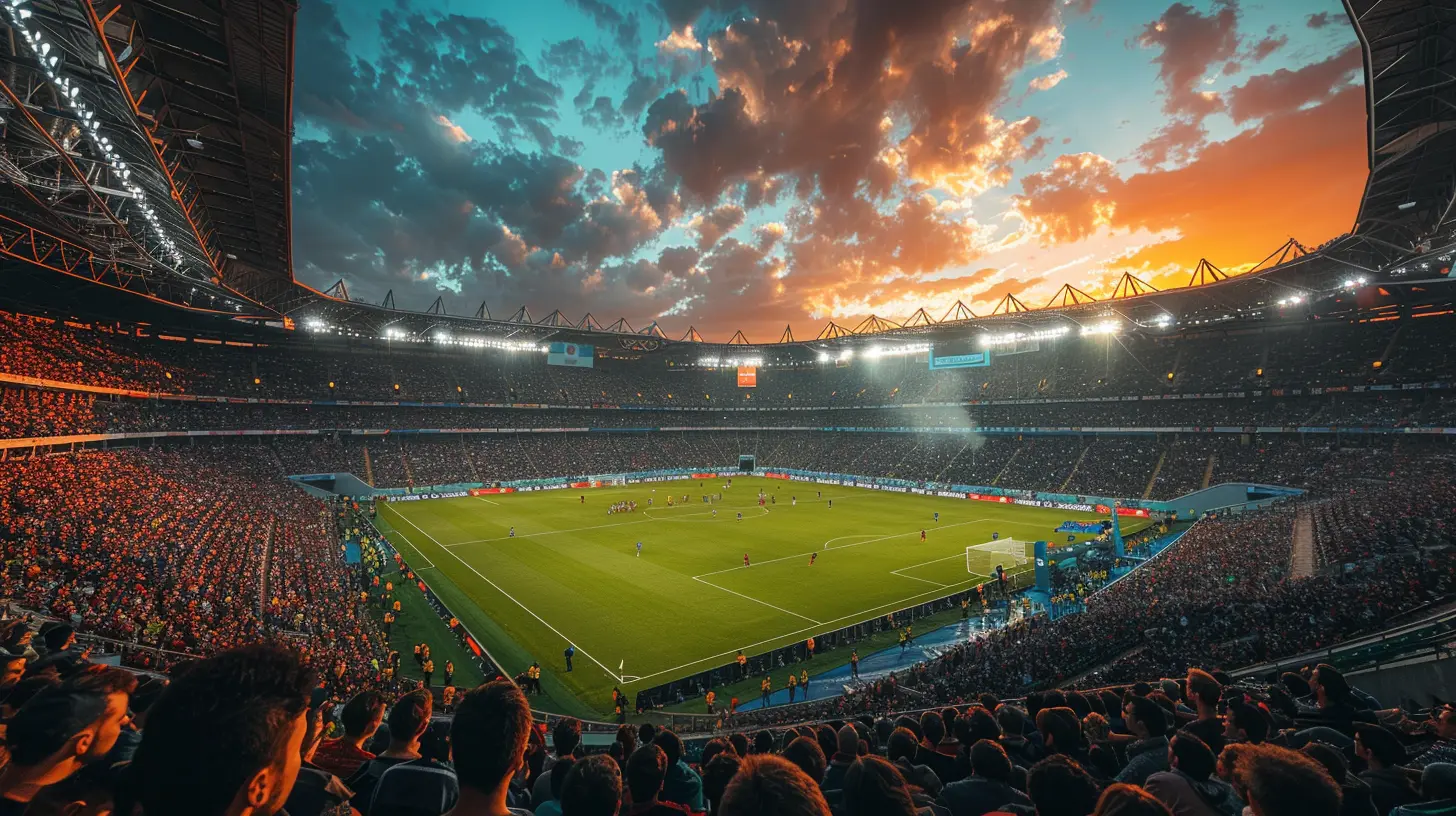
When It Works: What Successful Political Use Looks Like
The playbook succeeds when three conditions line up.First, the event has to actually run well. A smooth tournament buys credibility. A chaotic one destroys it faster than any boycott.
Second, the political message has to match observable reality. If a government claims transformation but visitors see dysfunction, the gap becomes the story. The Barcelona Olympics are often cited as a case where infrastructure investment aligned with a genuine long-term urban plan, which is why the legacy argument still holds up there.
Third, the benefits have to be distributed in ways citizens can see. When locals feel the event was built over them rather than for them, the goodwill evaporates.
When It Backfires: The Risks Governments Underestimate
The playbook has a long list of failure modes, and they are worth studying because they repeat.The Cost Overrun Trap
Almost every mega-event runs over budget. When the public learns the final number, the political dividend shrinks. Governments that hide costs during the bid phase usually pay a heavier price later, because the revelation itself becomes a scandal.Sportswashing Allegations
When a state with a poor human rights record hosts a major event, critics argue the event is being used to distract from or legitimize that record. This is now a standard part of the coverage cycle. Hosts can respond by using the event as a platform for genuine reform, but a defensive posture usually makes the criticism louder. The lesson is that the accusation is not something you can publicize your way out of. You either address the underlying record or you absorb the criticism.Boycotts and Politicized Absences
Boycotts have a long history in sport, and they cut both ways. They can isolate a host, but they can also rally domestic support around a besieged government. The 1980 and 1984 Olympic boycotts are the textbook cases. Before supporting or organizing a boycott, it is worth asking whether the gesture will actually change the target's behavior or simply punish athletes and harden positions.Protest and Free Expression Flashpoints
Athletes increasingly use their platform. Governments and federations often try to control this, with rules about what can be worn or said. These rules are politically loaded, and enforcement is inconsistent. The practical advice for organizers is to decide in advance how you will handle expression, and to be transparent about it, because ad hoc decisions under pressure tend to look arbitrary.The Legacy Gap
The gap between promised legacy and delivered legacy is the most common failure. Stadiums that sit empty, transport that serves the event but not the city, jobs that vanish after the closing ceremony. The fix is unglamorous: independent oversight, published legacy plans, and a willingness to build less.
Common Misconceptions Worth Correcting
A few beliefs about sports and politics deserve pushback."Hosting always boosts the economy." Not reliably. Direct revenue rarely covers costs, and the broader economic effects are hard to isolate from everything else happening in a city.
"Sport and politics can be kept separate." They cannot, and pretending otherwise usually serves whoever benefits from the current arrangement. The more honest approach is to manage the political dimension openly.
"A boycott is a strong tool." Sometimes. But boycotts often hurt the wrong people and give targets a convenient villain. They work best when they are coordinated, time-limited, and tied to a specific demand.
"Soft power is automatic once you host." No. Soft power depends on how the event is received, not just on how much you spend. A well-run event with a credible message earns it. A lavish event with a defensive posture does not.
Practical Guidance for Different Readers
The playbook looks different depending on where you sit.If you are a government or bid committee: Build the legacy plan before the bid, publish the real budget, and decide your stance on athlete expression early. Treat human rights criticism as a signal to examine your record, not just your communications strategy. And be honest with voters about what hosting can and cannot deliver.
If you are a sponsor or broadcaster: Understand that your brand is attached to the host's politics whether you like it or not. Due diligence on the host government is not optional. Have a position on controversies before they happen, because improvising under pressure rarely ends well.
If you are an athlete or official: Know the rules on expression, know your rights, and understand that your platform is political whether you use it or not. Silence is also a stance.
If you are a citizen or journalist: Follow the money. Look at the bid commitments, the cost overruns, and the legacy plans. Compare what was promised with what was delivered. That comparison is the most reliable measure of whether the political play worked.
Best Practices That Hold Up Across Contexts
A few principles tend to separate the events that age well from those that do not.- Plan for the day after. Every facility needs a use case beyond the event.
- Publish the numbers. Transparency about costs reduces the political damage of overruns.
- Separate the sport from the message. Let athletes compete while the government makes its case elsewhere. Mixing the two too tightly creates friction.
- Engage critics early. Ignoring human rights or cost concerns does not make them go away. It usually amplifies them.
- Measure what matters. Track legacy outcomes, not just attendance and broadcast numbers.
The Bottom Line
Governments will keep using major sporting events as political instruments, because the tool works often enough to justify the risk. The playbook is not inherently good or bad. It is a set of tactics with real trade-offs. The difference between a successful use and a damaging one usually comes down to honesty, execution, and whether the promised benefits reach the people who paid for them.Anyone who cares about sport, or about politics, is better off understanding how the machinery works than pretending it does not exist. The cameras will be rolling either way.
all images in this post were generated using AI tools
Category:
Sports And PoliticsAuthor:

Frankie Bailey