The Evolution of High School Sports Uniforms: From Tradition to Innovation
24 July 2026
Sports uniforms have been a rite of passage for high school athletes for generations. From the heavy wool jerseys of the early 1900s to today’s sleek, moisture-wicking materials, uniforms have come a long way. But how did we get here? What drove the changes? And let’s be honest—why were some of those bygone uniforms so…ugly?
Let’s take a nostalgic (and slightly amusing) trip down memory lane to track the wild evolution of high school sports uniforms, from tradition to cutting-edge innovation. 
1. The Early Days – Function Over Fashion (1900s-1950s)
Picture this: baggy wool sweaters, knee-high socks, and stiff cotton shorts. Sounds comfy, right? (Spoiler: It wasn’t.)Back in the early 20th century, high school sports uniforms were more about durability than style. Most were made from wool or thick cotton, chosen not for breathability but because they could withstand the wear and tear of grueling matches. The downside? Wool is hot, heavy, and absorbs sweat like a sponge, which meant athletes were basically running around in sweat-soaked blankets.
Basketball players wore long-sleeved jerseys and short shorts—yes, you read that right. Football players looked more like knights in padded armor, and baseball players sported thick wool pants with belts and heavy button-up jerseys. And let’s not forget the leather helmets that offered about as much protection as a wet paper bag.
Back then, the idea of "performance-enhancing fabric" sounded like sorcery. Athletes just had to deal with the discomfort and push through, proving that toughness was as much about enduring bad fashion as it was about skill. 
2. The Polyester Revolution (1960s-1980s)
Fast forward to the 1960s, and the game started changing—literally and figuratively. Polyester became the new go-to fabric for high school sports uniforms. Why? Because it was lightweight, stretchy, and (most importantly) cheap.But while polyester was a step up from wool (goodbye, sweat-soaked jerseys!), it came with its own set of issues. It wasn’t exactly breathable, and if you’ve ever worn pure polyester on a hot day, you know it’s basically a personal sauna.
Then came the color explosion of the 1970s and '80s. Bold stripes, funky fonts, and—let’s be real—some questionable fashion choices took center stage. Schools started embracing bright, flashy designs to stand out from the competition. Think neon greens, deep purples, and gold-trimmed everything. If you played high school sports during this era, chances are you looked like you were straight out of a disco-themed action movie.
Oh, and let’s not forget the introduction of longer basketball shorts in the ‘80s, thanks to Michael Jordan. No more running around in shorts that looked like they were borrowed from a little brother. 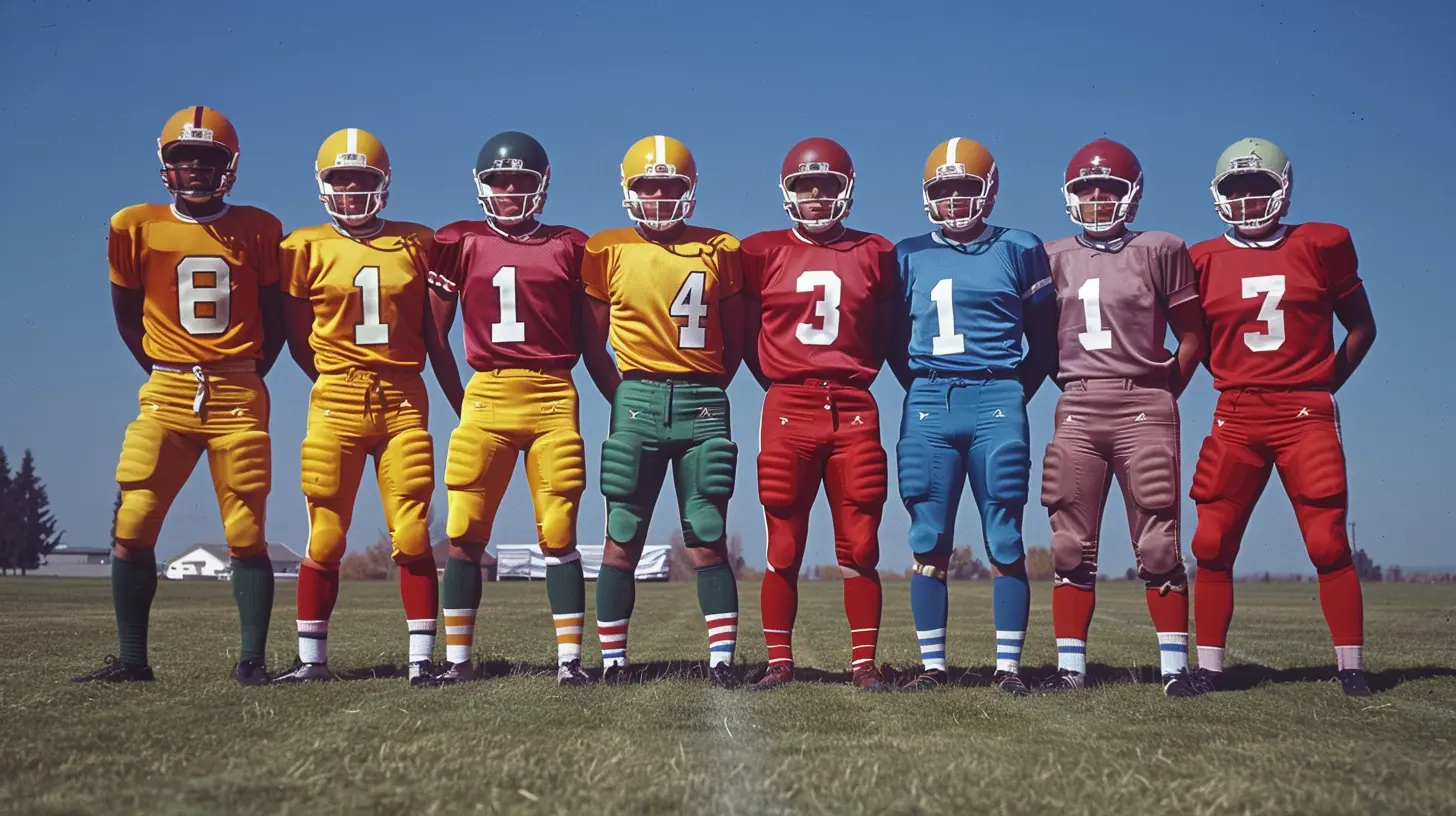
3. The Rise of Performance Wear (1990s-2000s)
By the 1990s, high school sports uniforms had leveled up—big time. Enter Dri-FIT, mesh fabric, and moisture-wicking materials. Athletes were finally getting uniforms designed not just for aesthetics but for actual performance.Football jerseys became tighter to prevent opponents from grabbing excess fabric. Basketball shorts settled at a comfortable length—long enough to move freely, short enough to avoid looking like baggy capris. Soccer jerseys embraced lightweight synthetic materials that allowed better airflow. And let’s not forget the rise of the iconic compression gear—athletes everywhere suddenly looked (and felt) like superheroes.
Logos and school branding also became a big deal. Customization was all the rage—schools wanted their uniforms to scream "intimidation" before the game even started. From fierce mascots to futuristic lettering, uniforms became walking billboards of school pride. 
4. The Age of Smart Uniforms (2010s-Present)
Now we’ve arrived at the golden age of sports uniforms. The days of itchy wool and suffocating polyester are long gone. Today, high school athletes are rocking uniforms made with cutting-edge technology.? Moisture-Wicking and Breathable Fabrics
Modern uniforms are designed to keep athletes cool, dry, and comfortable. Materials like Nike’s Dri-FIT and Under Armour’s HeatGear are engineered to wick sweat away from the body, helping players stay cool under pressure.? Compression Tech for Performance
Compression shirts, leggings, and socks help with muscle recovery and circulation, reducing the risk of injuries. Athletes no longer just play in their uniforms—they rely on them for performance enhancement.? Eco-Friendly and Sustainable Jerseys
With the world pushing for sustainability, schools are jumping on the eco-friendly trend. Recycled polyester, bamboo fibers, and other sustainable materials are making their way into high school sports uniforms. Some companies even make jerseys out of recycled plastic bottles—because saving the planet while scoring goals is a win-win.? Smart Fabrics and Wearable Tech
Yep, uniforms are getting smarter. Some high schools have started experimenting with embedded sensors that track heart rate, hydration levels, and movement patterns during games. Imagine having a uniform that tells you when you're running low on energy—talk about futuristic!? Sleek and Minimalist Designs
The flashy, over-the-top designs of the past are taking a backseat to cleaner, more streamlined looks. Think solid colors, bold lettering, and sleek modern fonts. The emphasis is now on performance, not just aesthetics.5. What’s Next? The Future of High School Sports Uniforms
If history has taught us anything, it’s that sports uniforms will continue to evolve. But what’s next?? 3D-Printed Uniforms
Imagine a uniform custom-made to fit an athlete’s exact body measurements, printed on demand. No more baggy jerseys or awkwardly tight shorts—just a perfect fit every time.? Temperature-Regulating Fabrics
We already have moisture-wicking materials, but what about uniforms that adjust their temperature based on the environment? Playing in the cold? They’ll keep you warm. Running in the heat? They’ll cool you down.? Augmented Reality Integration
This might sound like sci-fi, but some companies are experimenting with uniforms that connect to AR glasses, displaying player stats in real-time. Imagine coaches tracking fatigue levels mid-game or players seeing their stats mid-play.One thing’s for sure—high school sports uniforms have come a long way, and they’re only going to get cooler (literally and figuratively).
Final Whistle: The Perfect Blend of Tradition and Innovation
From wool sweaters and baggy shorts to high-tech, sweat-wicking jerseys, high school sports uniforms have evolved dramatically. What was once just a piece of clothing has now become a powerful tool for performance, comfort, and even sustainability.But despite all the changes, one thing remains the same: the pride of wearing your school’s colors. Whether it’s a vintage wool jersey or a futuristic smart uniform, putting on that jersey means something special.
So, what’s been your favorite era of high school sports uniforms? Are you team polyester throwbacks or all about the latest tech gear? Either way, one thing’s for sure—high school sports fashion will never stop evolving.
all images in this post were generated using AI tools
Category:
High School SportsAuthor:

Frankie Bailey
Discussion
rate this article
1 comments
Solara McKay
High school sports uniforms reflect more than just team spirit; they symbolize evolving identities and values, blending tradition with innovation to inspire athletes and shape community pride.
August 11, 2026 at 5:02 AM