Olympic Protests and Their Impact on Global Diplomacy
12 August 2026
The Olympic Games have always been sold as a pure celebration of sport, a temporary truce where politics takes a back seat and athletes from every corner of the world compete under one banner. But that ideal has never matched reality. From the very first modern Games in 1896, politics has been woven into the fabric of the Olympics, and protest has been one of its most persistent threads. The question is not whether protest belongs at the Games, but how it shapes the diplomatic landscape long after the flame is extinguished.
When an athlete raises a fist, takes a knee, or wears a symbolic armband, they are not just making a personal statement. They are triggering a chain reaction that moves through media cycles, government statements, diplomatic cables, and sometimes even sanctions. Understanding that chain reaction is essential for anyone who wants to grasp how sport and statecraft intersect. This article breaks down the mechanics of Olympic protest, the diplomatic fallout it creates, and the lessons that organizers, athletes, and policymakers can draw from decades of high-stakes symbolism.
The Historical Precedent: When the Games Became a Stage
The idea that the Olympics are apolitical is a myth that collapses under the weight of history. The 1936 Berlin Games were explicitly used by the Nazi regime as a propaganda tool, and the world largely went along with it. That single event set a precedent that the Games could be co-opted for political ends, whether by the host nation or by those who oppose it.The 1968 Mexico City Games gave us the most iconic protest in Olympic history. Tommie Smith and John Carlos, two American sprinters, raised black-gloved fists during the national anthem after winning gold and bronze in the 200 meters. Their gesture was not spontaneous. It was a carefully planned act tied to the Olympic Project for Human Rights, a movement that sought to highlight racial inequality in the United States and beyond. The immediate fallout was severe: both athletes were suspended from the U.S. team and sent home. But the long-term impact was enormous. Their image became a global symbol of resistance, and it forced governments and sporting bodies to acknowledge that athletes could carry political weight far beyond their athletic performance.
What is often overlooked is the diplomatic ripple. The Mexican government, hosting the Games, was already dealing with internal unrest, including the Tlatelolco massacre just ten days before the opening ceremony. The Smith and Carlos protest drew international attention to human rights abuses in Mexico, embarrassing the host government on a global stage. That did not topple the regime, but it did shift the narrative from sports to politics, and it demonstrated that a single gesture could reframe international perception of a nation.
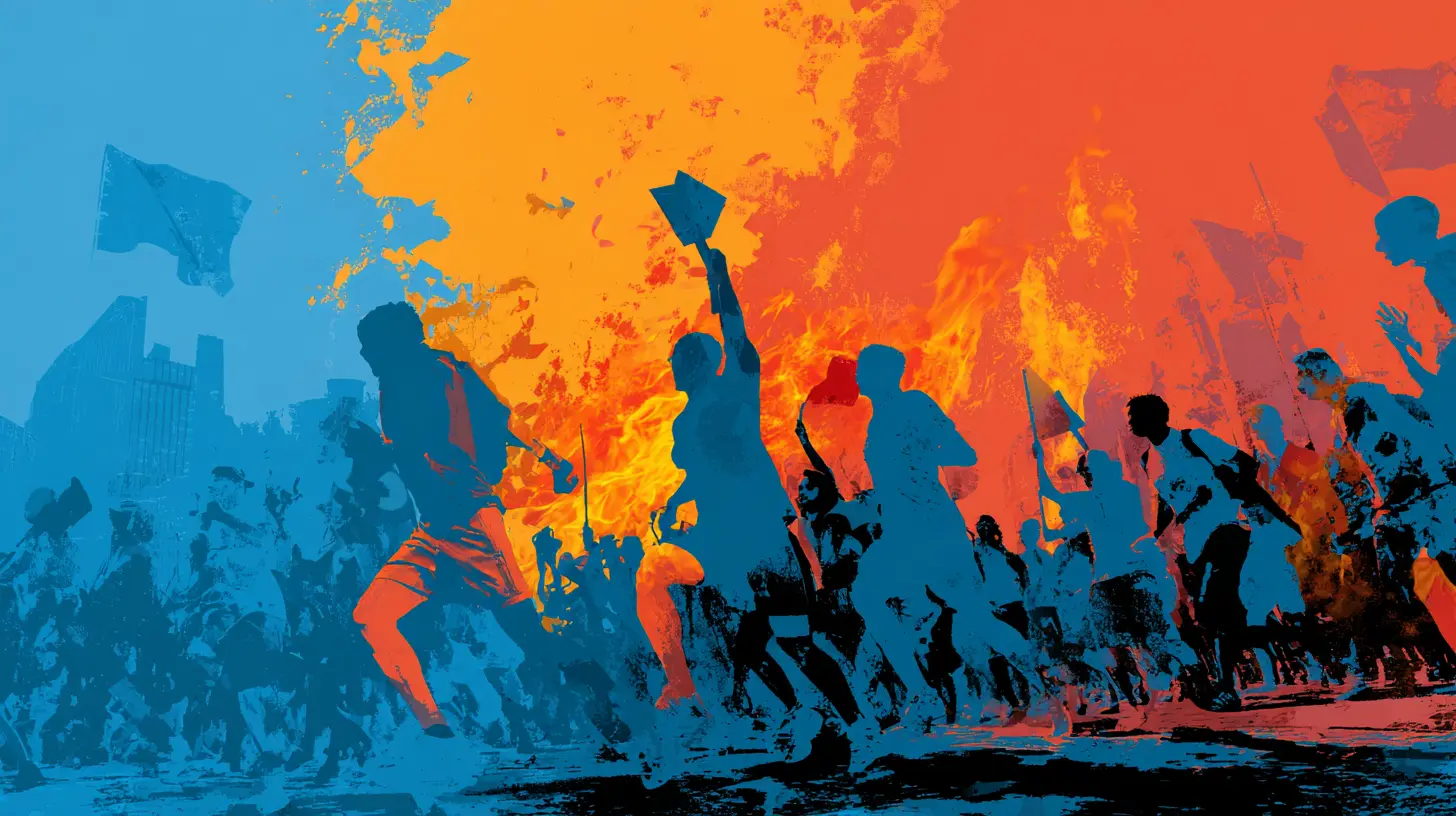
The Diplomatic Tightrope: Host Nations and the Fear of Embarrassment
Every host nation faces the same dilemma. They want the world to see their best face, their modern infrastructure, their cultural richness. A protest, especially one aimed at the host government, threatens that carefully curated image. This is why host nations often go to great lengths to suppress dissent during the Games, sometimes through overt censorship, sometimes through more subtle pressure on athletes and delegations.Consider the 1980 Moscow Olympics. The Soviet Union invaded Afghanistan in 1979, and the United States led a boycott of the Games. That boycott was itself a form of protest, not by athletes but by governments. It sent a clear diplomatic message: you cannot host a global celebration while committing acts of aggression. The Soviets responded by boycotting the 1984 Los Angeles Games. This tit-for-tat dynamic shows that protest at the Olympics is not always a grassroots gesture. It can be weaponized by states as a tool of foreign policy.
The 2008 Beijing Games offer a more recent example. China faced widespread criticism over its human rights record, particularly in Tibet and Darfur. During the torch relay, protests erupted in several countries, and some world leaders considered boycotting the opening ceremony. In the end, most attended, and the Games were widely seen as a coming-out party for modern China. But the diplomatic tension did not disappear. The protests forced governments to publicly justify their participation, and it put human rights on the agenda in a way that China could not easily wave away. The result was a more cautious, more scrutinized relationship between China and the West in the years that followed.
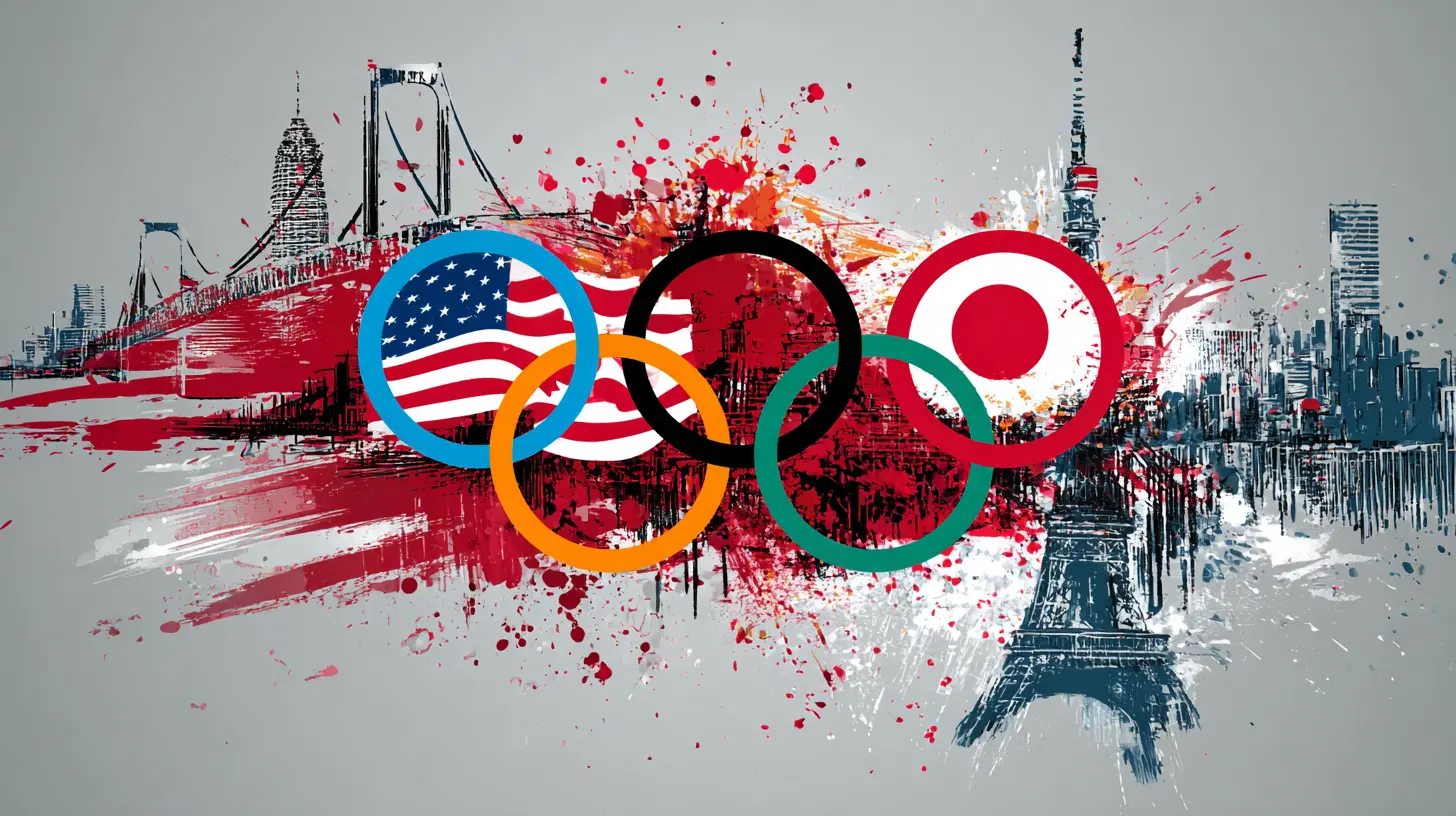
The Athlete as Diplomat: Personal Protest and State Response
Athletes are not just competitors. They are citizens with platforms, and their actions can carry more weight than a formal diplomatic note. This is especially true in an age of social media, where a single image can circle the globe in minutes. When an athlete protests, they are effectively engaging in a form of citizen diplomacy, bypassing traditional channels to make a direct appeal to the world.The case of Iranian athletes is instructive. Over the years, several Iranian athletes have used international competitions to express solidarity with opposition movements back home. In 2019, for example, Iranian chess player Dorsa Derakhshani competed without a hijab, a direct challenge to her country's policies. She was not an Olympian, but her case illustrates the pattern: a personal act of defiance that becomes a diplomatic incident. The Iranian government responded by banning her from the national team, but the international chess community rallied around her, and the incident became a talking point in U.S.-Iran relations.
The 2020 Tokyo Games, held in 2021 due to the pandemic, saw a different kind of protest. Athletes from various countries used the podium and press conferences to speak out on issues ranging from racial justice to LGBTQ rights. The International Olympic Committee (IOC) had relaxed its Rule 50, which previously banned any form of protest at Olympic venues. The new guidance allowed athletes to express themselves during press conferences and mixed zones, but still prohibited gestures on the field of play and on the podium. This partial opening was a response to years of criticism, but it also created a gray area that athletes and officials are still navigating.
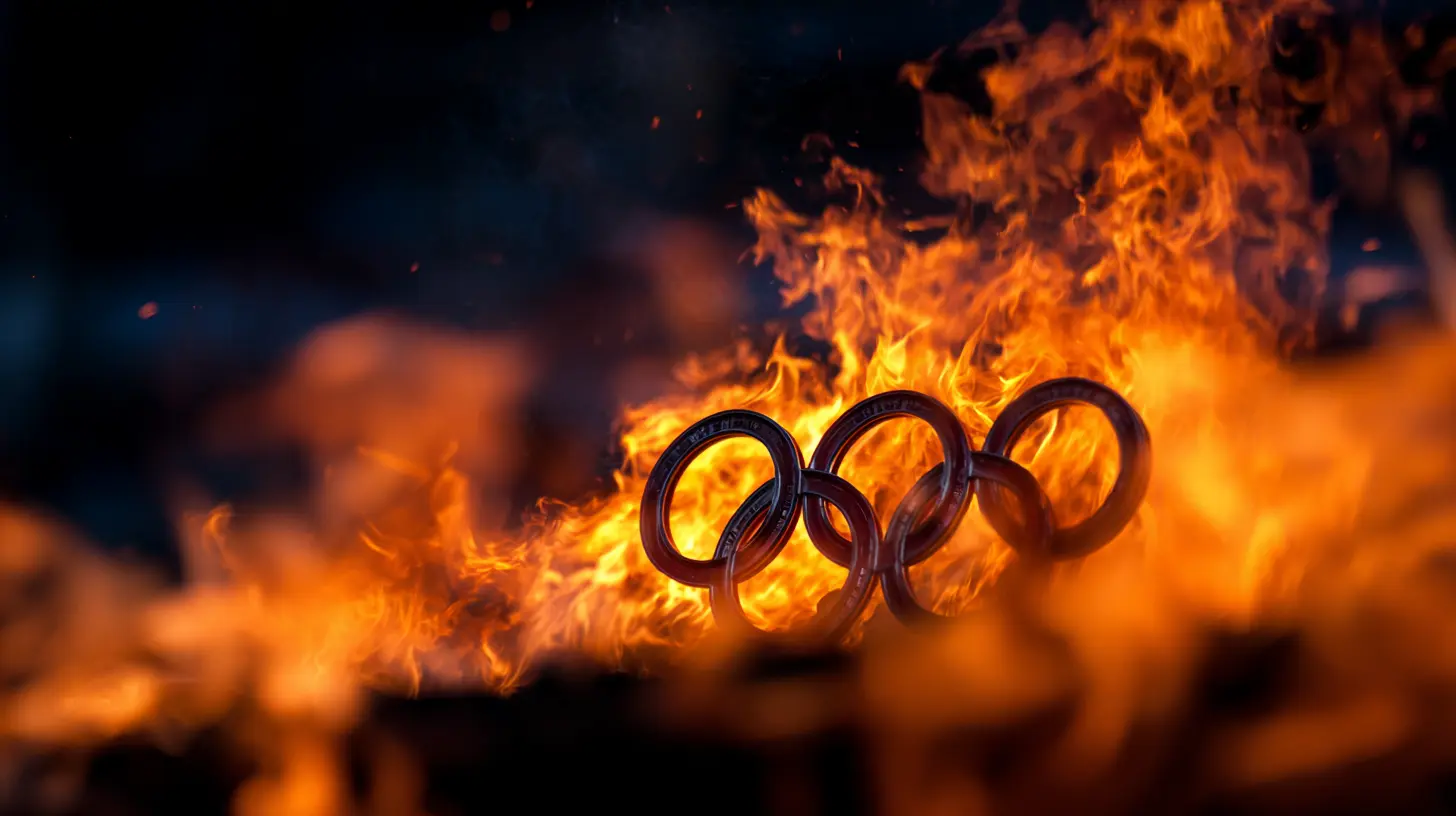
The IOC's Balancing Act: Rules, Enforcement, and Credibility
The International Olympic Committee is in an impossible position. It wants to protect the Olympic brand as a unifying force, but it also knows that suppressing all protest makes the organization look authoritarian. The evolution of Rule 50 reflects this tension. For decades, the rule was absolute: no political statements of any kind. But after the Black Lives Matter protests in 2020, the IOC faced intense pressure to change course. The result was a compromise that satisfies almost no one.Critics argue that the new rules are still too restrictive. Allowing protest in press conferences but not on the podium means that the most visible moments, the medal ceremonies, remain sanitized. Supporters of the rule argue that the podium is a shared space, not a personal platform, and that allowing protest there would turn the Olympics into a political circus. Both arguments have merit, but the IOC's real problem is credibility. If it selectively enforces its rules, it appears biased. If it enforces them uniformly, it appears authoritarian. There is no winning move, only a series of least-bad options.
The practical advice for the IOC is to shift from prohibition to facilitation. Instead of trying to stamp out protest, the organization could create structured opportunities for athletes to express their views without disrupting the competition. This could include dedicated segments during the opening or closing ceremonies, or official forums where athletes can address the world's media. The advantage of this approach is that it acknowledges the reality of protest while keeping the competitive focus intact. The disadvantage is that it could feel like a PR stunt, a way to co-opt dissent rather than honor it.
Real-World Consequences: How Protest Changes Diplomatic Relations
It is tempting to dismiss athlete protests as symbolic, but symbols matter in diplomacy. A protest at the Olympics can shift public opinion, which in turn puts pressure on governments to change their policies. The 1968 protest did not end racial segregation in the United States, but it did contribute to a broader conversation about race that influenced policy debates for years. The 2016 protest by U.S. soccer player Megan Rapinoe, who knelt during the national anthem, was a direct precursor to the larger athlete activism that followed. It normalized the idea that athletes can be political actors, and it forced sports leagues and sponsors to take positions on social issues.There are also direct diplomatic consequences. When an athlete protests, their home government often has to respond. That response can range from silence to condemnation to support. In some cases, the protest itself becomes a diplomatic tool. For example, when Belarusian sprinter Krystsina Tsimanouskaya refused to board a flight home from the Tokyo Olympics in 2021, she was effectively seeking asylum. Her protest was not a gesture but a life-or-death decision. The international community had to respond, and Poland granted her a humanitarian visa. That single act strained relations between Poland and Belarus, and it highlighted the repressive nature of the Belarusian regime in a way that months of diplomatic statements had not achieved.
The lesson here is that protest can have tangible, real-world outcomes. It is not just about making a statement. It is about triggering a response, and that response can be political, legal, or humanitarian. Athletes who plan to protest should understand that they are entering a diplomatic arena, and they should be prepared for the consequences, both positive and negative.
Common Misconceptions and Mistakes
One of the biggest misconceptions about Olympic protest is that it is always spontaneous. In reality, the most effective protests are carefully planned, with clear messaging and a defined goal. The Smith and Carlos protest was rehearsed. The decision to kneel, a gesture popularized by NFL quarterback Colin Kaepernick, was a deliberate act with a specific history. Spontaneous protests are often less effective because they lack a coherent message, and they can be easily dismissed as emotional outbursts.Another common mistake is assuming that all protests are directed at the host nation. Many protests are aimed at the athlete's own government, or at international bodies, or at global issues like climate change. Misreading the target of a protest can lead to diplomatic blunders. For example, if a foreign government condemns a protest that is actually directed at the United States, it can create an unnecessary rift. Governments and media outlets need to do their homework before responding to a protest.
A third mistake is conflating protest with disorder. The IOC and host nations often treat any political gesture as a security threat, but most protests are peaceful and non-disruptive. Overreacting to a kneel or a raised fist can turn a minor incident into a major diplomatic crisis. The best practice is to let the protest happen, let the media cover it, and let the diplomatic machinery respond in a measured way. This is easier said than done, but it prevents escalation.
The Role of Media and Public Perception
The media plays a crucial role in amplifying or dampening the impact of an Olympic protest. The same gesture can be framed as heroic or treasonous depending on the outlet covering it. This framing shapes public opinion, and public opinion shapes diplomatic pressure. In the age of social media, athletes have more control over their own narrative, but they also face a more fragmented and hostile information environment.For athletes, the best practice is to control the message. Issue a clear statement before or after the protest, explain the reasoning, and engage with the media on your own terms. This prevents the narrative from being hijacked by critics or misinterpreted by casual observers. For media outlets, the best practice is to provide context. A protest does not happen in a vacuum, and reporting on it without historical or political context does a disservice to the audience.
For the public, the best practice is to be skeptical of extreme framing. A protest is a complex act with multiple meanings, and it deserves more than a binary good-or-bad reaction. This is not easy, especially in a polarized media landscape, but it is necessary for a healthy public discourse.
Practical Advice for Athletes Considering a Protest
If you are an athlete considering a protest at the Olympics, the first step is to understand the rules. The IOC's Rule 50 still prohibits protests on the field of play and on the podium. Violating these rules can result in disciplinary action, including disqualification. Know the rules before you act.The second step is to define your goal. What are you trying to achieve? Are you raising awareness, demanding a specific policy change, or showing solidarity with a group? Your goal will determine your method. A silent gesture like a raised fist is different from a spoken statement at a press conference. Both have their place, but they have different impacts.
The third step is to consider the timing. A protest during a medal ceremony has maximum visibility but also maximum risk. A protest during a press conference is safer but may get less attention. There is no right answer, but you should be aware of the trade-offs.
The fourth step is to prepare for the backlash. You will face criticism, possibly from your own government, your sponsors, or the public. Have a response ready. Be clear about your principles and be willing to accept the consequences. This is not a decision to be made lightly.
The Future of Olympic Protest and Diplomacy
Looking ahead, the trend is toward more protest, not less. Younger athletes are more politically engaged, and social media gives them a platform that previous generations did not have. The IOC will have to adapt, either by loosening its rules further or by finding creative ways to channel athlete activism. The host nations will also have to adapt, recognizing that suppressing protest is often more damaging than allowing it.There is also the question of new forms of protest. Digital protests, such as changing social media avatars or wearing symbolic colors, are already common. Virtual reality and augmented reality could open new avenues for expression. The Olympics will always be a stage, and the stage will always have a political dimension. The task for all involved is to manage that dimension in a way that respects both the athletes' rights and the integrity of the competition.
Diplomacy is not just about treaties and summits. It is about perception, symbolism, and the stories we tell about ourselves and each other. Olympic protests are a form of storytelling, and their impact on global diplomacy is real and lasting. They remind us that the Games are not a break from politics but a reflection of it. And that is not a failure. It is a feature of a world that is always in motion.
all images in this post were generated using AI tools
Category:
Sports And PoliticsAuthor:

Frankie Bailey
Discussion
rate this article
1 comments
Barbara Mendoza
Great insights on Olympic protests. It's interesting to see how sports can shape global diplomacy...
August 17, 2026 at 10:58 AM
Frankie Bailey
Thank you! It's fascinating how the Olympics can serve as a platform for important issues and dialogue.