Knee Injuries That Could Reshape Franchise Decisions by 2027
11 September 2026
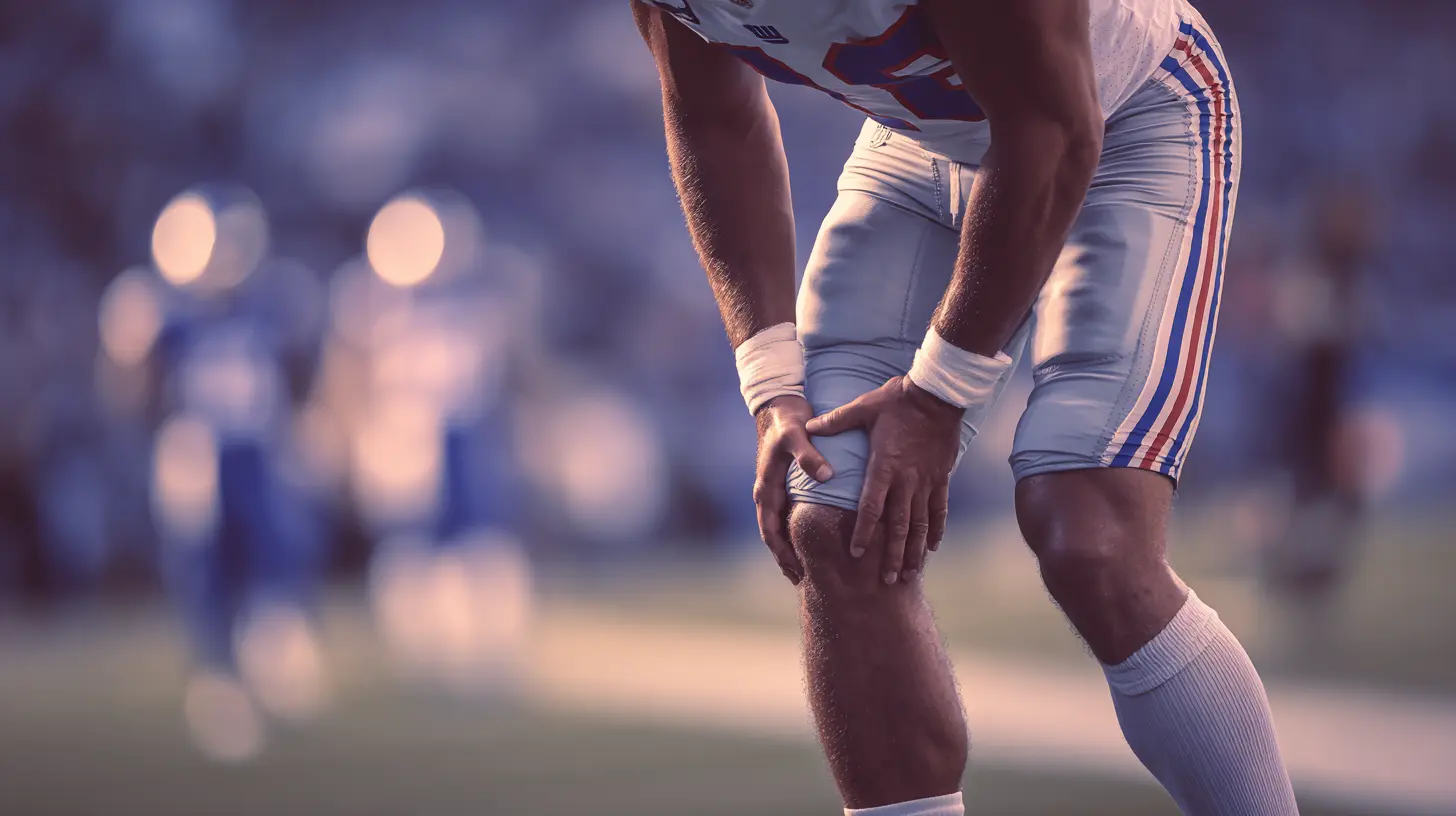
Knee injuries have always shaped the trajectory of sports franchises. A single torn ligament can alter a championship window, force a rebuild, or cost a general manager his job. But the next few years present a specific convergence that makes this topic worth examining closely. Medical technology is advancing quickly. Player movement is more fluid than ever. Salary cap rules keep tightening the math around risk. And a wave of high-profile athletes across multiple sports is entering the prime years of their careers with knee histories that teams must weigh carefully.
This article looks at the types of knee injuries most likely to influence franchise-level decisions between now and 2027. It is not a medical textbook. It is a front-office primer for anyone who wants to understand why certain knee diagnoses carry more weight than others, how teams evaluate them, and where the common mistakes happen.
Why Knee Injuries Carry So Much Leverage
The knee is a hinge joint that absorbs force, transfers power, and stabilizes the entire lower body. In sports that demand cutting, jumping, decelerating, and changing direction, the knee sits at the center of almost every explosive movement. That is why injuries there tend to be more consequential than injuries in many other areas of the body.A few structural realities explain the leverage:
- Cartilage has limited healing capacity. Once articular cartilage is damaged, it rarely returns to its original state.
- Ligaments heal as scar tissue. A reconstructed ACL is functional but not identical to a native one.
- Meniscus tissue does not regenerate. Removing part of it changes load distribution across the joint for the rest of a career.
- Bone bruises and cartilage lesions often signal longer-term risk even when the initial injury seems minor.
For a franchise, these realities translate into decisions about contract length, guaranteed money, draft capital, and roster construction. A player who can still perform at a high level may carry a risk profile that changes how a team structures a deal.
The Injuries That Matter Most Through 2027
Not every knee injury reshapes a franchise. Some are minor and resolve fully. The ones that tend to move the needle fall into a handful of categories.ACL Tears and Revision ACL Injuries
An ACL tear is the most discussed knee injury in sports, and for good reason. It costs a player most or all of a season, requires nine to twelve months of rehabilitation, and introduces long-term questions about explosiveness and confidence.The bigger concern for franchises is the revision ACL tear. When a player tears the reconstructed ligament a second time, the recovery is longer, the outcomes are less predictable, and the risk of career decline rises. Teams looking at a player with a revision history must weigh whether the athlete can return to the same movement profile.
What makes this tricky is that not all ACL tears are equal. An isolated ACL tear in a young athlete with clean cartilage often has a better prognosis than an ACL tear combined with meniscus damage or cartilage injury. Teams that treat all ACL tears as the same risk category make a mistake.
Meniscus Tears and Meniscectomy
The meniscus acts as a shock absorber. When a player undergoes a partial meniscectomy, the knee loses some of that cushioning. In the short term, the player often returns quickly. In the long term, the altered biomechanics can accelerate cartilage wear.This is where franchise decisions get interesting. A player who had a meniscectomy at 22 may look fine at 25 and start showing decline at 29. A team signing that player to a long-term deal at 26 is effectively betting on the timeline of joint degeneration.
Repair rather than removal is generally preferred when the tear pattern allows it, because preserving meniscus tissue reduces long-term arthritis risk. But repairs require longer rehab and do not always hold. Teams must understand which procedure was performed, not just that a meniscus injury occurred.
Cartilage and Osteochondral Injuries
Cartilage injuries are quietly among the most damaging. They do not always end a season, but they can shorten a career. Osteochondral lesions, which involve both cartilage and underlying bone, are especially concerning.Treatment options include microfracture, osteochondral autograft transfer, and newer cell-based approaches. Each has trade-offs. Microfracture can provide short-term relief but often produces fibrocartilage that is less durable than native hyaline cartilage. Osteochondral transfer can restore better tissue but involves donor site issues and limited coverage area.
For a franchise, a player with documented cartilage damage is a player whose long-term availability is uncertain. That uncertainty should be priced into any multi-year commitment.
Patellar Tendon and Quadriceps Tendon Ruptures
These are less common than ACL tears but often more severe. A patellar tendon rupture requires surgical repair and a long rehabilitation. Return to prior explosiveness is not guaranteed, particularly for older athletes.What makes these injuries franchise-relevant is their timing. They often occur in players in their late twenties or early thirties, which is exactly when teams are deciding on extensions. A rupture at that stage can eliminate a player's market almost overnight.
Multi-Ligament Knee Injuries
When a player injures more than one major ligament, the knee becomes a much more complex problem. These injuries can involve the ACL, PCL, MCL, LCL, and posterolateral corner. Surgical reconstruction is technically demanding, rehab is lengthy, and return-to-play rates are lower than for isolated injuries.Franchises rarely encounter these injuries, but when they do, the decision-making is different. A multi-ligament knee injury can end a career or permanently change a player's role. Teams must be honest about whether the athlete can return to the movement demands of the position.
How Teams Actually Evaluate Knee Risk
Public discussion of knee injuries tends to focus on whether a player is "back." Front offices think in more granular terms. Here is what a serious evaluation usually includes.Imaging Beyond the Standard MRI
An MRI is the starting point, not the finish line. Teams with strong medical staffs look at cartilage thickness, bone marrow edema, prior surgical tunnels, and the integrity of surrounding structures. They compare the injured knee to the healthy one.A common mistake among fans and media is assuming a clean MRI means no risk. MRI can miss early cartilage changes and does not fully capture biomechanical function.
Functional Testing and Movement Analysis
Return-to-play decisions increasingly rely on force plate data, jump testing, and change-of-direction assessments. These tests can reveal asymmetries that imaging cannot. A player who passes a physical but shows a 15 percent deficit in single-leg hop distance is not fully recovered, even if the MRI looks fine.Teams that invest in this kind of testing tend to catch problems earlier. Teams that rely only on imaging and a subjective "feels good" report take on more hidden risk.
Surgical History as a Timeline
The number of prior surgeries matters, but so does the spacing. Multiple knee surgeries within a short window suggest a joint that is not tolerating load well. Surgeries spaced years apart may simply reflect bad luck.Teams also look at the specific procedures. A meniscus repair is different from a meniscectomy. An ACL reconstruction with a patellar tendon graft is different from one with a hamstring graft, particularly regarding anterior knee pain and kneeling tolerance.
Position and Scheme Fit
Knee risk is not absolute. It is relative to what the player is asked to do. A pocket quarterback with a knee issue faces different demands than a scrambling quarterback. A power forward who plays below the rim has a different risk profile than one who relies on explosive leaping.This is where scheme and roster construction intersect with medical evaluation. A team may accept more knee risk in a player whose role minimizes cutting and jumping.
The Contract and Draft Implications
Understanding the medical side is only half the job. The other half is translating that into roster and cap decisions.Guaranteed Money and Injury Guarantees
In many professional contracts, injury guarantees protect a player's salary if he cannot pass a physical. Teams use these clauses carefully. A player with a significant knee history may be asked to accept a contract with limited guarantees or a waiver of certain protections.This is a negotiation, not a punishment. Both sides are pricing risk. The key for a team is to be consistent. If you discount one player's knee risk but ignore another's, you create locker room and agent problems.
Contract Length and Structure
Long-term deals for players with knee concerns are usually structured with team options, roster bonuses, or per-game incentives. These mechanisms shift risk away from the team while still rewarding the player if he stays healthy.A common mistake is overreacting to a single injury. A player who tears an ACL at 24 and rehabs well may be a better long-term bet than a player with chronic tendinopathy and no surgery. Teams that treat every knee injury as a red flag miss value.
Draft Board Adjustments
In the NFL, NBA, MLB, and NHL drafts, knee injuries can cause a player to fall. Sometimes that fall is justified. Sometimes it is an overcorrection.The best draft rooms separate injuries into categories: acute injuries with predictable recovery, chronic conditions with progressive risk, and degenerative findings that suggest a shortened career. A player with a clean ACL reconstruction and no cartilage damage is often a bargain in the second round. A player with early arthritis is not, regardless of talent.
Common Mistakes and Misconceptions
Several recurring errors show up in how teams and fans handle knee injuries.Treating "Return to Play" as "Return to Form"
A player can be cleared to play and still be a diminished version of himself. The first season after a major knee injury is often a transition year. Teams that expect immediate production set themselves up for disappointment.Ignoring the Second Injury
The risk of a second knee injury is elevated after the first one. This is true for ACL tears, meniscus injuries, and cartilage damage. A team that signs a player after a knee injury should build in contingency plans, not assume the worst is behind him.Overvaluing Imaging and Undervaluing Function
A clean MRI is reassuring, but it does not predict how a knee handles load. Functional testing and sport-specific movement analysis matter just as much.Assuming Age Protects or Dooms a Player
Younger players tend to heal faster, but they also have more years of cumulative load ahead. Older players heal more slowly, but they may have fewer high-impact years left anyway. Age is a factor, not a verdict.Forgetting the Mental Side
Rehabilitation is physical and psychological. Some players return with hesitation that limits performance. Others return more cautious but smarter. Teams that ignore the mental component miss part of the picture.
Best Practices for Franchises
There is no way to eliminate knee risk. There are ways to manage it intelligently.- Build a medical staff that communicates clearly with the front office. Siloed information leads to bad decisions.
- Use standardized functional testing for all players, not just those returning from injury.
- Price risk into contracts rather than avoiding players entirely.
- Draft and sign with scheme fit in mind. A player's role can reduce or amplify knee stress.
- Re-evaluate risk annually. A knee that looked stable two years ago may show new changes.
- Avoid the temptation to "win" a negotiation by stripping all guarantees. Players remember.
What to Watch Between Now and 2027
A few trends will shape how knee injuries affect franchise decisions over the next few years.Biologics and cartilage repair techniques continue to evolve. If a reliable way to restore hyaline cartilage emerges, the long-term outlook for players with cartilage damage improves. Until then, teams should treat cartilage injuries as a serious long-term concern.
Load management and training science keep improving. Teams that invest in sports science may reduce injury rates, but they cannot eliminate them.
The salary cap environment in major sports continues to reward teams that find inefficiencies. A player with a well-understood knee history may be undervalued if the market overreacts. The edge goes to teams that can separate real risk from noise.
Finally, player empowerment matters. Athletes have more control over their careers than ever. A team that mishandles a knee injury negotiation may find itself on the wrong side of future free agency. Reputation compounds.
A Final Word on Judgment
Knee injuries will always be part of sports. What separates good franchises from great ones is how they respond. The teams that succeed are not the ones that avoid all risk. They are the ones that understand risk clearly, price it honestly, and build rosters that can absorb the inevitable setbacks.By 2027, the franchises that treat knee injuries as a medical issue alone will fall behind. The ones that treat them as a strategic issue, connecting medical evaluation, contract design, scheme fit, and player relationships, will be the ones still competing when it matters.
all images in this post were generated using AI tools
Category:
Injury UpdatesAuthor:

Frankie Bailey
Discussion
rate this article
2 comments
Journey Reed
Knee injuries could change everything for franchises!
September 12, 2026 at 12:40 PM
Frankie Bailey
Absolutely, knee injuries can have a major impact on player careers and franchise strategies. It's crucial for teams to plan ahead.
Nell McCollum
Knee injuries are more than just setbacks; they can dictate a franchise's future. Teams must adapt quickly or risk losing their edge. Smart management means planning for every possibility, including the unexpected.
September 11, 2026 at 2:40 AM