How Team A’s Pressing Game Forced Errors from Team B
28 March 2026
Pressing has become one of the most crucial tactics in modern football. Teams that master it can disrupt their opponents, win possession higher up the field, and create goal-scoring opportunities from forced mistakes. In this match, Team A’s pressing game was relentless, causing Team B to crumble under pressure. But what exactly made Team A’s press so effective? Let’s break it down. 
Understanding the Pressing Game
Before we dive into how Team A’s pressing caused chaos, let’s first understand what pressing actually is.Pressing is when a team actively puts pressure on their opponents to force them into mistakes. Some teams press high (near the opponent’s goal), while others prefer a mid-block or a low block, pressing only in certain areas.
The goal of pressing is simple: win the ball back quickly and create scoring chances. But not every press is effective. If done poorly, it can leave gaps for the opponent to exploit. Team A, however, executed it perfectly. 
How Team A’s Pressing System Worked
Team A didn't just run around aimlessly trying to win the ball. They had a well-structured and well-coordinated pressing system that made life miserable for Team B.1. High-Intensity Pressing in the Final Third
Team A’s forwards and midfielders closed down Team B’s defenders the moment they received the ball. Instead of letting them build from the back, Team A suffocated them.- The striker positioned himself between the center-backs, cutting off passes.
- The wingers pressed aggressively to block passing lanes to the full-backs.
- The midfielders followed up by marking Team B’s deep-lying playmaker, denying them an easy outlet.
With nowhere to go, Team B’s defenders often resorted to rushed clearances or risky passes, leading to turnovers in dangerous areas.
2. Trapping Team B in Wide Areas
One of the smartest tactics Team A used was forcing Team B into wide areas.Whenever Team B’s full-backs received the ball, Team A’s players closed in quickly, cutting off passing options.
- The winger applied immediate pressure.
- The central midfielder shifted towards the touchline, preventing an easy pass inside.
- The nearest forward cut off any backward pass.
This forced Team B’s full-backs into difficult situations. They often had to play long, inaccurate passes or simply lost possession, allowing Team A to launch quick counterattacks.
3. Pressing Triggers – Team A’s Secret Weapon
Great pressing teams don’t press all the time—they pick their moments. Team A had specific pressing triggers, meaning they only pressed aggressively when certain conditions were met.Some common triggers included:
- A slow or hesitant touch from a defender – The moment Team B’s defender took an awkward touch, Team A swarmed like a pack of hungry wolves.
- A back pass – Whenever Team B’s players passed backwards toward their goalkeeper or defenders, Team A immediately stepped up the intensity.
- A sideways pass under pressure – Sideways passes might seem harmless, but for a team under a press, they can be dangerous. Every time Team B moved the ball sideways, Team A’s attackers closed the passing lanes and forced errors.
This system worked wonders and frustrated Team B, who struggled to build any meaningful attack. 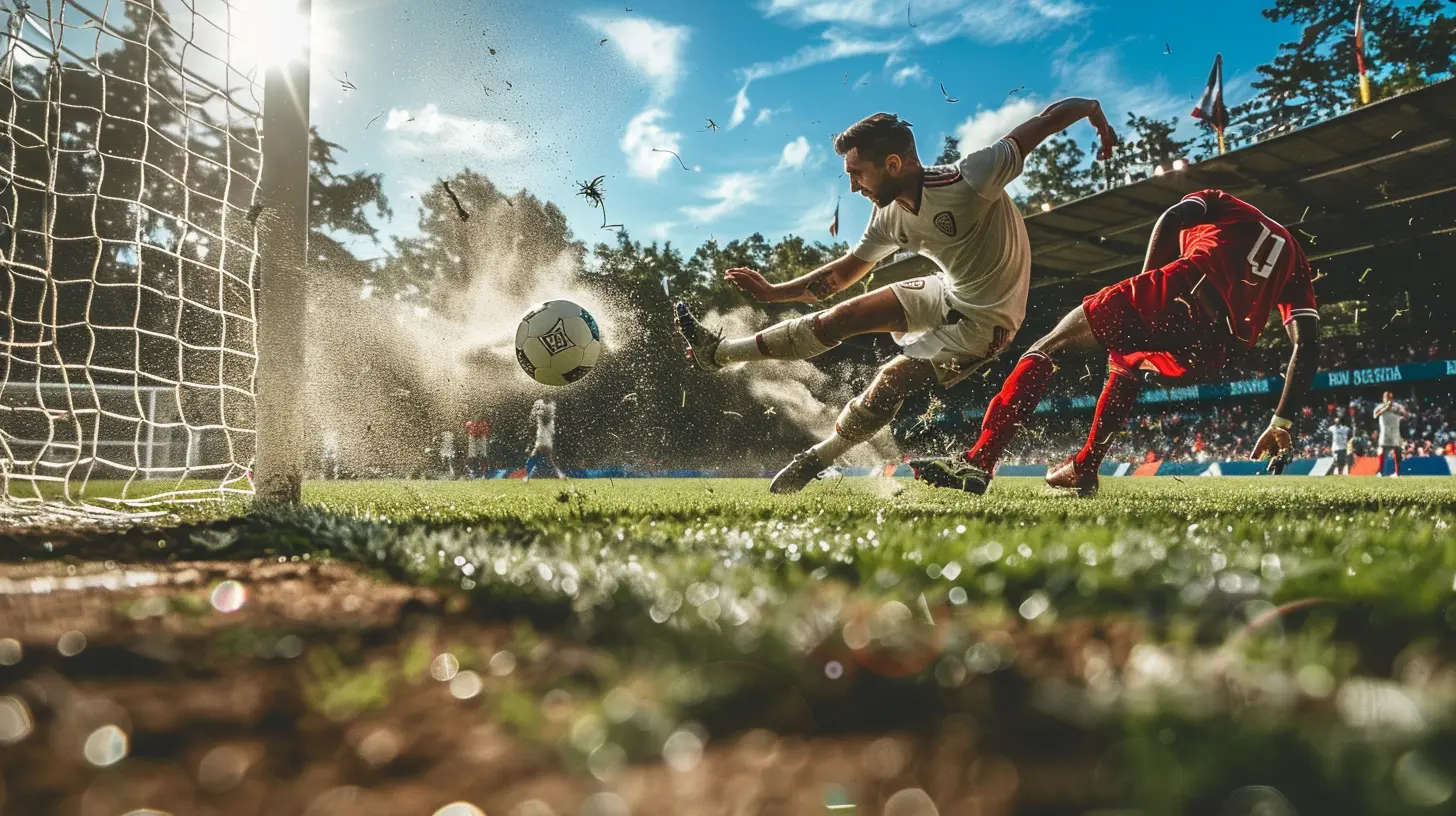
The Impact on Team B – Errors Under Pressure
Now, let’s talk about the end result of Team A’s pressing. How did it actually force Team B into making mistakes?1. Turnovers in Dangerous Areas
Under high pressure, Team B’s defenders frequently lost the ball inside their own half. These were moments that Team A capitalized on instantly.Losing the ball in your own half is a nightmare scenario—it means the opponent is just a few passes away from scoring. Team A didn’t waste those chances, as their attackers were always ready to pounce once possession was regained.
2. Poor Decision-Making and Panic
When a team is under constant pressure, even the most experienced players can panic.- Players rushed their passes, leading to giveaways.
- Defenders hesitated and got caught in possession.
- Midfielders were afraid to receive the ball due to the high press.
This mental pressure was just as damaging as the physical intensity. Team B’s game plan completely fell apart, as they couldn’t maintain possession or dictate the tempo.
3. Long Ball Desperation
With short passing out of the back no longer an option, Team B resorted to long balls. But these weren’t well-placed long passes with a purpose—they were desperate clearances that allowed Team A to recover possession easily.Every time a defender launched the ball forward, Team A’s defenders were ready to win aerial duels and start another attack. This cycle kept repeating, and Team B never looked comfortable on the ball. 
Why Team A’s Pressing Was So Effective
Not every team can press successfully. It takes organization, fitness, and tactical discipline. So, what made Team A’s pressing game so hard to handle?1. Incredible Work Rate
Pressing isn’t just about tactics—you need players willing to run their socks off. Team A’s players worked tirelessly for the full 90 minutes, maintaining an intensity that never allowed Team B to breathe.2. Perfect Synchronization
A disorganized press is worse than no press at all—it leaves gaps everywhere. Team A executed their press in perfect harmony. Every player knew their role and when to apply pressure.3. Quick Recovery After Losing Possession
One of the biggest strengths of Team A’s press was how quickly they reacted when they lost the ball. Instead of retreating, they hunted down Team B immediately, winning the ball back almost instantly.This approach, often called gegenpressing (counter-pressing), ensured Team A kept control of the match even when they temporarily lost possession.
Final Thoughts – Pressing Wins Games
This match was a classic example of how pressing can completely disrupt an opponent’s game plan. Team A’s relentless pressure forced Team B into constant mistakes, leading to turnovers, rushed decisions, and ultimately, a dominant performance from the pressing side.Pressing isn’t just about running—it’s a well-coordinated, high-intensity strategy that, when executed properly, can completely suffocate teams. Team A’s display was a masterclass in pressing football, proving once again that in modern football, pressure creates diamonds—or in this case, turnovers and goals.
all images in this post were generated using AI tools
Category:
Post Match AnalysisAuthor:

Frankie Bailey
Discussion
rate this article
2 comments
Olive Perez
Great insights on Team A's strategies! Their pressing game really put Team B on the back foot and created some thrilling moments.
June 8, 2026 at 4:09 AM
Frankie Bailey
Thanks for your feedback! Team A's pressing really showcased their intensity and created some exciting chances. Glad you enjoyed it!
Miranda McWain
Team A's effective pressing disrupted Team B's rhythm, showcasing how high-pressure tactics can exploit defensive weaknesses. This strategic approach not only led to errors but also highlighted the importance of adaptability in modern football.
April 2, 2026 at 12:19 PM
Frankie Bailey
Thank you for your insightful comment! Indeed, Team A's pressing strategy was crucial in capitalizing on Team B's vulnerabilities, emphasizing the need for adaptability in modern football.