How Injury Reports Could Impact Fantasy Leagues in 2026
14 October 2026
Fantasy football has always been a game of information. The managers who win consistently are rarely the ones who simply drafted the best players in August. They are the ones who understood, often before their league mates did, that a hamstring strain reported on a Wednesday afternoon could reshape an entire season by Sunday night. Injury reports have always mattered. But the way they matter is changing, and 2026 sits right at the center of that change.
The question worth asking is not whether injuries will affect fantasy leagues. That has been true since the first commissioner wrote a lineup on paper. The real question is how the reporting ecosystem around injuries is evolving, and what that evolution means for the people who set lineups every week. Between regulatory shifts, betting market influence, team media strategies, and the growing sophistication of fantasy managers themselves, the injury report is becoming something closer to a live data feed than a static weekly document. Understanding that shift is the difference between reacting to news and anticipating it.
This article examines where injury reporting is heading, why it is heading there, and how fantasy managers can position themselves to benefit rather than get burned.
The Foundation: Why Injury Reports Exist At All
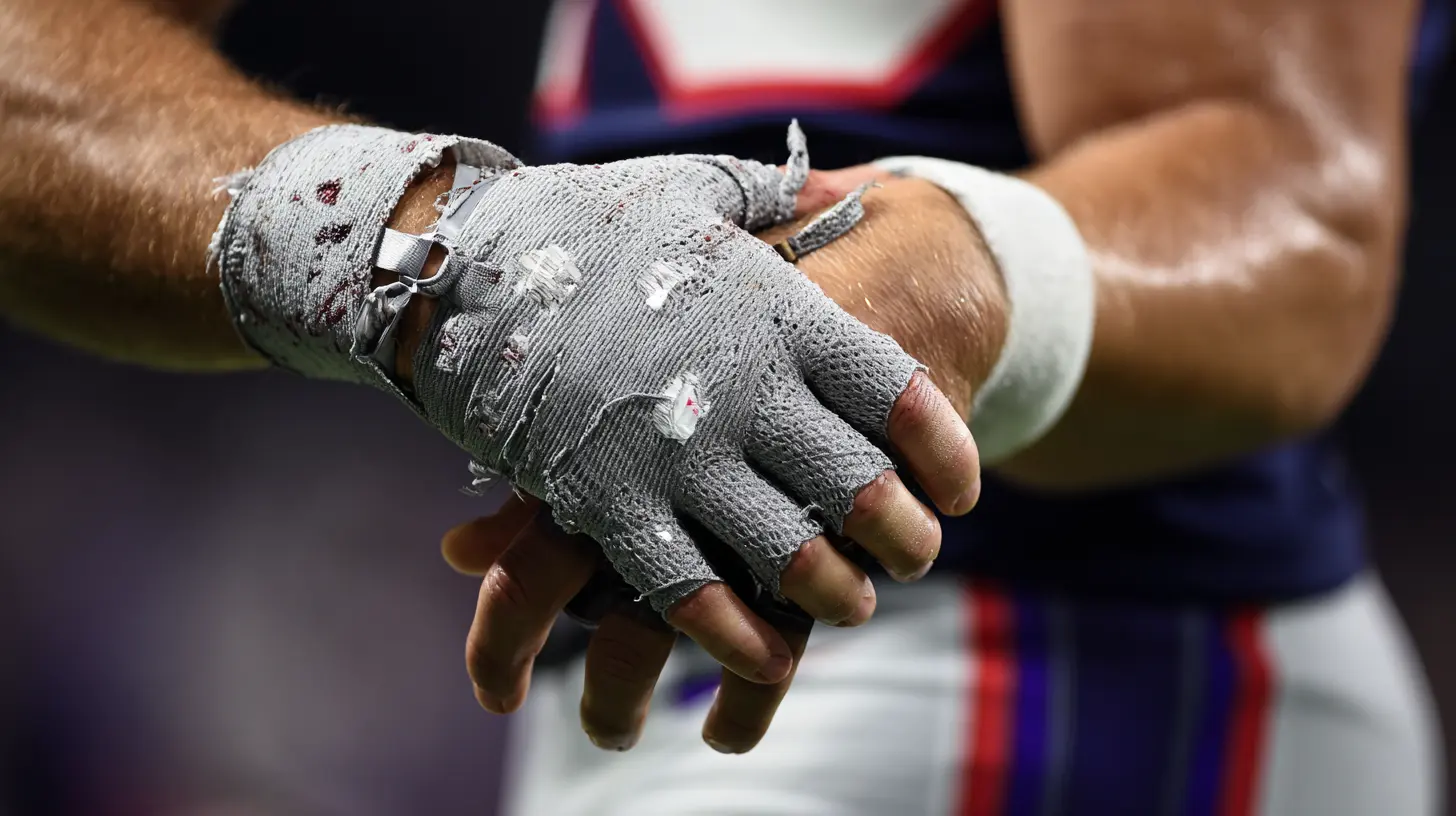
Before projecting forward, it helps to be precise about what an injury report actually is. In the NFL, the official report is a compliance document. Teams are required to list players with a practice status (did not participate, limited, full) and a game status (out, doubtful, questionable) at defined points during the week. The purpose is competitive integrity and, increasingly, gambling integrity. It was never designed to help fantasy managers.That distinction matters because it explains most of the frustration fantasy players feel. Teams have incentives to be vague. A coach who says a player is "day to day" is not lying so much as managing information as a competitive asset. Opponents read the same report. If a team reveals too much, it hands an advantage to the other sideline. Fantasy managers are essentially reading a document written for a different audience and hoping it tells them what they need.
In 2026, that tension is likely to intensify, not resolve. The forces pushing toward more transparency and the forces pushing toward secrecy are both getting stronger.
The Regulatory Squeeze: Gambling Money Changes Everything
The single largest driver of change in injury reporting is the legal sports betting market. When states legalized wagering at scale, they created a constituency with a financial interest in accurate, timely injury information. Regulators, leagues, and sportsbooks all have reasons to want fewer surprises.Consider what happens when a star quarterback is a late scratch after the betting public has already placed wagers. That scenario generates complaints, investigations, and pressure on leagues to tighten disclosure rules. The response is typically incremental: earlier reporting deadlines, clearer definitions of practice participation, mandatory injury designations even for players who might play. None of these changes are designed for fantasy, but fantasy inherits them.
For fantasy managers, this is mostly good news in one narrow sense: more information earlier. The trade-off is that information becomes priced in faster. If a player's status is clarified on Thursday instead of Sunday morning, your opponents see it too. The edge from simply reading the news shrinks. The edge shifts to interpretation, which is a harder skill.
There is also a subtler risk. When reporting rules tighten, teams sometimes respond by being technically compliant but practically unhelpful. A player can be listed as "limited" for a dozen different reasons, from a minor tweak to a deliberate load management decision. The label becomes less informative even as the reporting becomes more frequent. Fantasy managers who treat the designation as a precise signal will be disappointed.
Real-Time Data and the Shrinking Information Window
The most visible change heading into 2026 is speed. Injury information now moves through multiple channels simultaneously: team press conferences, beat reporter social feeds, national insiders, and increasingly, automated alerts tied to practice footage and official transactions. The window between an event and public knowledge has compressed from hours to minutes.Why does this matter for fantasy? Because the value of information is time-sensitive. A manager who learns at 11:30 AM on Sunday that a running back is unlikely to play can still adjust a lineup. A manager who learns at 12:55 PM, five minutes before kickoff, is often stuck. As reporting accelerates, the practical question becomes less about access and more about decision speed.
This creates a real trade-off. Faster information rewards managers who are available and decisive on Sunday mornings. It punishes those who check their lineup once and walk away. Leagues with deep benches and flexible lineups handle this better than leagues with rigid roster rules. If you run a league, consider whether your waiver and lineup rules are compatible with a world where news breaks continuously. A league that locks all players at the first kickoff of the day, for instance, is far less forgiving than one with rolling locks.

The Practice Report as a Predictive Tool
Here is where genuine expertise separates from casual play. The official game status is a lagging indicator. The practice report is a leading one. Managers who understand how to read practice participation patterns can often infer a player's likely status before the formal designation arrives.The logic is straightforward. Teams follow routines. A player who practices fully on Wednesday and Thursday but appears on the report with a new designation Friday is a different situation than a player who was limited all week and upgraded to full on Friday. The first pattern sometimes signals a setback. The second often signals a player trending toward playing.
But this is where nuance matters, and where many managers go wrong. Practice participation is not a medical record. Teams manage veteran workloads deliberately. A star receiver listed as "limited" on Wednesday might simply be on a maintenance plan that has nothing to do with a new injury. Treating every "limited" as a warning sign leads to unnecessary panic and bad lineup decisions.
The better approach is to track patterns over time and compare against a player's own baseline. If a player who normally practices fully suddenly appears as limited for two consecutive days, that is meaningful. If a player with a known chronic issue is limited every Wednesday for three months, that is noise. Context is everything.
Why "Questionable" Is the Most Dangerous Word in Fantasy
No designation causes more fantasy damage than "questionable." It is a coin flip dressed as information. Teams use it for players who are genuinely 50/50, for players who are almost certainly playing but the team wants to keep opponents guessing, and for players who are almost certainly not playing but the team sees no benefit in ruling them out early.In 2026, expect the questionable designation to become even murkier. As betting markets scrutinize injury reports, some teams may lean on ambiguity as a defensive measure. If you cannot be accused of misleading the public, you can still be vague. Fantasy managers should treat "questionable" as a prompt to gather more information, not as an answer.
What should you actually do? First, identify the player's typical pattern. Some teams are historically transparent, ruling players out early. Others are historically cryptic. Second, watch for the Sunday morning report, which often clarifies status roughly 90 minutes before kickoff. Third, have a contingency plan already in place. The managers who handle questionable players best are the ones who decided on Thursday who their backup would be, not the ones scrambling at 12:50 PM.
The Rise of Load Management and Its Fantasy Consequences
One trend that has quietly reshaped fantasy value is load management. Originally associated with basketball, it has crept into football in the form of veteran rest days, snap count limits, and strategic inactive designations late in the season. A team that has clinched a playoff spot has little incentive to risk a star in a meaningless game.For fantasy managers, this creates a category of injury report entry that is not really an injury at all. A player listed with "rest" or "not injury related" is healthy but unavailable. This is frustrating, but it is also predictable if you pay attention to team circumstances. Late-season games involving teams already eliminated or already locked into a seed are the ones most likely to feature these designations.
The practical implication is that fantasy playoffs, which typically run in weeks 15 through 17, are increasingly vulnerable to rest-related absences. Managers who build rosters with playoff schedules in mind, prioritizing players on teams fighting for position, gain a real edge. This is not a new idea, but it is becoming more important as teams grow more willing to sit healthy players.
What Teams Gain From Ambiguity, and What It Costs You
It is worth being explicit about the incentive structure. Teams gain three things from ambiguous injury reporting.First, competitive advantage. An opponent that must prepare for two possible quarterbacks prepares less effectively for either.
Second, negotiating and roster flexibility. A player listed as questionable can be activated or held out without a formal roster move.
Third, fan and media management. Announcing a star will miss four weeks generates a news cycle. Announcing he is "week to week" softens the blow.
The cost falls on fantasy managers, who must make binary decisions with fuzzy inputs. There is no fix for this. It is a structural feature of the game, not a bug. The best response is to accept uncertainty and build decision processes that tolerate it. That means rostering depth at volatile positions, avoiding overreliance on any single player, and being willing to bench a questionable star for a healthy starter with a lower ceiling. That last decision is emotionally difficult and often correct.
Building a Personal Injury Intelligence System
Given all of this, what does a smart fantasy manager actually do in 2026? The answer is not to consume more information. It is to consume better information and organize it.Start with a small set of trusted sources. One national insider, one beat reporter per team you care about, and the official team injury report. More sources do not improve accuracy. They increase noise.
Next, separate signal from noise in your own notes. Track practice participation by day, not just the final designation. Note whether a player's status is trending up or down. A simple weekly log, even a few lines, beats memory.
Then, decide your rules in advance. If a player is questionable and you have a comparable healthy option, what do you do? If a player is doubtful, you should almost always bench him, since doubtful players rarely play. Having these rules pre-decided removes emotion from a high-pressure moment.
Finally, understand your league's mechanics. When do waivers run? When do lineups lock? Can you make moves after the early games? A great decision in a league with rolling locks is a wasted one in a league with a single lock time.
Common Mistakes and Misconceptions
Several errors show up again and again.The first is treating the injury report as a prediction. It is a status document. It tells you what a team is willing to say, not what will happen.
The second is ignoring practice reports entirely and relying only on the game designation. This throws away the most useful leading indicator available.
The third is overreacting to Wednesday and Thursday designations. Early-week statuses often change. Friday and Saturday are when the picture sharpens.
The fourth is assuming all teams handle reporting the same way. They do not. Some organizations are consistently transparent. Others are consistently opaque. Learning your players' teams is part of the job.
The fifth is failing to account for the opponent and game context. A player might be limited in practice but play a full snap share in a must-win game. Conversely, a player might be listed as full participant but see reduced snaps in a blowout.
Looking Ahead: What 2026 Might Actually Look Like
No one can state with certainty how injury reporting will evolve. But several plausible trends are worth preparing for.More frequent updates are likely, driven by betting market pressure and digital distribution. Formal designations may arrive earlier in the week, but they may also be accompanied by more caveats.
Team-controlled messaging may grow more sophisticated, with clubs using their own channels to shape narratives before national reporters do. This makes beat reporters more valuable, not less, because they often capture nuance that formal reports omit.
Fantasy platforms may integrate injury data more deeply, offering projected availability percentages rather than binary statuses. This would be genuinely useful, though it would also compress the edge available to managers who do their own analysis.
And the gap between casual and serious managers may widen. When information is abundant and fast, the advantage goes to those who can interpret it. That is a skill, and like any skill, it rewards practice.
Practical Recommendations
If you take nothing else from this article, take these points.Read practice reports, not just game designations. Track them over time.
Decide your questionable-player rules before Sunday. Write them down if that helps.
Build rosters with depth at positions prone to late-week uncertainty, especially running back and wide receiver.
Pay attention to team incentives late in the season. Rest designations are predictable if you look for them.
Do not chase every update. Curate your sources and trust your process.
And accept that some uncertainty is unavoidable. The managers who succeed long term are not the ones who eliminate risk. They are the ones who manage it better than everyone else in their league.
The injury report will keep changing. Your job is to change with it, thoughtfully and without panic.
all images in this post were generated using AI tools
Category:
Injury UpdatesAuthor:

Frankie Bailey