How Biomechanics Is Reducing Reinjury Risks in 2026
15 October 2026
Reinjury is the quiet crisis of sports medicine. An athlete returns to competition, passes the standard tests, feels ready, and then breaks down again in the same place. For decades, the industry treated this as bad luck or a failure of toughness. In 2026, that explanation no longer holds up. Biomechanics has moved from a niche laboratory discipline into the daily work of return to sport, and the results are changing how clinicians, coaches, and athletes think about risk.
The core shift is simple to state and hard to execute. Instead of asking whether a tissue has healed, practitioners now ask whether the athlete's movement system can absorb the loads that sport will place on it. That distinction sounds academic. In practice, it determines whether a player finishes the season or spends another six months in rehabilitation.
Why Traditional Return to Sport Criteria Keep Failing
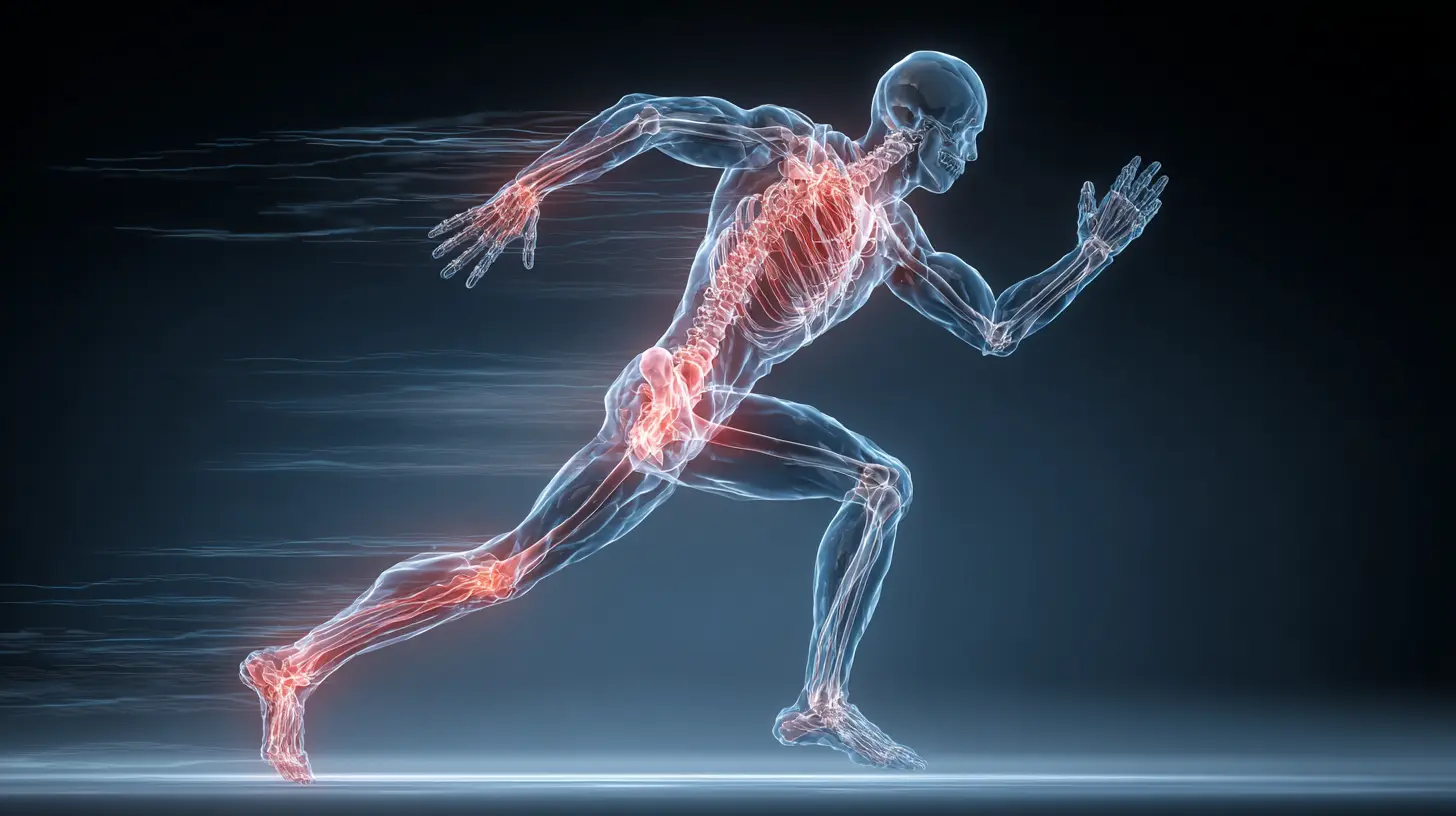
For years, the standard discharge test was a mix of time, pain, and isolated strength. If the calendar said twelve weeks, the knee felt fine walking, and the quadriceps tested within ten percent of the other side, the athlete was cleared. The logic was reasonable given the tools available. It was also incomplete.Reinjury happens under conditions that isolated tests rarely reproduce. A soccer player decelerating at speed, a basketball player landing off balance after contact, a runner fatiguing in the final miles of a race. These moments combine high force, rapid timing, and unpredictable positioning. A strength test on a stable platform tells you almost nothing about how the body will behave in that chaos.
Biomechanics addresses this gap by measuring movement rather than guessing at it. It looks at joint angles, force distribution, timing sequences, and asymmetry across the whole kinetic chain. The point is not to collect data for its own sake. The point is to find the specific failure points that predict a second injury before the athlete ever returns to play.
The Mechanics of Reinjury: What Actually Goes Wrong
To understand why biomechanical assessment works, you have to understand how reinjuries occur. Most are not caused by a single traumatic event. They build up through compensations that persist long after the original injury heals.Compensation Patterns That Outlast Pain
When a tissue is injured, the nervous system rewires movement to avoid pain. This is protective and useful in the short term. The problem is that these patterns often persist after the tissue recovers, because the brain has learned them as the new normal.A classic example is the athlete who injures an ankle. For weeks, they shift weight to the uninjured side to avoid discomfort. The hip and knee on the opposite leg start absorbing more load. By the time the ankle feels fine, the opposite limb is working harder than it should, and the original ankle has lost proprioceptive sharpness. Clearing the ankle without addressing the whole pattern leaves the athlete at risk on both sides.
Biomechanical screening catches these patterns because it measures the entire movement, not just the injured joint. A single leg squat, a hop test, or a drop landing reveals asymmetries that the athlete cannot feel and the clinician cannot see with the naked eye.
The Load Tolerance Gap
Tissue heals at a different rate than it adapts to load. A repaired tendon may be structurally sound at four months but still unable to handle the peak forces of sprinting or jumping. This is the load tolerance gap, and it is where many reinjuries live.Biomechanics helps close that gap by quantifying what the tissue actually experiences during sport specific movements. Force plates, wearable sensors, and video analysis can estimate peak loads and compare them to what the athlete has demonstrated in training. If the gap is too wide, the return is premature regardless of how the knee looks on an MRI.
What Modern Biomechanical Assessment Looks Like
The tools have become more accessible, which is a major reason biomechanics is influencing practice in 2026 rather than sitting in research labs.Markerless Motion Capture
Camera based systems that do not require reflective markers have made gait and jump analysis practical in clinics and training facilities. An athlete performs a series of movements while cameras record. Software estimates joint angles and identifies asymmetries. The setup takes minutes, not hours, and the athlete can repeat it throughout rehabilitation to track progress.The trade off is precision. Markerless systems are less accurate than laboratory grade motion capture, especially for subtle rotations. For return to sport decisions, that trade off is often acceptable because the goal is to identify meaningful asymmetries, not to publish research.
Wearable Sensors and Inertial Measurement Units
Small sensors worn on the shins, thighs, or lower back can measure acceleration, deceleration, and impact forces during real training and competition. This is valuable because it captures the unpredictable movements that laboratory tests miss. A player may look symmetrical in a controlled hop test and then show a clear asymmetry during a competitive scrimmage.The challenge is data volume. Wearables generate enormous amounts of information, and without a clear framework for interpreting it, they create noise rather than insight. The best practitioners define specific thresholds and questions before collecting data, not after.
Force Plates and Asymmetry Metrics
Force plates remain the gold standard for measuring jump and landing mechanics. They reveal how much force each leg produces, how quickly it is produced, and how the athlete absorbs impact. Asymmetry above a certain threshold, often cited in the range of ten to fifteen percent, is associated with increased reinjury risk in several common sports injuries.That said, asymmetry is not automatically a problem. Some sports create natural asymmetry, and some athletes function well with mild differences. The number matters less than the trend and the context. A persistent asymmetry that does not improve with targeted training is more concerning than a small asymmetry that resolves as strength returns.
Applying Biomechanics to Common Reinjury Scenarios
Different injuries demand different biomechanical lenses. A generic screening protocol misses the specific mechanisms that drive recurrence in each case.ACL Reinjury
Anterior cruciate ligament injuries have a notoriously high reinjury rate, particularly in young athletes returning to pivoting sports. Biomechanics has clarified that the risk is not just about ligament healing. It is about how the athlete lands, cuts, and decelerates.Key markers include knee valgus collapse during landing, stiff landings with limited knee flexion, and asymmetrical quadriceps and hamstring strength. Video analysis of cutting maneuvers often reveals that the athlete avoids the injured side or positions the foot in a way that loads the graft. Correcting these patterns through targeted neuromuscular training reduces risk more effectively than strength work alone.
Hamstring Strain Recurrence
Hamstring strains recur at high rates, and the reason is often that the athlete returns before the muscle has regained its ability to produce force at long lengths. Biomechanical assessment during sprinting and Nordic hamstring exercises can reveal deficits that standard strength tests miss.The eccentric component matters enormously here. The hamstring must tolerate high forces while lengthening during the late swing phase of sprinting. If that capacity is not restored, the muscle is vulnerable every time the athlete accelerates. Biomechanical analysis helps identify whether the deficit is in force production, timing, or both.
Ankle Sprain and Chronic Instability
Ankle sprains are often dismissed as minor, which is a mistake. A significant portion of athletes develop chronic ankle instability, and the reinjury rate is high. Biomechanics shows that the issue is frequently not just ligament laxity but altered landing mechanics, reduced proprioception, and delayed muscle activation.Balance and hop testing with biomechanical analysis can reveal whether the athlete is relying on visual cues rather than joint position sense. If they are, they need targeted proprioceptive training before returning to sport, not just strengthening.
Why Biomechanics Works: The Underlying Logic
The effectiveness of biomechanical assessment rests on a few principles that are worth stating plainly.First, movement is a whole body event. Injuries do not happen in isolation. A knee problem often reflects hip control, ankle mobility, or trunk stability. Measuring the whole chain identifies the real driver.
Second, the nervous system governs movement. Muscles respond to signals from the brain and spinal cord. If those signals are altered by injury, the resulting movement patterns can persist even after the tissue heals. Biomechanics provides a window into those patterns.
Third, load is the language of tissue adaptation. Tissues adapt to the loads they experience. If the loads in rehabilitation do not match the loads in sport, the tissue will not be prepared. Biomechanics quantifies the gap.
Limitations and Common Mistakes
Biomechanics is powerful, but it is not magic. Overreliance on data without clinical judgment leads to problems.One common mistake is chasing perfect symmetry. Perfect symmetry is rare and not always desirable. The goal is functional symmetry that supports the demands of the sport, not a number on a screen.
Another mistake is testing in isolation. A single assessment at the end of rehabilitation is far less useful than repeated assessments over time. The trend matters more than the snapshot.
A third mistake is ignoring the psychological dimension. Fear of reinjury changes movement. An athlete who is hesitant will move differently, and that difference shows up in biomechanical data. Addressing confidence and graded exposure to sport specific situations is part of the process, not separate from it.
Finally, there is the risk of over testing. More data is not always better. If assessments do not change decisions, they waste time and resources. The best programs use a small number of reliable tests that directly inform return to sport criteria.
Practical Recommendations for Athletes, Coaches, and Clinicians
For athletes, the message is to ask questions. If you are being cleared to return, ask what your movement looks like compared to your baseline and compared to your uninjured side. Ask whether you have been tested in sport specific situations, not just in the clinic.For coaches, the value is in integrating biomechanical principles into training. Landing mechanics, deceleration control, and change of direction technique can be trained daily. Small corrections in technique reduce risk over a season.
For clinicians, the key is to use biomechanics as a decision support tool, not a replacement for judgment. Combine objective data with subjective reports, sport demands, and the athlete's confidence. Document baseline measurements early so you have something to compare against later.
What to Expect in the Coming Years
Biomechanics will continue to move closer to real time. Wearables that provide immediate feedback during training, algorithms that flag risky movement patterns as they happen, and personalized return to sport protocols based on individual movement signatures are all realistic developments.The bigger shift, however, is cultural. As athletes, coaches, and organizations see that biomechanical assessment reduces reinjury and extends careers, the practice will become standard rather than optional. The teams that adopt it early will have a competitive advantage in player availability and long term performance.
Reinjury is not inevitable. It is a consequence of incomplete preparation and unrecognized risk. Biomechanics gives us the tools to see what was previously invisible. Used thoughtfully, it turns return to sport from a guess into a plan.
all images in this post were generated using AI tools
Category:
Injury UpdatesAuthor:

Frankie Bailey
Discussion
rate this article
1 comments
Vanta Wilson
Great read! It's encouraging to see how biomechanics is changing the game in injury prevention. Understanding how our bodies move can really help athletes stay on track and perform better. Here's to a healthier future for sports in 2026 and beyond... we all want to see our favorite players thrive!
October 15, 2026 at 4:35 AM