How Advanced Rehab Is Creating Faster Returns in 2026
1 October 2026
A sprinter clutches a hamstring and the stadium goes quiet. Six years ago, that moment likely meant eight to twelve weeks on the sideline, a cautious return, and months of lingering doubt. In 2026, the same injury might cost four to six weeks, with the athlete running at near-maximal speed before the tissue has fully scarred. That shift is not marketing spin. It reflects a genuine change in how sports medicine understands healing, load, and the nervous system's role in recovery.
This article examines what has actually changed, why these methods work when applied correctly, when they can backfire, and how athletes, coaches, and clinicians should think about the trade-offs. The goal is not to sell you on technology. It is to help you make better decisions about a body that has to last.

The Core Shift: From Passive Healing to Active Adaptation
Traditional rehab followed a predictable script. Protect the injured area, reduce inflammation, wait for tissue to heal, then gradually rebuild strength. The problem with that model is that it treats the body like a machine part that needs to sit in a repair shop. Living tissue does not work that way.Bone, tendon, muscle, and ligament respond to mechanical signals. Remove those signals and the tissue weakens. Immobilize a healthy limb for two weeks and you will lose measurable strength and muscle mass. So the old approach often created a second problem while solving the first.
Advanced rehab in 2026 flips the sequence. Instead of waiting for full structural healing, clinicians introduce safe, controlled mechanical and neurological stimulus as early as the tissue can tolerate it. The question is no longer "Is it healed?" It is "What can this tissue handle right now, and how do we progress that capacity without crossing the line into re-injury?"
That reframing explains most of the acceleration. Faster returns come less from miracle devices and more from better timing.

Why the Nervous System Is the Real Bottleneck
Here is a concept that separates excellent rehab from average rehab: the tissue often heals before the athlete feels ready, and sometimes the athlete feels ready before the tissue has healed.Pain, stiffness, and that vague sense of instability are not purely mechanical. They are produced by the nervous system, which has learned to protect the area. After an injury, the brain downregulates output to the affected region. Muscles fire in altered sequences. Proprioception dulls. The limb feels foreign.
This is why some athletes pass every strength test but still cannot sprint at full speed. The hardware is repaired. The software is still running an old protection program.
Advanced rehab addresses this directly. Techniques like blood flow restriction training, targeted neuromuscular re-education, and graded exposure to high-speed movement are designed to retrain the nervous system, not just rebuild tissue. When the brain regains trust in the limb, output returns quickly.
The practical takeaway: if your rehab is only about sets, reps, and range of motion, you are likely leaving weeks on the table.

The Technologies That Actually Move the Needle
Not every tool deserves the hype. Some are genuinely transformative. Others are expensive placebos wrapped in clinical language. Here is an honest breakdown.Blood Flow Restriction Training
A cuff restricts venous return while allowing arterial flow. The limb works at low loads, often 20 to 30 percent of maximum, yet produces adaptations similar to heavy lifting. For someone who cannot load a healing tendon with heavy weight, this is a real solution.Why it works: metabolic stress and cellular signaling drive muscle and tendon adaptation independent of mechanical load. The tissue gets the message to rebuild without the strain.
When to avoid it: vascular disease, history of blood clots, uncontrolled hypertension, or anytime a clinician cannot safely apply and monitor the cuff. It is also not a replacement for eventual heavy loading. It is a bridge.
Advanced Imaging and Load Monitoring
Traditional MRI shows structure. It does not show function. In 2026, clinicians increasingly combine imaging with real-time load data from wearable sensors. Force plates, GPS units, and inertial measurement devices reveal how an athlete moves, not just how the tissue looks.The value is in the mismatch. An athlete may have a clean scan but asymmetric loading patterns that predict re-injury. Catching that early changes the entire plan.
The trade-off: data can mislead. A number without context is noise. These tools work only when a skilled clinician interprets them alongside the athlete's symptoms and history.
Regenerative Injections and Biologics
Platelet-rich plasma, corticosteroid injections, and various biologic preparations remain widely used. The evidence is mixed and highly dependent on injury type and location.Corticosteroids reduce pain quickly but can weaken tissue over time if overused. They are a short-term bridge, not a cure. PRP shows promise in some tendon and ligament injuries but results vary enormously based on preparation method, injection technique, and the specific tissue involved.
The honest position: these are tools with narrow indications. Anyone promising a guaranteed fast return from an injection alone is overselling. They work best as part of a broader loading and rehab program.
Neuromuscular and Cognitive Training
This is the least glamorous and arguably the most important. Reaction drills, dual-task training, and sport-specific decision-making under fatigue rebuild the connection between brain and body. An athlete is not cleared for return because the knee is strong. They are cleared because they can cut, land, and react without conscious thought.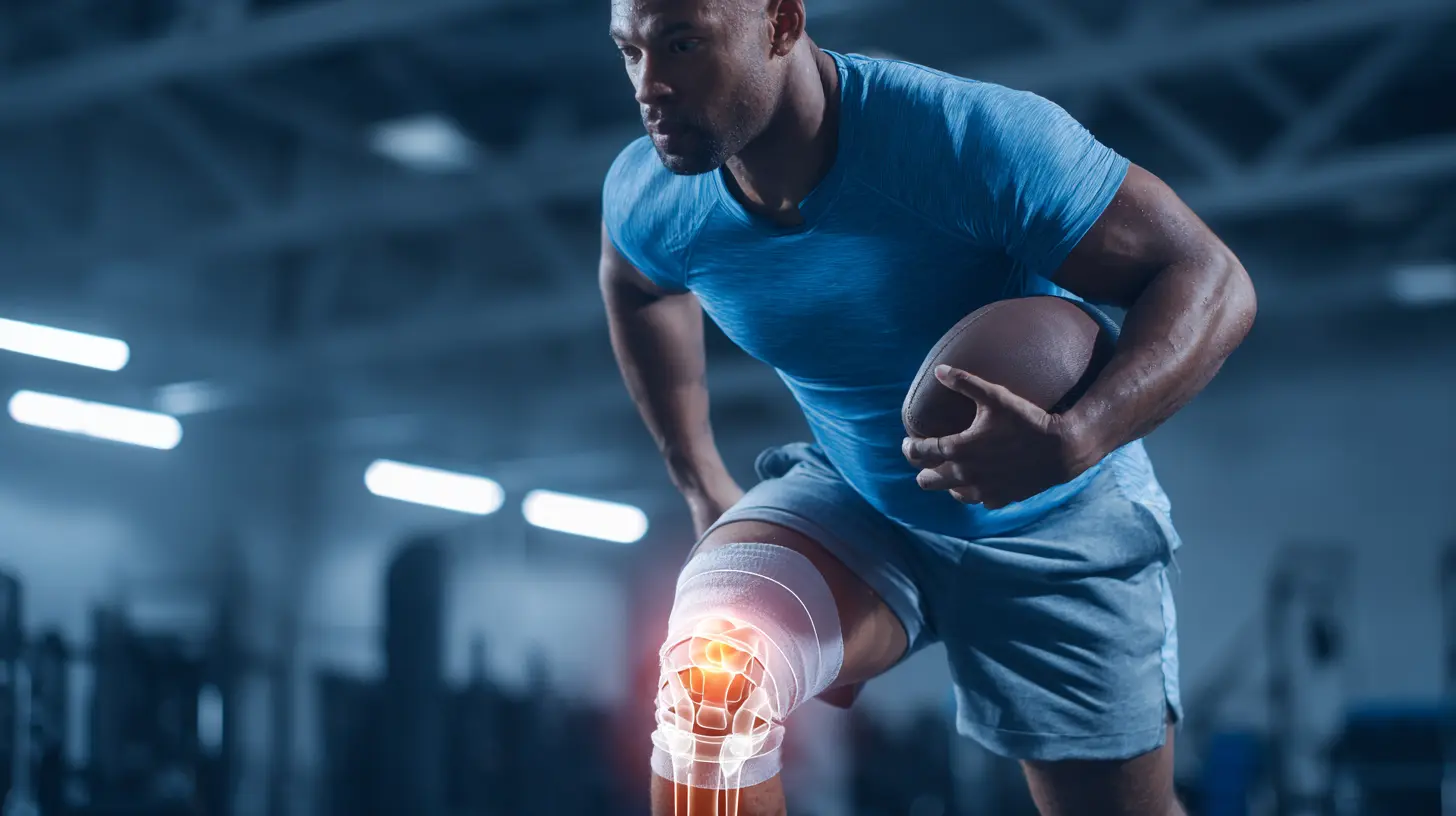
The Timeline Myth: Why "Faster" Does Not Mean "Reckless"
A common misconception is that advanced rehab shortcuts healing. It does not. You cannot compress the biology of collagen maturation or bone remodeling. What you can do is stop wasting time.Consider two athletes with the same grade two hamstring strain. Athlete A follows the old protocol: rest, light stretching, gradual jogging at week three, running at week six. Athlete B begins controlled isometric loading within days, adds blood flow restriction work, and progresses to high-speed running on an anti-gravity treadmill once specific criteria are met.
Both athletes' tissue heals on a similar biological timeline. But Athlete B has maintained strength, kept the nervous system engaged, and preserved cardiovascular fitness. When the tissue is ready, Athlete B is already prepared to use it. Athlete A is starting from a much lower baseline.
That is the real mechanism. Advanced rehab does not accelerate healing. It eliminates the deconditioning and fear that add weeks to the return.
Criteria-Based Progression Beats Calendar-Based Progression
The single most important principle in modern rehab is this: the calendar does not clear an athlete. Criteria do.A well-designed program defines specific, measurable milestones. For a knee injury, that might include limb symmetry above 90 percent on strength testing, pain-free single-leg hop distance within 10 percent of the other side, and normal landing mechanics on video analysis.
Each milestone unlocks the next phase. If the athlete does not meet it, they do not advance, regardless of how many weeks have passed. This protects against re-injury while removing arbitrary delays.
Common mistake: clinicians who use time as the primary guide. "You are six weeks out, so you can start running." That is guessing. The athlete might be ready at four weeks or not until eight. Criteria-based progression answers that question with evidence.
Real-World Example: ACL Reconstruction
ACL rehab illustrates the tension perfectly. For years, the standard return timeline was nine to twelve months. Many athletes rushed back sooner and re-injured. Others waited a full year and still re-injured because they had never restored true neuromuscular control.In 2026, the better programs combine early loading, blood flow restriction to prevent quadriceps atrophy, and a heavy emphasis on plyometrics, deceleration, and sport-specific chaos drills. Return to sport is not a date. It is a battery of tests that includes psychological readiness questionnaires, isometric strength ratios, and video analysis of cutting mechanics.
The result is not that everyone returns at six months. It is that athletes who are genuinely ready return sooner, and those who are not are held back until they are. That is a better system for everyone.
The Psychological Dimension Nobody Wants to Discuss
Fear of re-injury is one of the strongest predictors of a poor return. Athletes who do not trust their body move tentatively. Tentative movement is inefficient movement, and inefficient movement is how re-injuries happen.Advanced rehab treats confidence as a trainable quality. Graded exposure to increasingly demanding tasks, combined with clear feedback and education, rebuilds trust. Some programs use virtual reality or biofeedback to let athletes practice high-risk movements in a safe environment before doing them on the field.
This is not soft science. It is applied neuroscience. An athlete who believes their knee will hold is an athlete who moves with the timing and force production required at the highest level.
What Can Go Wrong: The Risks of Pushing Too Hard
Every advantage has a shadow. The same tools that accelerate return can cause harm when misused.Blood flow restriction can cause nerve damage or dangerous clotting if applied incorrectly. Anti-gravity running can mask poor mechanics that will surface later under full body weight. Early return to sport without meeting criteria is the fastest route to a second, often worse, injury.
The most common mistake is confusing "no pain" with "no risk." Pain is a signal, but it is not the only one. Swelling, altered movement patterns, and declining performance under fatigue are all warning signs that the tissue or nervous system is not ready.
Another trap: relying on a single test or metric. No single number captures readiness. The best decisions integrate strength, movement quality, psychological state, sport demands, and the athlete's own sense of readiness.
Practical Advice for Athletes and Coaches
If you are navigating an injury, here is what actually matters.First, ask about criteria. Any rehab professional should be able to tell you exactly what milestones you need to hit before advancing. If the answer is a timeline without measurements, get a second opinion.
Second, insist on objective testing. Strength ratios, hop tests, video analysis, and load monitoring are not luxuries. They are how you avoid guesswork.
Third, treat the nervous system as seriously as the tissue. Reaction drills, balance work, and sport-specific decision-making belong in the program from early on, not as an afterthought.
Fourth, respect the biology. You cannot rush collagen. You can only avoid wasting time while it matures.
Fifth, build in psychological support. Fear is real, and it responds to structured exposure and honest communication.
The Road Ahead
Advanced rehab in 2026 is not about any single device or technique. It is a philosophy: load tissue intelligently, retrain the nervous system, use data to guide decisions, and progress based on criteria rather than calendars.The athletes who benefit most are not necessarily the ones with the best technology. They are the ones working with clinicians who understand why each intervention works, when it should be used, and when it should be set aside. That judgment, more than any gadget, is what creates faster and safer returns.
all images in this post were generated using AI tools
Category:
Injury UpdatesAuthor:

Frankie Bailey