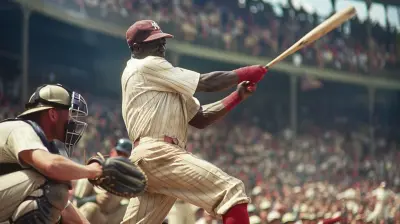
From the Field to the Page: The Art of Writing About Sports
9 April 2026
Sports have this magic quality, don’t they? One moment you're screaming at a last-minute goal, the next you're tearing up at a farewell speech. But while the action unfolds in real-time, there’s another side of sports that’s just as thrilling—capturing all that emotion, drama, and intensity through writing.
Welcome to the world where sweat meets syntax, where touchdowns turn into topics, and where athletes become legends through the power of words. If you’ve ever wanted to step off the field and onto the page, or if you're just a sports fan who loves storytelling, you’re in the right place.

Why Writing About Sports Is So Much More Than Just Reporting
Let’s get this straight: sports writing isn't just about “who scored what.” It’s storytelling in its rawest, most passionate form. A true sports writer doesn’t just show you the score—they show you the struggle behind it.You're not just covering stats, you're capturing moments. You’re painting vivid pictures for readers who may not have even watched the game. You bring the locker room to life. You give context to rivalries. You humanize the athlete behind the jersey. Sports writing is where journalism, history, psychology, and poetry all meet at the same dinner table.

The Power of Emotion in Sports Writing
Ever felt chills reading a post-game article or heard your voice crack narrating a winning shot? That’s because sports writing thrives off raw emotion.Whether it’s the heartbreak of a missed penalty or the glory of a buzzer-beater, these are moments packed with human feeling. And as a writer, it's your job to translate that emotion from the field into words that resonate.
Use metaphors, sensory details, and poignant anecdotes. Let readers feel the mud on the cleats, the tension in the air, or the pounding heart of a young rookie in his debut game.
Remember, sports are emotionally charged because they’re unpredictable. That unpredictability is gold for any writer.

Know the Game Inside and Out
To write well about sports, you gotta know your stuff. No, you don’t need to play quarterback or shoot three-pointers for a living, but you should understand the rules, history, and strategies.Start by diving headfirst into:
- The terminology of the sport
- The historical context of teams and players
- Key rivalries and narratives
- Current stats and standings
When you know the game deeply, your writing becomes insightful rather than surface-level. You can predict plays, dissect decisions, and offer perspectives that captivate even the most hardcore fans.
Knowledge makes the difference between "he passed the ball" and “he threaded a perfect no-look pass through a tight zone defense."

Types of Sports Writing
Just like sports are diverse, so are the ways to write about them. Let’s break down the different styles of sports writing and how each brings something unique to the game.1. Game Recaps
This is your bread and butter. A good recap isn't just box scores and final results.Tell the story of the game. What were the turning points? Who showed up when it mattered most? What was the energy like in the stadium?
A recap should answer the "what happened?" with just enough flair to keep it engaging.
2. Opinion Pieces
Here’s where your voice can shine. Love or hate a coach's decision? Think a trade will break a dynasty? Lay it all out.Just make sure your opinions are backed by stats, history, or expert takes. Bold is good. Reckless? Not so much.
3. Feature Stories
Ah, the good stuff. This is where sports writing turns into profile, drama, and human interest journalism.Maybe it's an underdog making his comeback. Maybe it's an Olympic hopeful training in her backyard. Tell their story. Dig deep. Interview their families, coaches, and teammates. Capture the essence of who they are beyond their stats.
4. Live Blogs and Commentary
Fast-paced, high-energy, real-time writing. It's like tweeting, but with style.You’ve got to be sharp, observant, and quick on the draw. But done right, this can pull readers into the heat of the moment—even if they're stuck at work refreshing their browsers.
5. Historical and Analytical Articles
This takes time and research. But if you're the kind of person who enjoys diving into data and unraveling the past, this style provides depth and credibility.Think: “How Analytics Changed Baseball” or “Top 10 Greatest NBA Finals in History.” Bring new perspectives to the table.
Tips to Master the Craft of Sports Writing
Getting good at writing about sports takes more than just watching ESPN. Here are some tips that’ll help you turn your passion into polished prose.1. Watch With a Writer's Eye
Don’t just cheer. Observe.- What did the crowd do when the star player got subbed?
- Was the coach pacing or sitting calmly?
- How did body language shift when the momentum changed?
Details bring stories to life.
2. Talk to People
Players, coaches, fans, assistants, even referees—everyone has their own angle of the story.A single quote can become the centerpiece of your article. Interviews give your writing authenticity and emotion. Be respectful and curious.
And hey, even casual sideline chatter can reveal gold.
3. Practice Like an Athlete
Yes, writing takes practice too.Write game recaps even if they’re just for yourself. Try different angles: what if you covered the same game from the perspective of a rookie vs. a veteran?
Push your creativity. Experiment. Hone your voice.
4. Read the Greats
Writers like Grantland Rice, Bob Ryan, Wright Thompson, or Dave Zirin—these legends knew how to balance facts with flair.The more you read top-tier sports writing, the more tools you’ll add to your own toolbox. Pay attention to how they open an article, hook the reader, and build drama.
5. Use Stats Wisely
Don’t drown your readers in numbers. Stats should support your story, not become it.Instead of saying “he averaged 9.7 rebounds per game,” say “he’s the guy cleaning the glass when the game’s on the line.” Then, back it with that stat.
Context + character = compelling content.
SEO Tips for Sports Writers (Yeah, You Need ’Em!)
If you want people to read your amazing article, they’ve gotta find it first. That’s where SEO (Search Engine Optimization) steps in.1. Nail Your Keywords
Target what your audience is searching for. Think: “NFL trades 2024,” “fantasy football sleepers,” “best soccer goals of all time.”Use these naturally throughout the article, especially in:
- The title
- Headers
- Meta descriptions
- The first 100 words
2. Use Snappy Headlines and Subheads
Google loves headers. So does your reader.Break up your content with H2s and H3s to make it scannable. Include relevant keywords in at least some of them.
3. Add Internal and External Links
Link to your older posts when relevant—keeps users on your blog.And link to credible sources (like ESPN, official league websites, or player profiles). It boosts trust, and Google likes that.
4. Include Multimedia
Photos, videos, highlight reels—anything that engages the eye can keep readers around longer.Longer time on the page = better rank in search results.
5. Write for Humans First
That means using plain language, avoiding keyword stuffing, and focusing on storytelling. Google's smarter than you think—it knows when you're trying too hard.The Personal Side of Sports Writing
Here’s the thing: writing about sports is an emotional ride. You get to witness greatness. You also see failure. You watch careers blossom and fade. Through it all, you’re the one preserving the narrative.It’s a privilege, really.
Whether you're writing about a local high school team's unbeaten season or covering the World Cup, remember—your words matter. You have the power to make readers care, even if they’ve never watched a single game.
So write with heart. Let the field inspire your page.
Because at the end of the day? That’s what sports writing is all about.
all images in this post were generated using AI tools
Category:
Sports BooksAuthor:

Frankie Bailey
Discussion
rate this article
2 comments
Noah Newton
This article brilliantly captures the unique challenge of translating the excitement of sports into written words. It highlights how storytelling can elevate the game, making it accessible and engaging for fans who crave deeper insights.
July 13, 2026 at 12:25 PM
Frankie Bailey
Thank you for your kind words! I'm glad the article resonated with you and shed light on the art of sports writing.
Carla Riggs
Writing about sports is akin to capturing the thrill of the game; every word can inspire passion and connect fans. Let your words echo the excitement and stories behind the athletes we love. Chase that inspiration!
April 26, 2026 at 3:32 AM
Frankie Bailey
Absolutely! Capturing that thrill is what makes sports writing so powerful. It's all about connecting with the passion and stories that fans cherish. I'm excited to share that journey.