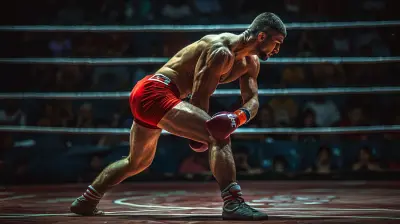
Every Fan’s Favorite Moment from the 2026 Sports Year
12 September 2026
Ask ten fans to name the best moment of the 2026 sports year and you will get ten different answers. That is not a dodge. It is the honest nature of a year that delivered so much across so many sports that no single highlight can carry the whole story. The fan in Milan will point to something different than the fan in Manila, and both will be right.
What makes a moment stick? Not the scoreboard alone. The moments we remember are the ones that combine high stakes with genuine uncertainty, human effort with visible emotion, and a story we can retell in thirty seconds. This article breaks down the moments that defined 2026, explains why they resonate so deeply, and offers a practical way to think about which one deserves the top spot in your own memory.

Why the "Favorite Moment" Question Is Harder Than It Looks
Sports media loves a tidy narrative. One highlight, one hero, one clean ending. Real fandom rarely works that way.Think about what happens when you watch a game live. You are not processing it like a historian. You are reacting in real time, often with friends, sometimes with strangers, occasionally alone on a couch at an unreasonable hour. The memory that forms is a blend of the event itself and everything around it. That is why two fans can watch the same match and walk away with completely different "favorite moments."
There is also a recency problem. Whatever happened last tends to feel biggest. A moment from January can fade by December even if it was objectively more dramatic. This is normal, but it is worth naming so you can separate genuine greatness from simple proximity.
The most useful test is simple. Does the moment still give you chills when you describe it months later? If yes, it belongs on your list. If you have to check the box score to remember the details, it probably does not.

The Moments That Defined 2026
A Winter Games That Delivered Under Pressure
The 2026 Winter Olympics in Milan and Cortina d'Ampezzo gave fans a rare combination: familiar sports performed at an unfamiliar level. What stood out was not any single result but the density of close finishes. Several events came down to fractions of a second or a single clean run, and that scarcity of margin is what makes Olympic sport so compelling.The lesson here is about format. When a competition compresses years of preparation into one attempt, the emotional payoff multiplies. There is no series to fall back on, no next game to fix things. That structure, used well, produces moments that feel heavier than anything a regular season can offer.
The World Cup Across Three Countries
The 2026 men's World Cup, hosted across the United States, Canada, and Mexico, was always going to be a logistical spectacle. What made it memorable was the expanded field. More teams meant more styles, more upsets, and more fan bases experiencing the tournament for the first time.Purists worried that a bigger tournament would dilute quality. In practice, the opposite happened in the group stage. Underdog sides arrived organized and fearless, and the gap between established powers and newcomers looked smaller than many expected. That is a trade-off worth understanding: expansion can lower the average quality of a single match while raising the overall drama of the tournament.
A NBA Season That Refused to Settle
The 2026 NBA season was defined by parity. Multiple teams traded the top spot in each conference, and the playoff picture stayed unsettled into the final weeks. For fans, this is the ideal scenario. Every game matters, load management debates get sharper, and the postseason feels earned rather than assumed.The trade-off is real, though. Parity can mean fewer all-time great teams and fewer dynasties to root against. Some fans love a villain. Others love chaos. The 2026 season leaned hard toward chaos, and that suited the moment.
Tennis and the Changing of the Guard
Tennis in 2026 felt like a handover year. Established names still competed at a high level, but younger players won the matches that mattered most. What made this compelling was not the results themselves but the way the transition happened. It was gradual, contested, and occasionally messy, which is exactly how real generational change looks.If you want to understand why fans respond to this, look at the alternative. A sport where the same three names win everything for a decade is impressive but predictable. A sport where the hierarchy is genuinely in question produces better viewing, more debate, and more investment from casual fans.
The Quiet Moments That Outlasted the Headlines
Not every favorite moment comes with a scoreboard. Some of the most enduring memories from 2026 involve athletes speaking openly about pressure, retirement decisions, or personal setbacks. These moments do not trend for long, but they change how fans relate to the people they watch.This matters more than it used to. Modern fans follow athletes year-round through social media and long-form interviews. When an athlete is honest about difficulty, it builds a different kind of loyalty, one based on respect rather than highlights.

Why These Moments Stick: The Psychology of Sports Memory
Understanding why a moment lingers helps you evaluate your own favorites with more clarity. Three factors do most of the work.Uncertainty. The brain pays more attention when the outcome is genuinely unknown. A blowout is forgettable even if the play was spectacular. A game that could go either way until the final second burns itself into memory.
Stakes. The same play means more in a final than in a midseason game. This is why context matters so much when comparing moments across sports. A routine free throw in a decisive game carries more weight than a spectacular dunk in a meaningless one.
Shared experience. Watching with others amplifies memory. If your whole neighborhood is watching the same match, the moment becomes part of a collective story, not just a personal one. This is why international tournaments and the Olympics consistently produce the most memorable moments. They synchronize attention in a way that league play rarely does.
There is a fourth factor that gets less attention: narrative clarity. A moment that can be described in one sentence survives. A moment that requires five minutes of setup fades. This is not fair, but it is true, and it explains why certain plays become shorthand for entire seasons.

How to Judge a "Favorite Moment" Without Getting It Wrong
Most fans default to whatever they saw most recently or whatever the loudest voices on social media pushed. That is not a great method. Here is a better one.Use the Retelling Test
Try to describe the moment to someone who did not see it. If the story works without visual aids, it has staying power. If you find yourself saying "you had to be there," it probably will not last.Separate Personal Memory from Collective Memory
Your favorite moment does not have to be the consensus pick. In fact, the most meaningful moments are often personal. A game you watched with your father. A comeback you followed on a radio in a car. A win that meant something to your city after a hard year.These do not need to be validated by anyone else. But it is worth knowing the difference. When someone asks for the biggest moment of 2026, they usually mean the collective one. When they ask for your favorite, they mean yours.
Weigh the Whole Year, Not the Last Month
Recency bias is the most common mistake. Do a quick mental scan of the year before you commit to an answer. What happened in February? What happened in June? If nothing from those months comes to mind, ask whether that is because nothing happened or because you have simply forgotten.Avoid the Highlight Trap
A spectacular individual play is not automatically a great moment. Context does the heavy lifting. A buzzer-beater in a regular-season game is fun. A buzzer-beater in a Game 7 is history. When you rank moments, rank the situation as much as the play.Common Misconceptions About Sports Moments
Misconception one: the biggest moment is the most skilled one. Not true. Skill matters, but drama matters more. Fans remember tension, not technique.Misconception two: consensus picks are always correct. Consensus reflects media reach and time zones as much as actual drama. A moment that happened at 3 a.m. in your region may have been just as good as the one that aired in prime time.
Misconception three: you need to have watched live. Watching live adds something, but it is not required. Plenty of fans discovered great moments through replays and highlights and built real attachment to them. The memory is yours either way.
Misconception four: older moments are always better. Nostalgia is powerful, but it distorts. Every generation thinks its era was the peak. The honest answer is that great moments happen in every era, and each one feels biggest to the people who lived through it.
Comparing the Candidates: A Practical Framework
If you want to pick a single favorite moment from 2026, use a simple scoring approach. Rate each candidate on four dimensions from one to five.- Stakes: How much did it matter?
- Uncertainty: How close was it to going the other way?
- Emotion: Did it produce a genuine reaction?
- Retellability: Can you describe it in one sentence?
Add the scores. The highest total is usually your real answer, even if it is not the one you expected. This method also forces you to be honest about why a moment feels important. Often, a moment scores high on emotion but low on stakes, which tells you it is a personal favorite rather than a year-defining one.
There is a trade-off here. Scoring gives you consistency, but it can flatten the messy, irrational quality that makes fandom fun. Use the framework when you need to explain your choice. Ignore it when you just want to feel something.
What 2026 Taught Us About Modern Sports
Three broader patterns emerged from the year, and they are worth carrying forward.Expansion works when the product holds up. Both the Winter Games and the World Cup grew in scope. The results depended less on the size of the event and more on the quality of the competition. Bigger is not automatically better, but it is not automatically worse either.
Parity is a feature, not a bug. Leagues that produce genuine uncertainty keep fans engaged longer. The cost is fewer dynasties and fewer all-time great teams. That is a real trade-off, and reasonable fans can disagree about which they prefer.
Athletes are speaking more openly. This shift changes the emotional texture of fandom. Fans now connect with people, not just performances. It is a healthier dynamic in most ways, though it also puts more pressure on athletes to be constantly available.
Final Thoughts: Your Moment Is the Right One
The 2026 sports year gave fans an unusual amount to choose from. A Winter Games full of tight finishes. A World Cup that stretched across a continent. A basketball season that refused to crown anyone early. A tennis year that marked a real transition. And quieter moments that mattered just as much to the people who experienced them.If you take one thing from this, let it be this. The best moment of the year is not the one with the loudest highlight reel. It is the one you can still feel when you talk about it. That is the moment that belongs to you, and no ranking can take it away.
all images in this post were generated using AI tools
Category:
Season RecapsAuthor:

Frankie Bailey
Discussion
rate this article
2 comments
Brandon Bryant
What a thrilling year for sports! From unforgettable comebacks to jaw-dropping performances, every fan has their own highlight. I loved that last-minute goal in the finals that had us all on the edge of our seats... What was your favorite moment?
September 16, 2026 at 10:59 AM
Valerie McKinney
Who knew we were all secretly Olympic-level couch athletes? Cheers to popcorn-fueled cheering and way too many hot wings!
September 14, 2026 at 11:25 AM